

4.8/5 on App Store
Traveling nurses miss hundreds in mileage deductions every tax season. Every commute to a facility, agency meeting, and supply run qualifies, but only if you're tracking it.
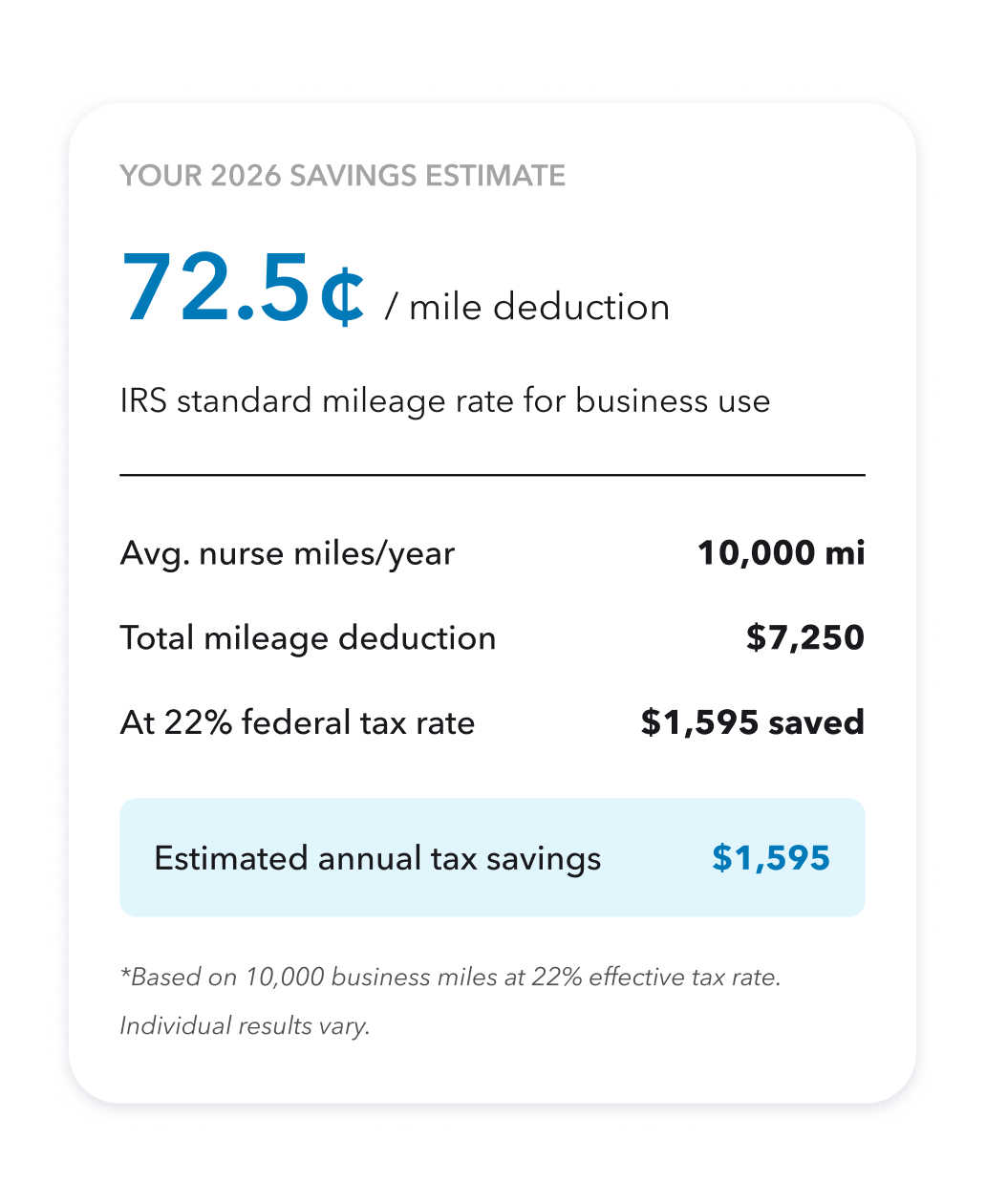




The IRS allows traveling nurses to deduct any drive that's ordinary and necessary for business, from commuting to a temporary facility to picking up medical supplies. If it serves your assignment and your career, it's deductible.

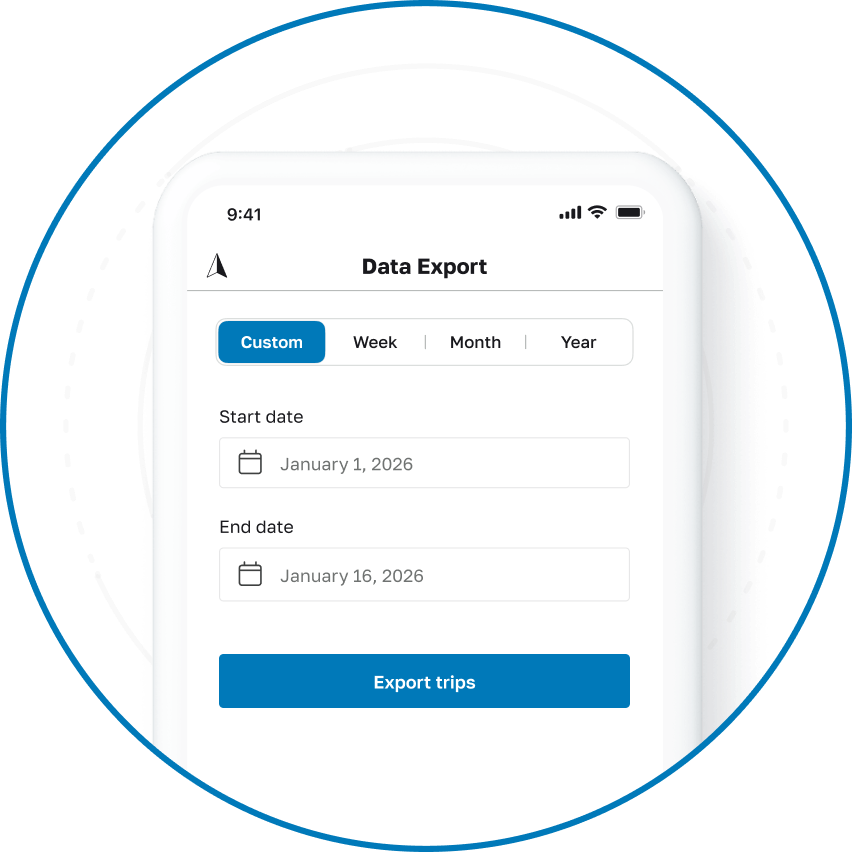
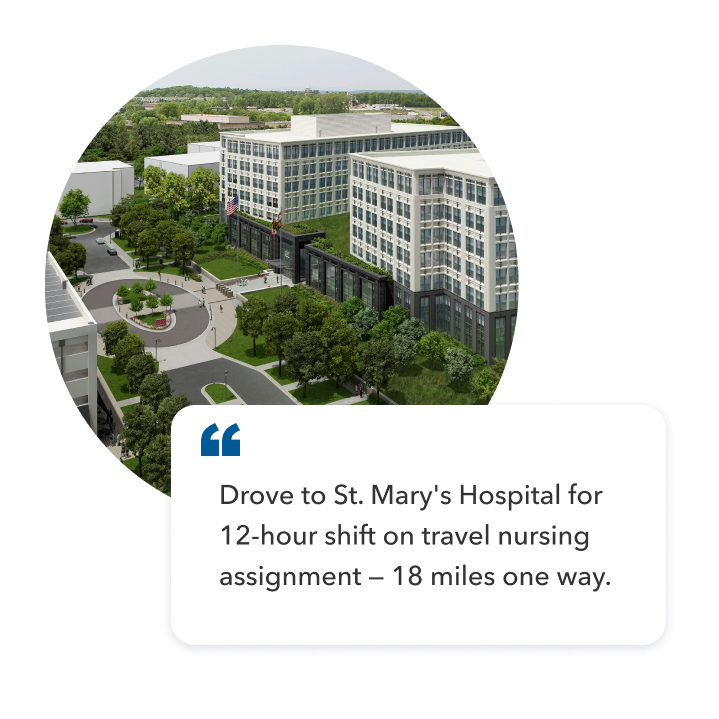
Every drive to a hospital, clinic, or care facility where you're on assignment counts toward your mileage deduction — whether it's your first day on the unit or a recurring shift throughout the contract. You don't need a permanent desk or a set schedule for each drive to qualify. As long as the trip serves your assignment, it belongs in your log.
Driving to meet with a staffing agency, sign contract paperwork, or attend an onboarding session for a new assignment is fully deductible. These trips sit at the core of your business activity as an independent contractor, and the IRS recognizes them as such. Every mile driven to secure or manage a travel nursing contract belongs in your mileage log.

Every drive to purchase or pick up supplies, equipment, or materials required for your assignment qualifies for a mileage deduction — from a pharmacy run for patient-care essentials to a medical supply store for specialty items. If you're making multiple supply stops during the same trip, each leg of the route counts as deductible business mileage, stacking your total logged miles meaningfully.

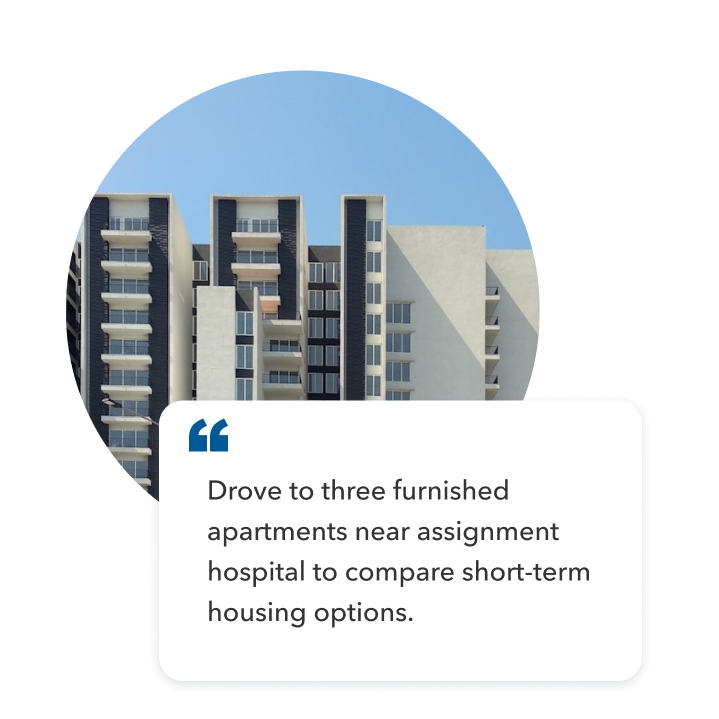
Driving to tour temporary housing, sign a short-term lease, or scout the area near your assignment location all qualify as deductible drives under IRS rules. The IRS recognizes relocation activity as a legitimate part of the traveling nurse business model, meaning every mile you put into securing your living situation for a new contract is just as deductible as the shifts themselves.
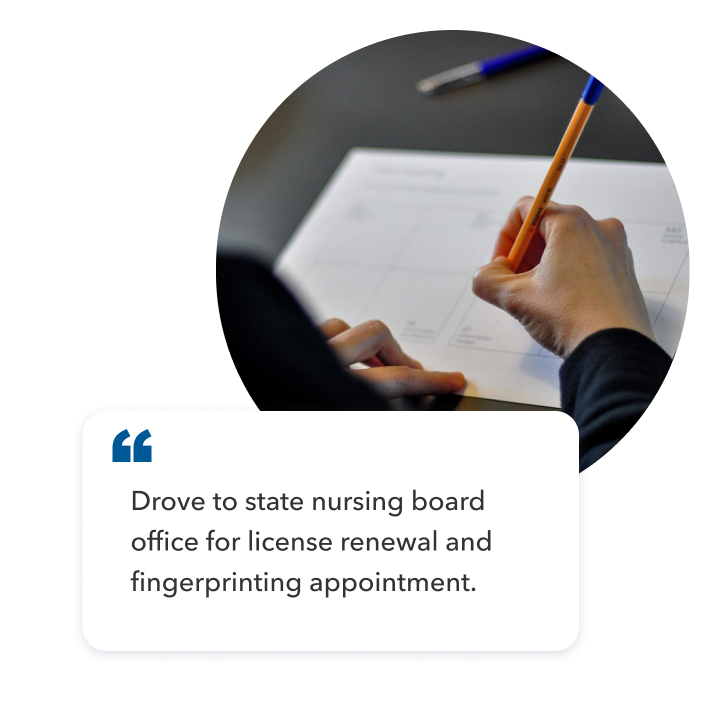
The location of your licensing or credentialing appointment doesn't affect deductibility — whether you're driving to a state nursing board office, a testing center, or a hospital credentialing department, every mile counts. Any drive made to maintain, renew, or obtain a license required for your assignments is a fully deductible business expense.
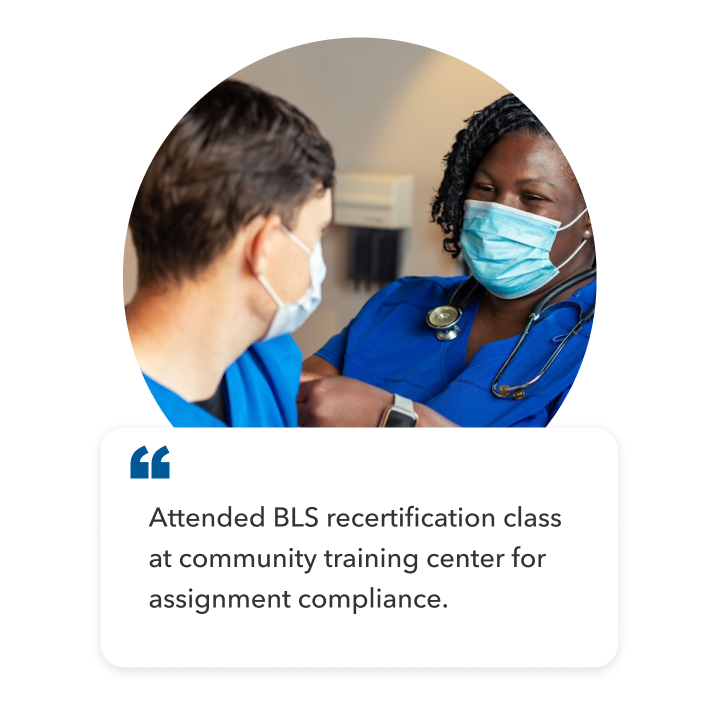
Attending a continuing education class, skills training session, or certification renewal course as a working nurse is considered ordinary and necessary business activity by the IRS. Every mile driven to maintain your qualifications and stay placement-ready fully qualifies for a deduction — because without current credentials, your next assignment simply doesn't happen.
At the current IRS standard mileage rate, traveling nurses who move between assignments consistently are sitting on a significant deduction — and most don't realize how large it actually is. A full-time traveling nurse working back-to-back 13-week contracts across different facilities can realistically log 12,000 to 18,000 business miles in a year, balancing facility commutes, agency meetings, supply runs, and credentialing appointments. At the current rate, that translates to a deduction worth $8,700 to $13,050. For a high-volume traveler managing multiple state licenses and frequent relocations, that figure climbs closer to $18,125 — real money that belongs in your pocket, not overlooked at tax time.
Traveling nurses lose mileage deductions in audits for one reason more than any other — records pieced together after the fact rather than captured in the moment. The IRS calls this the contemporaneous record requirement, and it applies to every trip you claim.

The IRS routinely cross-references claimed trips against agency assignment records, facility schedules, and contract dates. Every trip in your log needs a specific date.

GPS-captured coordinates carry the most weight in an audit because they are objective and difficult to dispute. Log the specific address for every trip origin and destination.

Write a specific note: "shift at St. Mary's ICU on travel assignment." Vague entries like "work" will not survive IRS scrutiny.

Total miles per trip. Automatic GPS tracking captures this precisely — no odometer readings or manual input required.
Answers to the most common questions traveling nurses and travel healthcare workers ask about IRS mileage deductions. Each answer is written to give you a clear, actionable response — not tax jargon. For advice specific to your situation, consult a qualified CPA or tax professional.
Automatic GPS tracking captures every deductible mile , generate your IRS-compliant report instantly.
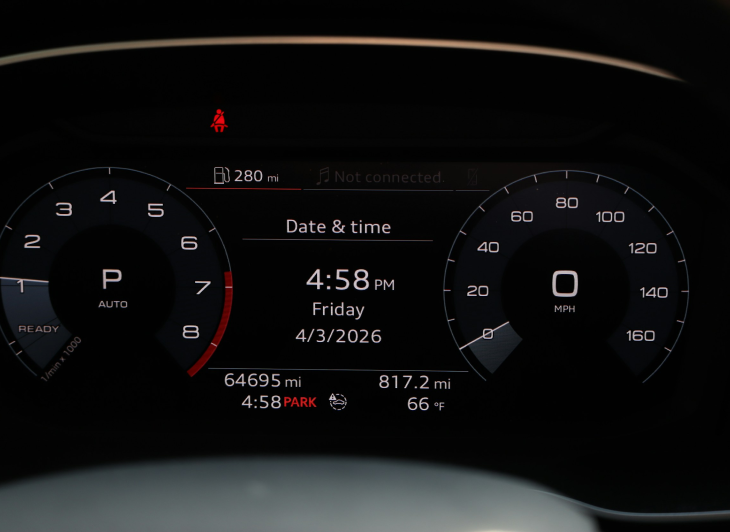
Get the latest 2026 IRS mileage rate, see how it compares to prior years, and learn how to apply it to your deductions correctly.

Healthcare workers drive more deductible miles than most realize. Here's what qualifies, what the IRS requires, and how much you could save.

Nurses leave significant tax deductions unclaimed every year. Here's a complete breakdown of what qualifies and how to capture every dollar.









.svg)
