
Freelance Photographers

IRS Mileage Deduction for Freelance Photographers

Driving to shoots, scouting, or picking up gear? Every mile is deductible at 72.5¢ in 2026. Most photographers leave thousands unclaimed each tax season. Track your miles and keep what's yours.


IRS compliance

What the IRS Requires From Your Mileage Log

The IRS requires logging trips as they happen, not reconstructing them at tax time. It's the most audited mileage rule. Every business trip must capture four specific details.

Client Photo Shoots

Every drive from your home office or studio to a shoot qualifies as a mileage deduction, including each leg of multi-location days. If you're shooting a wedding with a ceremony followed by a reception across town, every mile between venues counts. Multi-stop days, early morning drives, and late-night returns all qualify as legitimate business mileage.

Everlance expense tracking app

Location Scouting

Scouting potential shoot locations, parks, beaches, barns, rooftops, and beyond is fully deductible whether or not the location ends up being booked. Even exploratory drives to find new backdrops for your portfolio count. If you drove there for business purposes, the IRS considers it a valid mileage deduction, so log every scouting trip the moment you leave.

Everlance expense tracking app

Equipment Pickup & Return

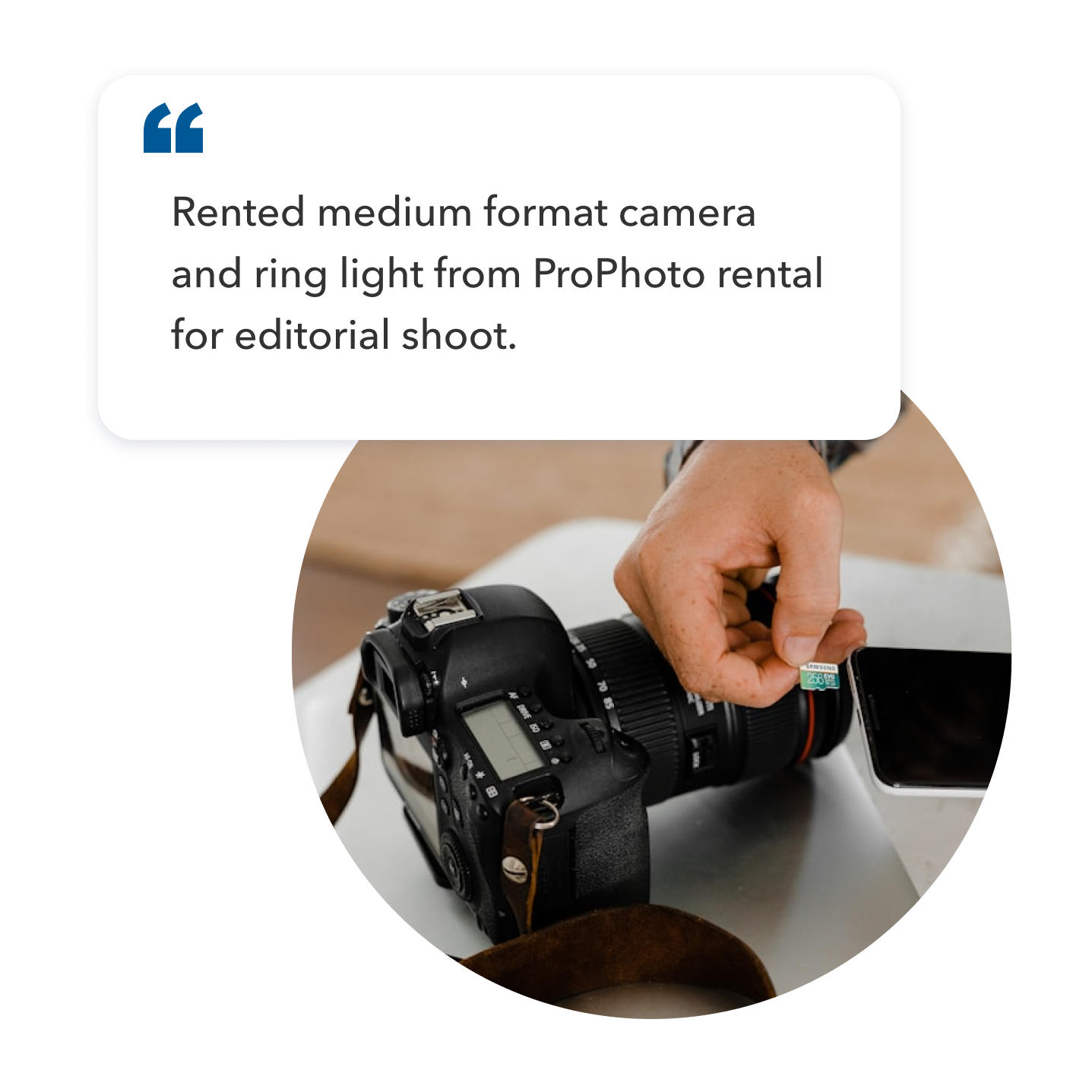
Driving to rent, return, or purchase gear — cameras, lenses, lighting, or even batteries at a big-box store — is fully deductible as long as the trip is business-related. This includes trips to rental houses, camera stores, or manufacturer service centers. If the equipment serves your photography business, the drive to get it does too.
Everlance expense tracking app

Equipment Repair & Service

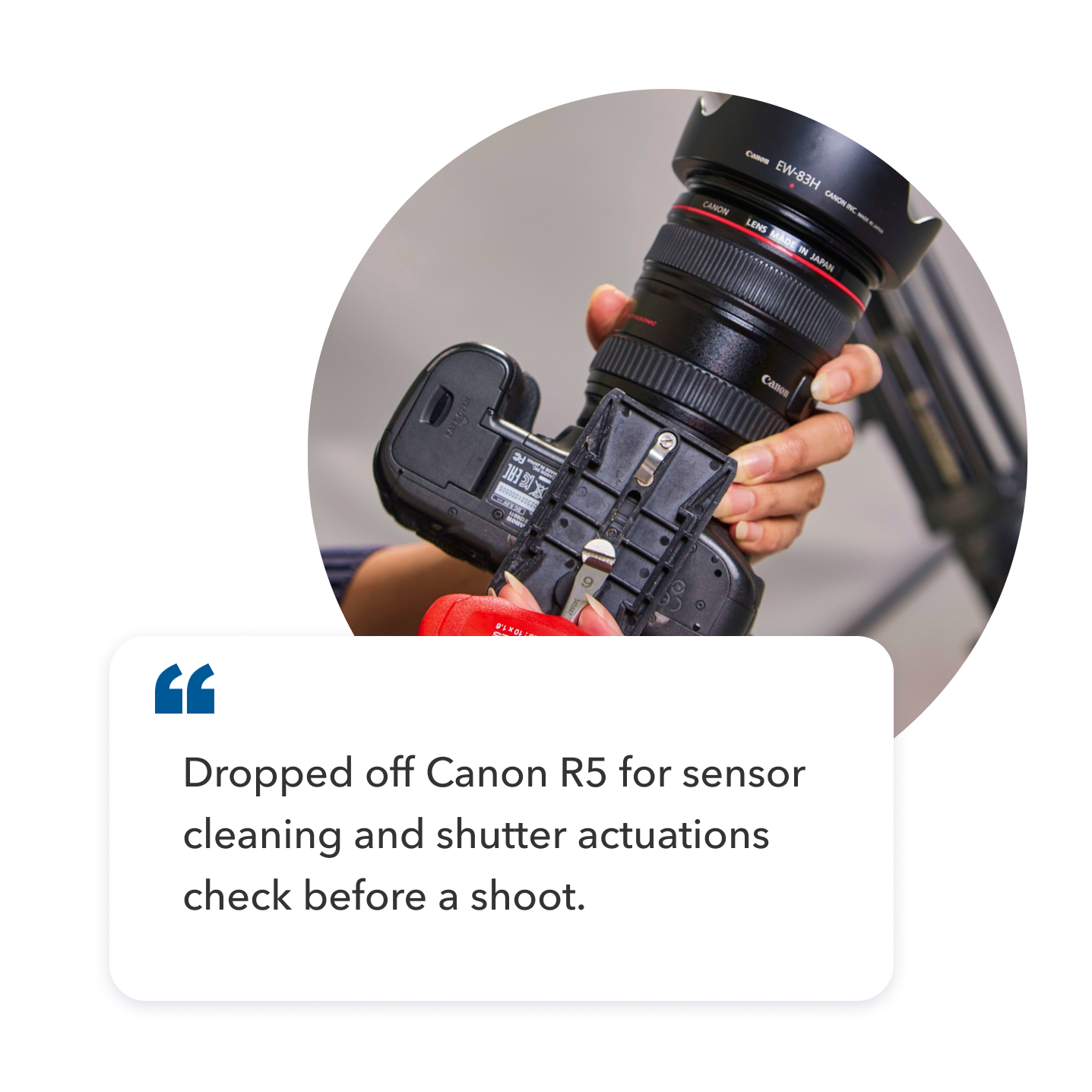
Drives to repair or service your camera body, lenses, flash units, or any other professional gear are fully deductible. Maintenance miles count the same as shoot miles. Whether you're dropping off a lens for calibration or picking up a body after a shutter replacement, every mile to and from the shop is a legitimate write-off.
Everlance expense tracking app

Client Meetings & Consultations

As a freelance photographer, mileage deductions extend beyond shoots, driving to meet clients for planning sessions, contract signings, proof reviews, or album deliveries all count at 72.5¢ per mile. Whether you're meeting at a coffee shop, their home, or your studio, consistent logging ensures every client mile gets captured.

Everlance expense tracking app

Education & Networking

Every mile driven to grow your skills counts as a mileage deduction. Driving to workshops, conferences like WPPI or PhotoPlus, industry meetups, or vendor showcases all qualify as deductible professional development mileage. The IRS recognizes that growing your craft is growing your business, so whether you're attending a lighting masterclass across town or a multi-day conference out of state, log every mile. Your education is your competitive edge, and the drive to get there is a legitimate write-off.

Everlance expense tracking app
Estimate your 2026 deduction

How Much Can You Save This Year?

At 72.5¢ per mile, mileage deductions add up faster than most freelance photographers realize. A wedding photographer averaging three shoots per weekend can easily log 15,000+ business miles annually — a deduction worth over $10,800. But shoots are just the start. Factor in location scouting, equipment runs, client meetings, and conference travel, and your deductible mileage climbs even higher. Every photographer's situation is different, so we built the calculator below to make it personal. Enter your annual business miles and your federal tax rate to see exactly what your drives are worth — then start tracking so none of it slips through.

Estimate my savings

Annual business miles 15,000
Federal tax rate 22%

Estimated annual tax savings

$2,393

($10,875 total deduction)

Start Tracking — It's Free
IRS compliance

What the IRS Requires From Your Mileage Log

The IRS requires logging trips as they happen, not reconstructing them at tax time. It's the most audited mileage rule. Every business trip must capture four specific details.

Miles driven

Log total miles per trip. GPS apps like Everlance capture this automatically; manual odometer logs require start and end readings for every trip.

Business purpose

Note the specific business purpose, 'wedding shoot' or 'gear rental return.' Vague entries like 'work' won't hold up in an audit.

Date of the trip

Log the exact date of every trip as it happens, retroactive estimates won't hold up under an IRS audit

Starting & ending location

Log start and end locations, full addresses or city and purpose. GPS-captured addresses are ideal as they're timestamped and audit-proof.

Date of the trip

Log the exact date of every trip as it happens, retroactive estimates won't hold up under an IRS audit.

Starting & ending location

Log start and end locations, full addresses or city and purpose. GPS-captured addresses are ideal as they're timestamped and audit-proof.

Business purpose

Note the specific business purpose, 'wedding shoot' or 'gear rental return.' Vague entries like 'work' won't hold up in an audit.

Miles driven

Note the specific business purpose, 'wedding shoot' or 'gear rental return.' Vague entries like 'work' won't hold up in an audit.

Photographer Mileage Deduction — FAQ

Answers to the most common questions photographers ask about IRS mileage deductions in 2026. Each answer is written to give you a clear, actionable response — not legal jargon. For advice specific to your tax situation, always consult a qualified CPA or tax professional.

Yes — AI-generated logs are fully acceptable to the IRS, provided they meet the same documentation standards as any other record-keeping method. The IRS requires that mileage records be "contemporaneous," meaning they were created at or near the time of each trip rather than reconstructed weeks later. AI tracking apps satisfy this requirement because they log trips in real time via GPS.

To be audit-ready, every entry must include: the date of the trip, the starting location, the destination, the business purpose, and the miles driven. If your app captures all five of these automatically, your logs should hold up under scrutiny.

It's also a good idea to export and save a backup of your logs periodically, so you're not relying solely on a third-party app's servers if you ever need to produce records.

Not always — it depends on your specific vehicle costs and how many miles you drive. The standard mileage method tends to win for high-mileage drivers in fuel-efficient or older vehicles with low insurance and maintenance costs, because the flat rate per mile often exceeds what you'd actually spend.

The actual expense method can come out ahead if you drive a newer or expensive vehicle with high depreciation, carry a premium insurance policy, or have significant loan interest. Eligible actual expenses include gas, oil, insurance, repairs, tires, registration fees, lease payments, and depreciation — all multiplied by your business-use percentage.

The only reliable way to know which method wins is to run the numbers under both. AI tools make this fast: feed them your total annual car costs and business-use percentage and they'll calculate both scenarios side by side. Important: once you use the actual expense method for a given vehicle, you generally cannot switch back to standard mileage for that same vehicle in a future year.

It's your responsibility — not the app's — to ensure that every trip classified as business actually was business. The IRS holds you accountable for the accuracy of your mileage records regardless of what tool generated them. Claiming personal miles as business miles, even accidentally, is an audit red flag that can result in disallowed deductions, back taxes, interest, and penalties.

Most AI mileage apps let you review and reclassify trips on a weekly or monthly basis. Build a habit of auditing your log regularly rather than waiting until tax time, when it's much harder to remember the purpose of individual trips.

If you do find a miscategorized trip, correct it promptly and note the change. A pattern of consistent, timely corrections actually demonstrates good faith record-keeping — which works in your favor if you're ever questioned by the IRS.

Yes, but there's a critical restriction: you must elect the standard mileage rate in the first year you place a vehicle in service for business. If you use the actual expense method in year one, you're locked into it for the life of that vehicle — you cannot switch to standard mileage in a later year.

If you do elect standard mileage in year one, you have more flexibility going forward. You can switch to actual expenses in a subsequent year, and then switch back again, though certain depreciation adjustments apply. The IRS requires straight-line depreciation if you return to the standard rate after a period on actual expenses.

For drivers buying a new vehicle with high first-year depreciation, using actual expenses from day one may capture a much larger initial deduction — but at the permanent cost of losing the simpler standard mileage option. An AI tool can model multi-year projections under both methods, which is worth doing before you commit to your year-one election.

Yes — recording your odometer at the beginning and end of each tax year remains a best practice even when you're using an AI tracking app. The IRS recommends this because your total odometer movement provides an independent baseline you can use to cross-check your app's logged business miles.

For example, if your app reports 18,000 business miles but your odometer only moved 19,000 miles total, that implies fewer than 1,000 personal miles all year — which is implausible for most people and would raise immediate questions in an audit.

Most AI mileage apps prompt you to log beginning and end-of-year odometer readings for exactly this reason. It takes about ten seconds and meaningfully strengthens your documentation. Some drivers also note their odometer at each fill-up or service appointment, creating a running corroboration trail throughout the year.

Yes — the cost of a mileage tracking app you use for business is an ordinary and necessary business expense, which means it's fully deductible. Self-employed individuals report this on Schedule C, typically under "Other expenses." Keep a copy of your subscription receipts or bank statements as documentation.

If you use the app exclusively for business mileage tracking, the full subscription cost is deductible. If you use it for personal purposes as well, you should deduct only the percentage attributable to business use. For most independent contractors and freelancers, the app exists solely to document business driving, making it a straightforward 100% business expense.

The same logic extends to related tools — accounting software, a dedicated phone data plan used for business, and even a portion of your phone's cost if it serves a genuine business function. Keep receipts and document the business purpose for anything you plan to deduct.

Always go directly to the IRS rather than relying on third-party articles, tax software defaults, or AI language models. The IRS publishes mileage rate announcements in numbered IRS Notices, which are available at IRS.gov. Search for "standard mileage rate" or check the IRS Newsroom for the most recent announcement.

Rates are typically announced in December for the upcoming tax year, though the IRS has occasionally issued mid-year adjustments in response to sharp changes in fuel costs. If a mid-year adjustment occurs, you'll need to apply the correct rate to each portion of the year separately.

AI language models have training data cutoffs and may confidently cite an outdated rate. This is one area where you should always verify against the primary IRS source before filing — applying even a slightly wrong rate across 20,000+ miles is a meaningful dollar error, and one that's entirely avoidable with a quick check at IRS.gov.

Stop Leaving Money on the Table

Track every business mile automatically. Generate an IRS-compliant report at tax time, in one tap. Set it up once, never miss a deduction again.