IRS Mileage Deductions

The Complete Guide for Self-Employed Professionals

Mileage deductions are among the most valuable and most underclaimed tax breaks for the self-employed. Deduct every business mile at the IRS standard rate, but only with a compliant log. Rules, qualifying trips, requirements, and a savings calculator by industry.

Trusted by over 4 million drivers

$13k+

Avg. annual deduction for high-mileage professionals

Quick and easy

Self-employed users tracking miles with Everlance

Superior support

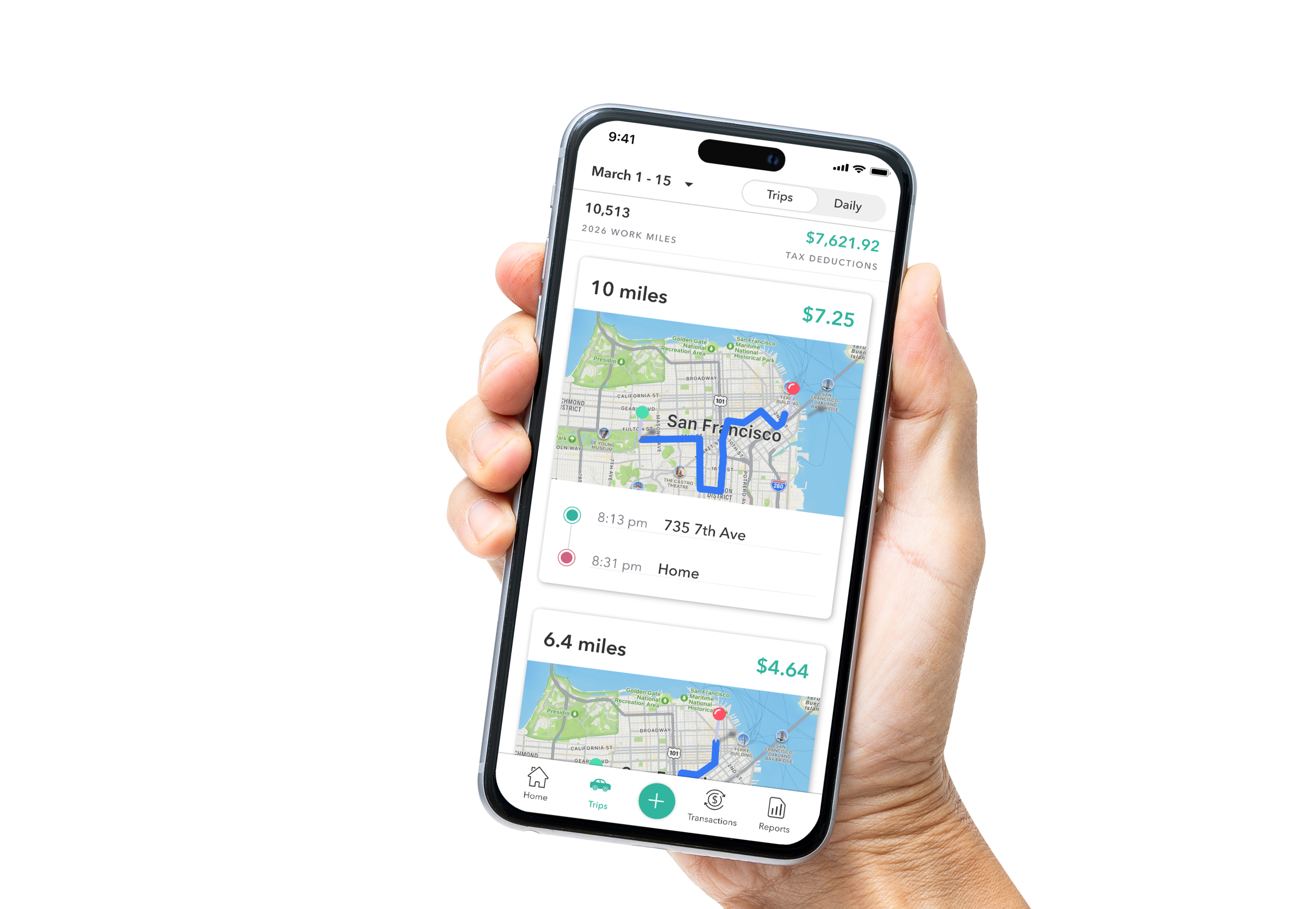
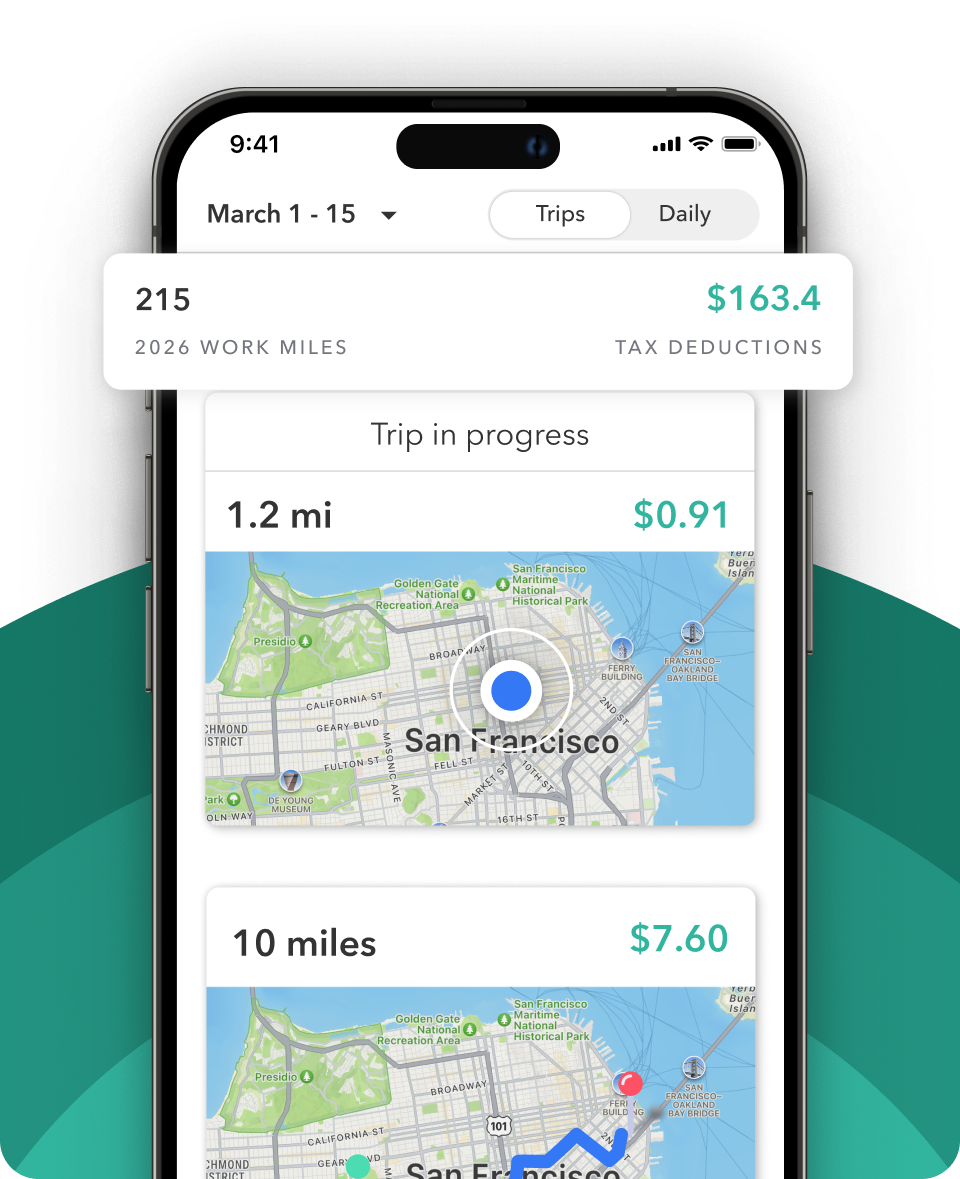
IRS-compliant GPS-verified mileage logs

Every business mile you drive is a tax deduction — are you capturing all of them?

Every untracked mile is a deduction youcan'tclaim back at tax time

What the IRS requires to claim a mileage deduction

The IRS does not require a specific format for your mileage log — but it does require specific information. Every business trip you claim must be documented with four data points. Missing any one of them gives the IRS grounds to disallow your entire mileage deduction, even if every trip was completely legitimate.Now that we've covered the fundamentals, let's dive deeper into the various aspects of IRS mileage reimbursement.

Date of the trip

Every entry must include the exact date the drive took place. The IRS cross-references claimed trips against permit records, MLS activity, client invoices, and platform logs — a missing or approximate date turns a valid deduction into an unverifiable one.

Starting & ending location

Log the specific address where each trip began and ended. GPS-captured coordinates carry the most weight in an audit because they are objective, timestamped, and virtually impossible to dispute. Entries that say only "office to client" without addresses are routinely challenged.

Business purpose

Every entry must include the exact date the drive took place. The IRS cross-references claimed trips against permit records, MLS activity, client invoices, and platform logs — a missing or approximate date turns a valid deduction into an unverifiable one.

Miles driven

Record the total miles for every individual trip not weekly or monthly totals. Automatic GPS tracking captures this at the trip level in real time, eliminating the need for odometer readings, manual math, or end-of-year estimates that the IRS may reject.

It's also worth understanding what the IRS means by "ordinary and necessary." A business drive qualifies when it serves a legitimate, recognizable purpose for your profession it does not need to be exceptional or rare. A real estate agent driving to a property showing, a contractor checking a job site, and a nurse commuting to a temporary facility assignment are all ordinary and necessary. The IRS does not require the drive to generate immediate revenue prospecting runs, estimating visits, and pre-contract site surveys all qualify as long as the business purpose is clear and documented.

One category that never qualifies: commuting. Driving from your home to a fixed, regular place of business  like your brokerage, office, or home depot is treated as a personal commute regardless of how work-related your mindset is. The exception is a qualifying home office. If you have a dedicated workspace that meets IRS home office requirements, your driveway becomes the start of every deductible trip. This single distinction changes your deduction significantly and is worth discussing with your CPA if you work primarily from home.

MILEAGE DEDUCTIONS CALCULATOR

How much could your mileage deduction be worth?

Enter your estimated annual business miles and federal tax rate to see your potential mileage deduction and estimated tax savings for 2026.

Mileage Deductions Calculator

How much could your mileage deduction be worth?

Enter your estimated annual business miles and federal tax rate to see your potential mileage deduction and estimated tax savings for 2026.

Annual Business Miles 18,500 mi
1,000 25,000 50,000
Federal Tax Rate 22%
10% 22% 37%

Total Mileage Deduction

$13,413

18,500 mi × 72.5¢

Estimated Tax Savings

$2,951

At 22% federal rate

Monthly Value

$246

Per month in savings

Start capturing every mile — free

Get started
CHOOSING YOUR METHOD

Standard mileage rate vs. actual expenses

Before you file, you need to choose which method you'll use to calculate your vehicle deduction. The right choice depends on your vehicle, your mileage volume, and your record-keeping preferences.

Factor
Standard Mileage Rate
Actual Expense Method
Record-keeping required Mileage log only Receipts for all vehicle costs
Best for high-mileage drivers Usually produces larger deduction Less effective at high mileage
Best for expensive vehicles May be less optimal Captures depreciation value
Flexibility to switch methods Must choose first year Cannot switch back once used
Simplicity One number per mile Requires itemizing all costs

Most self-employed professionals — across every industry covered in this hub — benefit more from the standard mileage rate. It requires far less record-keeping and typically produces a larger deduction than calculating actual vehicle costs like fuel, insurance, registration, and depreciation. One critical rule: you must choose the standard mileage method in the first year you place a vehicle in business service. Once you use actual expenses, you generally cannot switch back. Consult a CPA in year one to make the right choice.

Most professionals discover they're missing $2,000–$6,000 in deductions. GPS tracking fixes that.

Common questions

Mileage deduction FAQ

The most common questions self-employed professionals ask about IRS mileage deductions — answered clearly, without the tax jargon.
A GPS-based digital log is the strongest possible documentation because it's timestamped and objective. Without a contemporaneous mileage log, the IRS can disallow your entire mileage deduction — even if your trips were completely legitimate. Reconstructed logs created after an audit notice are viewed with high skepticism.
Not always. The standard mileage rate usually produces a larger deduction for high-mileage drivers, while the actual expense method can be more advantageous for expensive vehicles with significant depreciation. You must choose the standard mileage method in the first year you use a vehicle for business — switching to actual expenses in a later year locks you out of the standard rate for that vehicle going forward.
You only deduct the miles driven for business purposes. If a personal trip is miscategorized, you should correct it before filing. If you stop for a personal errand in the middle of a business trip, you may need to split the mileage. The safest approach is to log each trip segment separately and clearly note the business purpose for each deductible leg.
Generally no. The IRS requires you to choose the standard mileage method in the first year you use a vehicle for business. If you use actual expenses in year one, you cannot switch to the standard rate for that vehicle in later years. However, if you start with the standard rate, you may be able to switch to actual expenses in a subsequent year — consult a qualified CPA before making that decision.
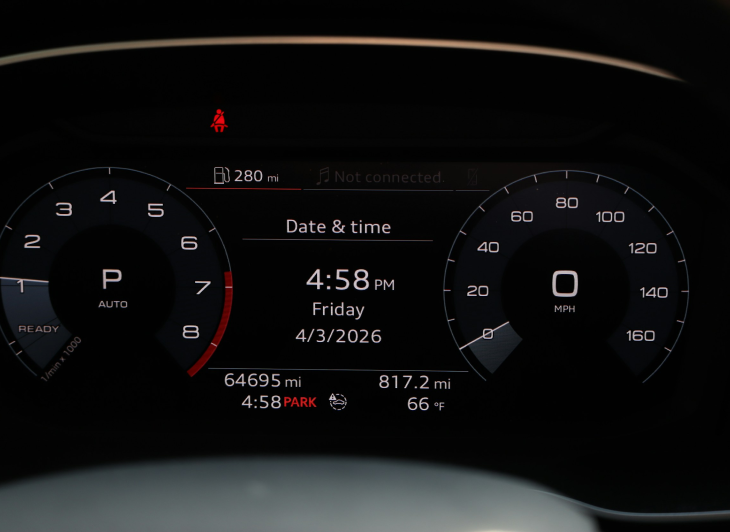
The IRS requires a record of your odometer reading at the beginning and end of each tax year, plus the total business miles driven. A GPS mileage app automatically captures trip distance, but you should still record your annual odometer readings. Many apps prompt you to do this at year-end to keep your log IRS-compliant.
Yes. If you use a mileage tracking app for business purposes, the subscription cost is generally deductible as a business expense. Keep your receipts and note the business purpose. If you use the app for both personal and business trips, only the business-use portion of the cost is deductible.
The IRS typically announces the standard mileage rate once per year, usually in December for the following tax year. In some years with unusual fuel price swings, the IRS has issued a mid-year adjustment. For 2026, the standard business mileage rate is 72.5 cents per mile. You can always find the current rate on the IRS website at irs.gov.

Every mile you don't log is a deduction you don't get

Automatic GPS tracking captures every deductible mile and delivers your IRS-compliant report instantly.


Start tracking every deductible mile