
Mileage Tracker for Food Delivery Drivers every mile, automatically.
Every DoorDash run, every Uber Eats batch, every Instacart shop-and-deliver racks up deductible miles. A mileage tracker built for food delivery captures every mile automatically, so you never leave tax savings on the table.
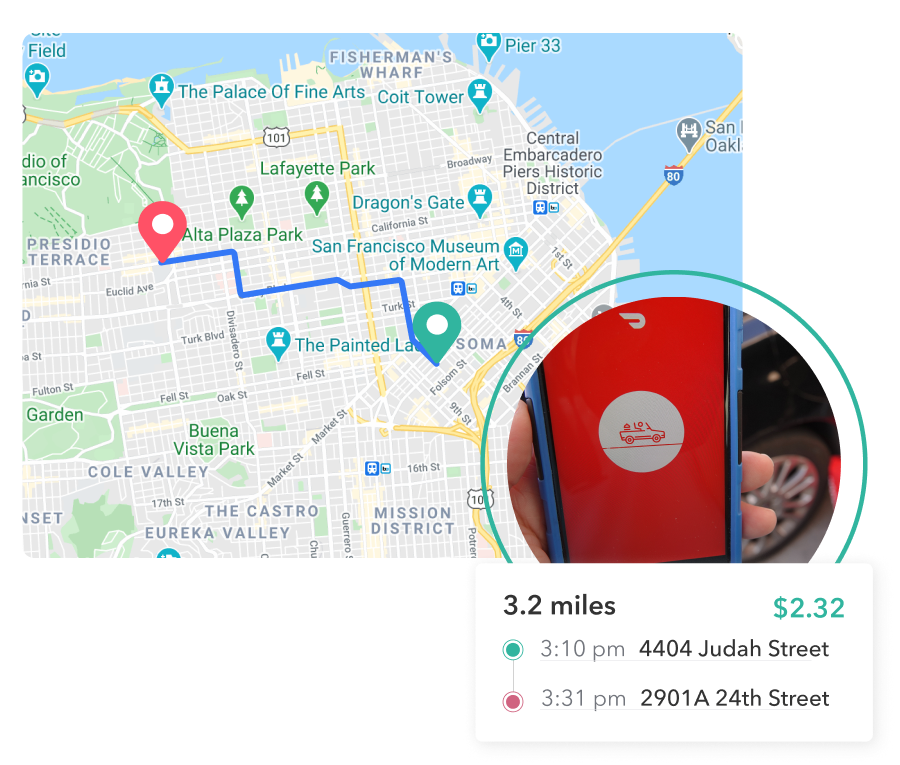
$2,000+
$7,000+
30%
4.8/5
Everything you need to know about mileage tracking for food delivery drivers
Whether you deliver part-time on DoorDash or grind full-time across Uber Eats, Instacart, and Grubhub, a reliable mileage tracker is one of the highest-leverage tax moves you can make. The miles add up fast, and so does the deduction.
What is a mileage tracker for food delivery drivers and why does it matter?
Food delivery mileage tracking means logging every business mile you drive while working: distances, dates, start points, destinations, and purposes recorded in a format the IRS can verify.
As a DoorDash, Uber Eats, Instacart, Grubhub, or Amazon Flex driver, you're classified as an independent contractor. Every business mile you drive is potentially deductible at the IRS standard mileage rate adding up to thousands of dollars in vehicle expense deductions each year.
Most drivers leave that money behind not because they don't qualify, but because they lack documentation. The IRS requires contemporaneous records: trips logged when they happen, not reconstructed later from your app's earnings history. A dedicated mileage app fixes this automatically.
How an automatic mileage tracker works for food delivery drivers?
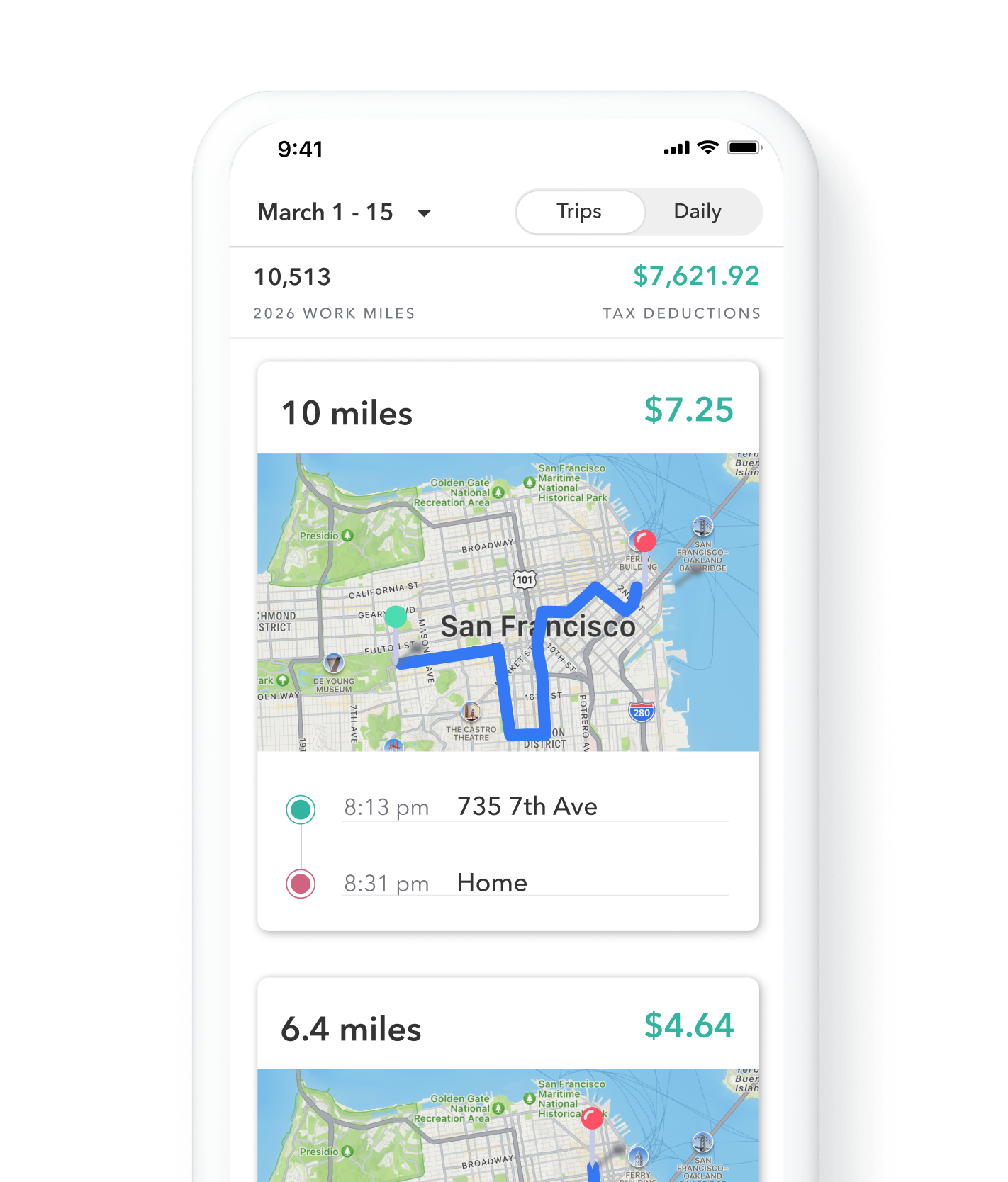
An automatic GPS mileage tracker uses your smartphone's location hardware to detect every drive no buttons required. For DoorDash and Uber Eats drivers constantly on the move, this is the difference between capturing every deductible mile and losing a significant portion of your tax savings.
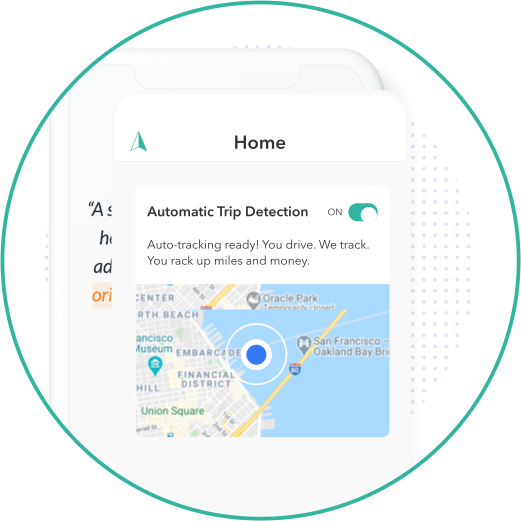
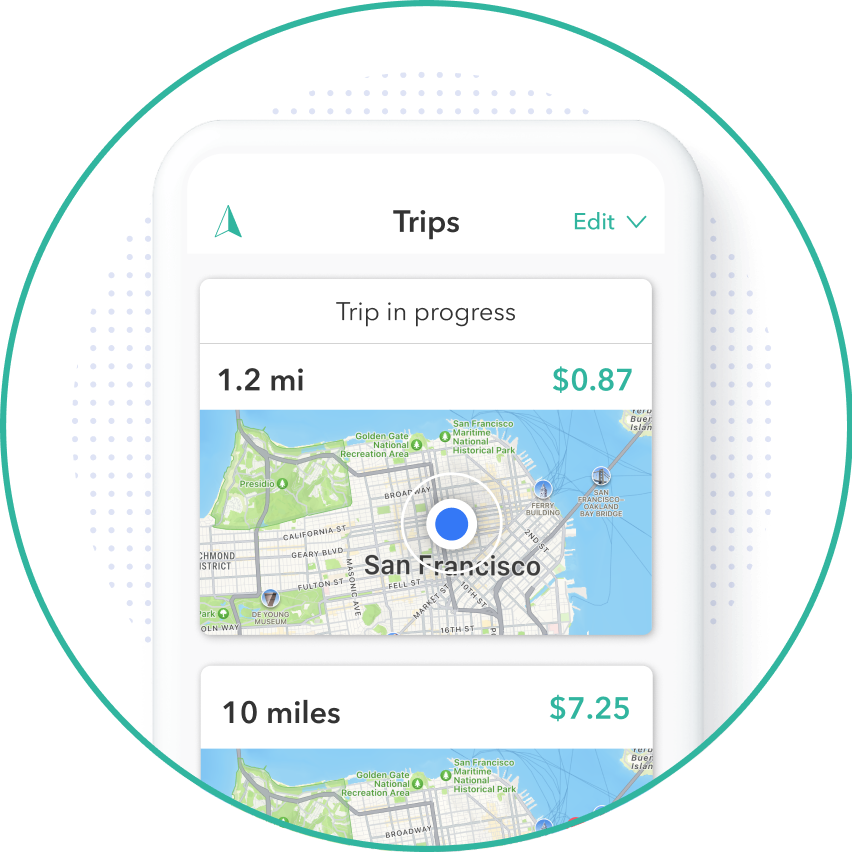
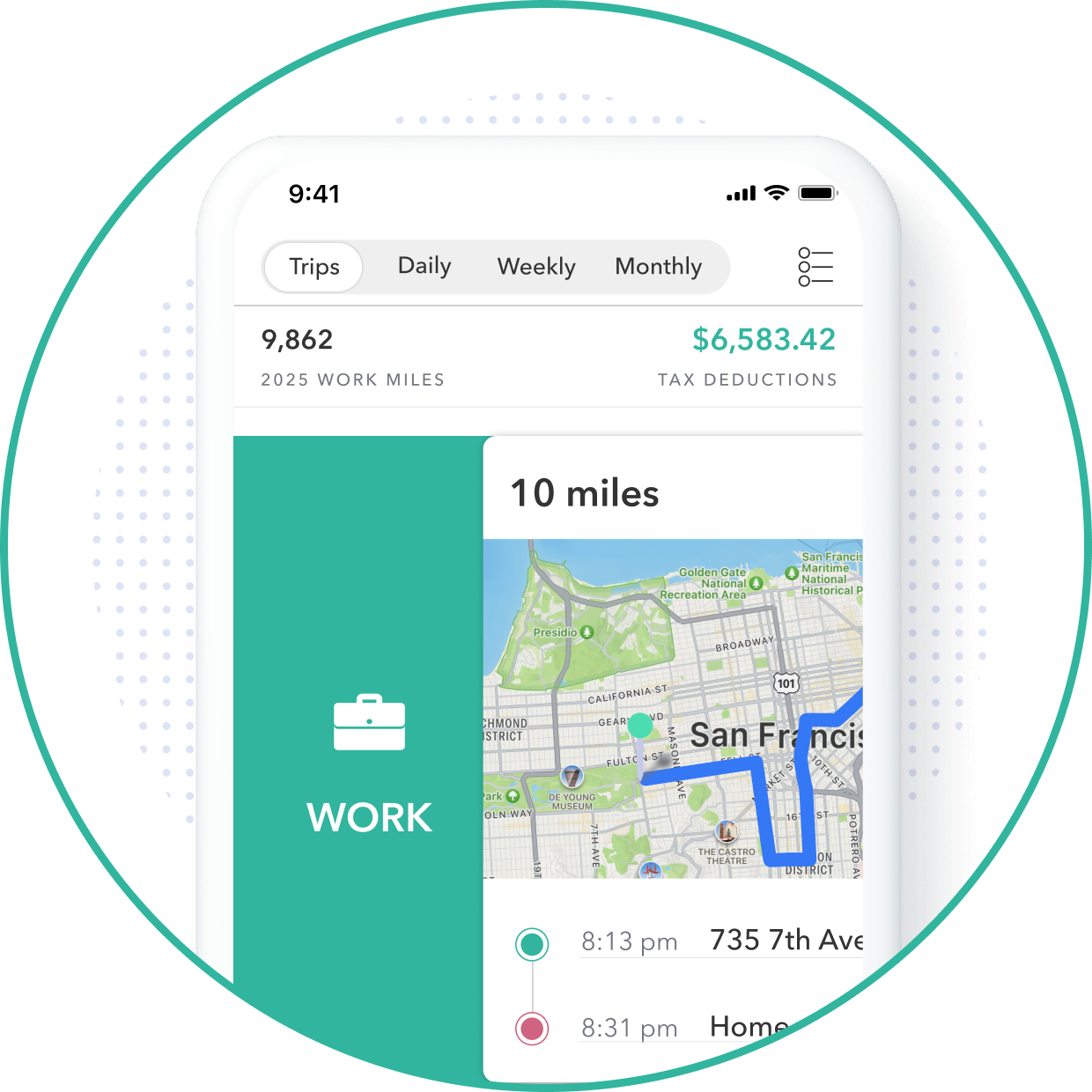
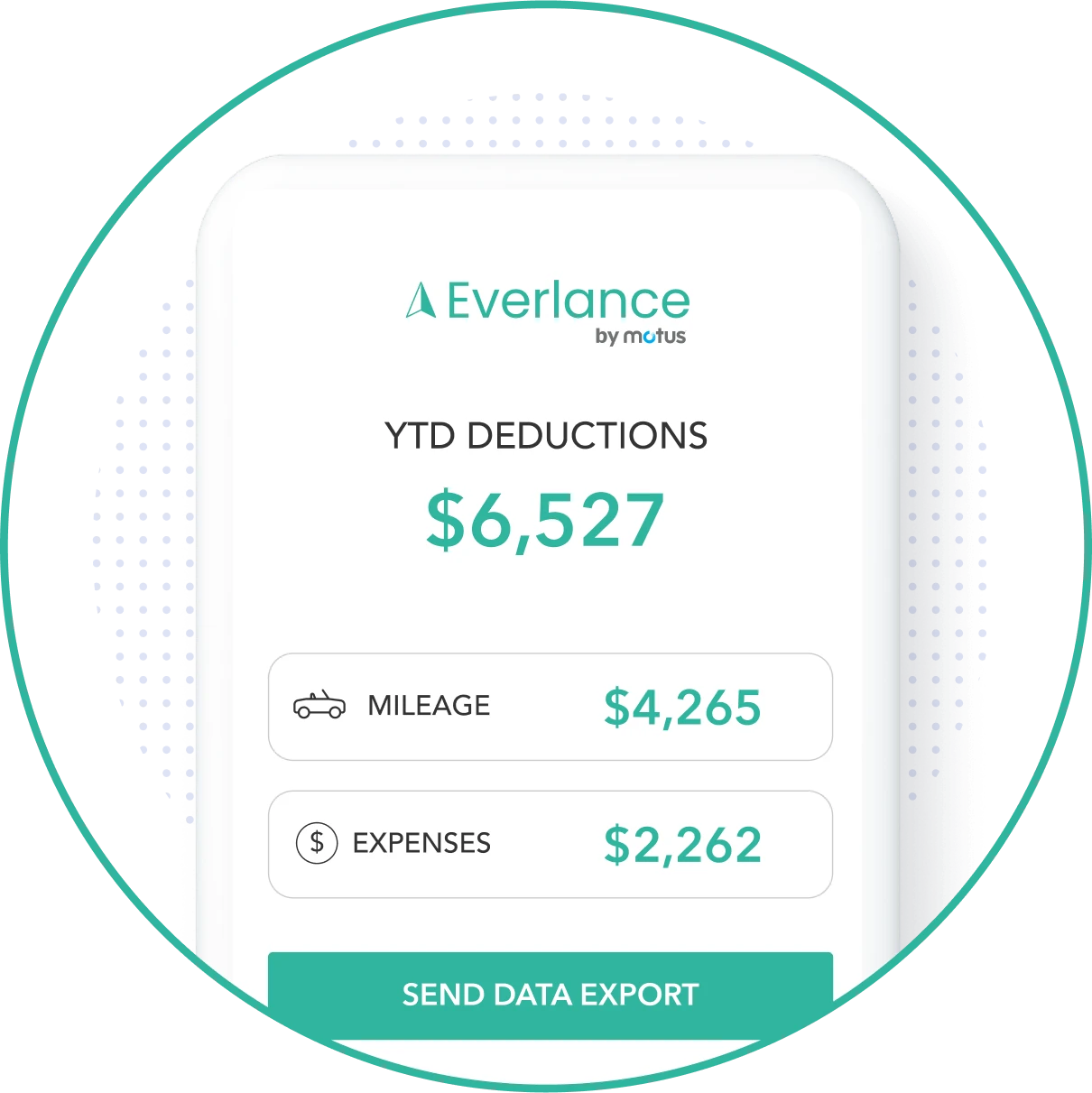
See every mile. Know what it's worth.
Here's what mileage tracking looks like inside the app and what your annual deduction could look like on your tax return. Adjust the sliders to match your numbers.
Mileage Savings Calculator
Your 2026 mileage savings estimate
$6,960
Based on IRS standard mileage rate
Mileage tracking matters more for food delivery drivers than almost any other gig
Every DoorDash shift starts and ends at your door. Every mile between pickup and drop-off is a business mile. Every repositioning drive, every Uber Eats reassignment, every return home all deductible, but only if you track it.

You drive far more than the app shows

The IRS rate makes every mile count

Your DoorDash or Uber Eats summary isn't a mileage log
Drivers who track consistently earn significantly more
Automatic mileage tracking tools capture 30% more deductible miles than manual methods. For a food delivery driver, that gap can mean hundreds to thousands of dollars in missed deductions per year. The job is too fast-paced for manual logging you accept a DoorDash order, navigate, drop off, accept the next one. An automatic app captures everything, whether you remember to open it or not.
Qualifying trip types:

Property showings — each leg is a separate deductible trip
Listing appointments and CMA presentations
Open house setup, signage, and hosting runs
Neighborhood farming and prospecting drives
Client meetings at any location
Home inspections, appraisals, and photo shoots
Continuing education and broker training
Title company, lender, and escrow visits
Qualifying trip types

How mileage tracking feeds directly into your tax return?
Food delivery drivers classified as independent contractors report income and expenses on Schedule C. Vehicle mileage is typically the single largest deduction available and every undocumented mile is taxable income you're paying on unnecessarily.
The IRS standard mileage method: your best bet as a delivery driver
Most delivery drivers choose the standard mileage rate over the actual expense method. It's simpler, and for the majority of food delivery vehicles it produces a larger deduction covering gas, insurance, depreciation, and maintenance in one per-mile figure on Schedule C.
Critical rule: you must elect the standard mileage rate in the first year you use a vehicle for business. Start with actual expenses and you generally can't switch back. An automatic mileage tracker ensures you're always capturing the data you need, whatever method you choose.
For drivers working multiple platforms (DoorDash + Uber Eats + Instacart), using multiple vehicles, or operating through an LLC, the rules vary but the need for accurate, contemporaneous records is the same.
Updated each year by the IRS
Covers gas, insurance, depreciation & maintenance. Applies to all qualifying business drives.
Every trip type above is fully deductible. Multiply a moderate week of food delivery driving across a full year and you see why vehicle mileage is the largest deduction available to 1099 gig workers. Every untracked mile is money you're leaving behind.
Mileage documentation and staying IRS-compliant
DoorDash, Uber Eats, Grubhub, and Instacart don't reimburse your mileage that's the independent contractor trade-off. You claim the deduction yourself. But claiming it successfully requires documentation most drivers never build.
Because platforms pay you as a 1099 contractor, every mile you drive is an out-of-pocket expense. The mileage deduction is how you recover it but only with proper documentation. No log, no deduction.
For agents receiving a mileage reimbursement through an accountable plan — where your broker reimburses you at or below the IRS standard rate in exchange for documented logs — that reimbursement is generally not included in your taxable income. The key word is "documented." Without a proper log, even legitimate reimbursements can become taxable compensation in an IRS review.
IRS compliance for vehicle deductions comes down to six elements the agency checks on Schedule C returns. Drivers who reconstruct mileage from platform earnings or Google Maps history routinely fail these checks, even when every mile was legitimate. Automatic tracking satisfies all six from the moment your car starts moving.





IRS Compliance Checklist

Date of the trip
The IRS cross-references claimed mileage against your 1099 earnings and platform activity logs. Every entry needs a precise date.

Starting & ending location
GPS-verified coordinates carry the most weight in an audit objective, timestamped, and extremely difficult to dispute.

Total miles per trip
Captured automatically by GPS. No manual odometer readings, no estimation, no rounding errors that draw examiner attention.

Specific business purpose
"DoorDash batch, 4 drops, downtown pickup zone" holds up. "Work" or "delivery" does not.
What food delivery drivers need to know about IRS documentation

Platforms don't log your full mileage
Your DoorDash, Instacart, or Uber Eats summary captures accepted-trip miles only. Pre-shift, repositioning, and return driving often 30–50% of total business mileage must be tracked separately.

Self-employment tax makes mileage even more valuable
As a 1099 contractor, you pay 15.3% self-employment tax on net earnings. The mileage deduction reduces net earnings, lowering both income tax and self-employment tax simultaneously.

Multi-platform drivers need unified tracking
If you run DoorDash, Instacart, and Uber Eats in the same week, your mileage log needs to capture all of it in one place no switching apps, no double entry.

IRS-compliant report format
Everlance generates downloadable mileage reports in PDF, CSV, and Excel — pre-formatted with every field the IRS requires. One tap, submission-ready.

Audit protection for high-deduction filers
Agents claiming significant vehicle deductions benefit from Everlance Professional's $1 million audit protection — expert representation and coverage if the IRS ever reviews your return.
Mileage tracking FAQs for food delivery drivers
Practical answers to the questions gig drivers ask most. For advice specific to your tax situation, always consult a qualified CPA or tax professional.
.svg)
Still have questions?
Explore the full resource library: IRS rate guides, mileage log templates, and Schedule C walkthroughs all in one place.

Stop leaving thousands on the table every year.
Every delivery mile tracked automatically across DoorDash, Uber Eats, Instacart, and more. Zero manual entry.


.svg)
