
Mileage Tracker for Personal Trainers.
Every session, every client, every drive tracked and deductible.
Personal trainers drive between gyms, client homes, and outdoor training sites all day. A GPS mileage tracker logs every qualifying business drive automatically, so every deductible mile reaches your Schedule C.
$3,000+
$8,000+
30%
4.8/5
The Personal Trainer's Complete Guide to Tracking Business Mileage
Whether you serve clients at home, split shifts across multiple gyms, or run outdoor sessions, mileage tracking is one of the highest-value deductions available to fitness professionals. Most trainers claim far less than they drove.
What is a mileage tracker for real estate agents — and why does it matter?
Mileage tracking for personal trainers means recording every business drive in a format that satisfies IRS Publication 463: date, starting location, destination, total miles, and business purpose.
For 1099 fitness contractors and self-employed coaches filing Schedule C, vehicle mileage is often the largest single deductible expense. Every qualifying drive reduces taxable net profit and self-employment tax simultaneously.
The most common reason fitness professionals miss their full deduction is poor documentation. Without a contemporaneous log, the IRS can disallow vehicle expenses entirely. An automatic GPS tracker creates a verified, timestamped record for every drive without manual input.
This is where a dedicated mileage log app transforms your workflow. Instead of manually writing down odometer readings or piecing together a real estate agent mileage log from memory each April, your phone does the work in the background — capturing every drive with GPS precision the moment your car starts moving. The best mileage tracker for real estate agents runs silently, requires zero manual input, and hands you an IRS-ready report when it's time to file.
How an automatic mileage tracker works for personal trainers and fitness coaches
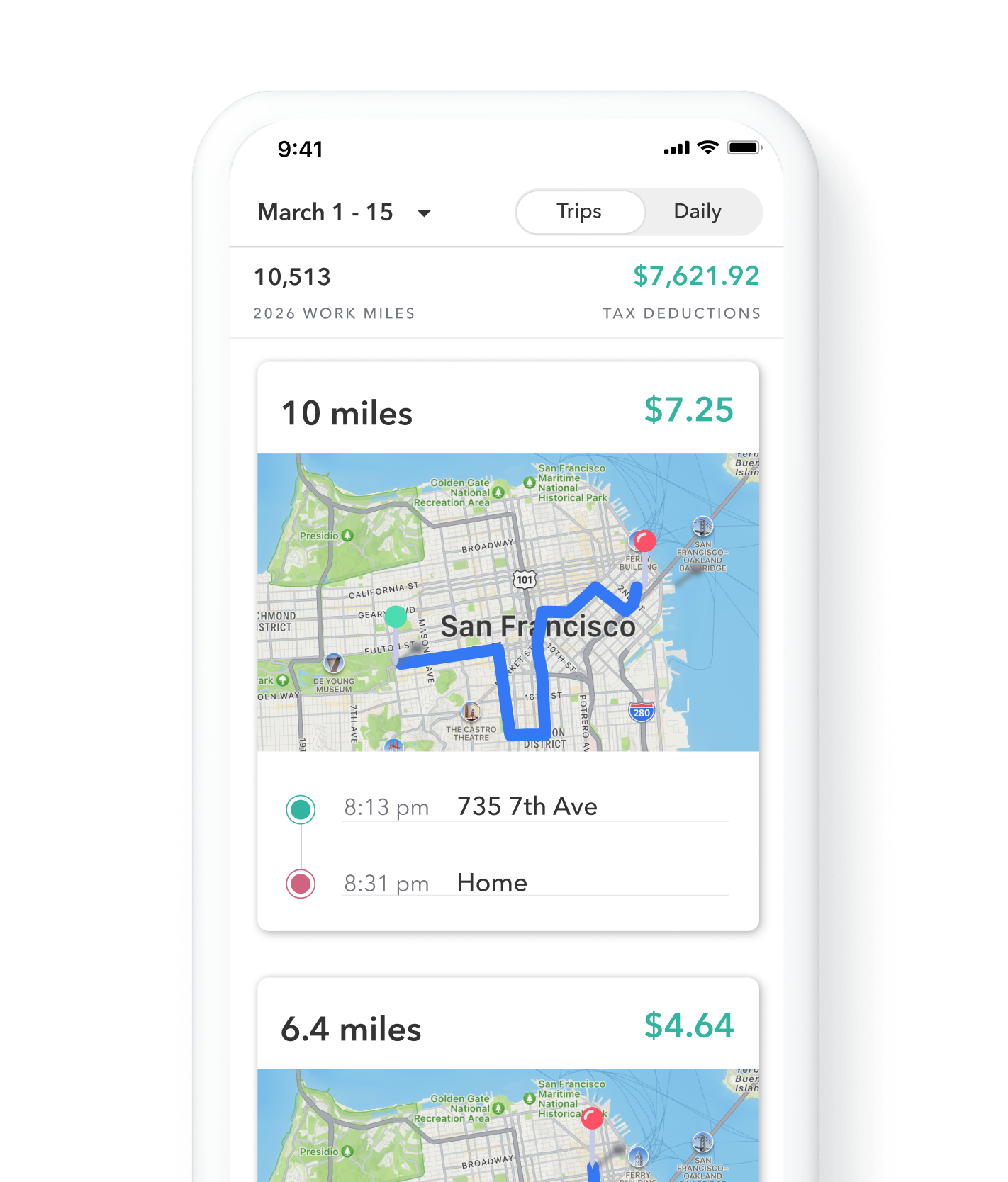
A GPS mileage app uses your smartphone's location and motion sensors to detect every drive automatically. For trainers with unpredictable daily schedules, this is the only reliable way to capture every client drive and equipment run.

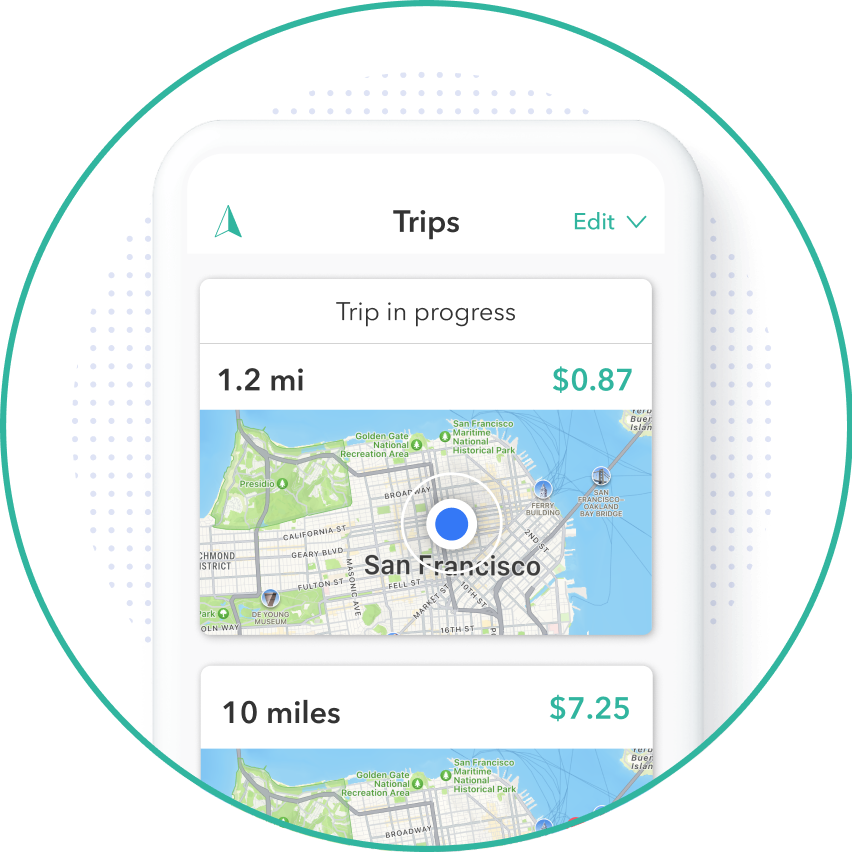
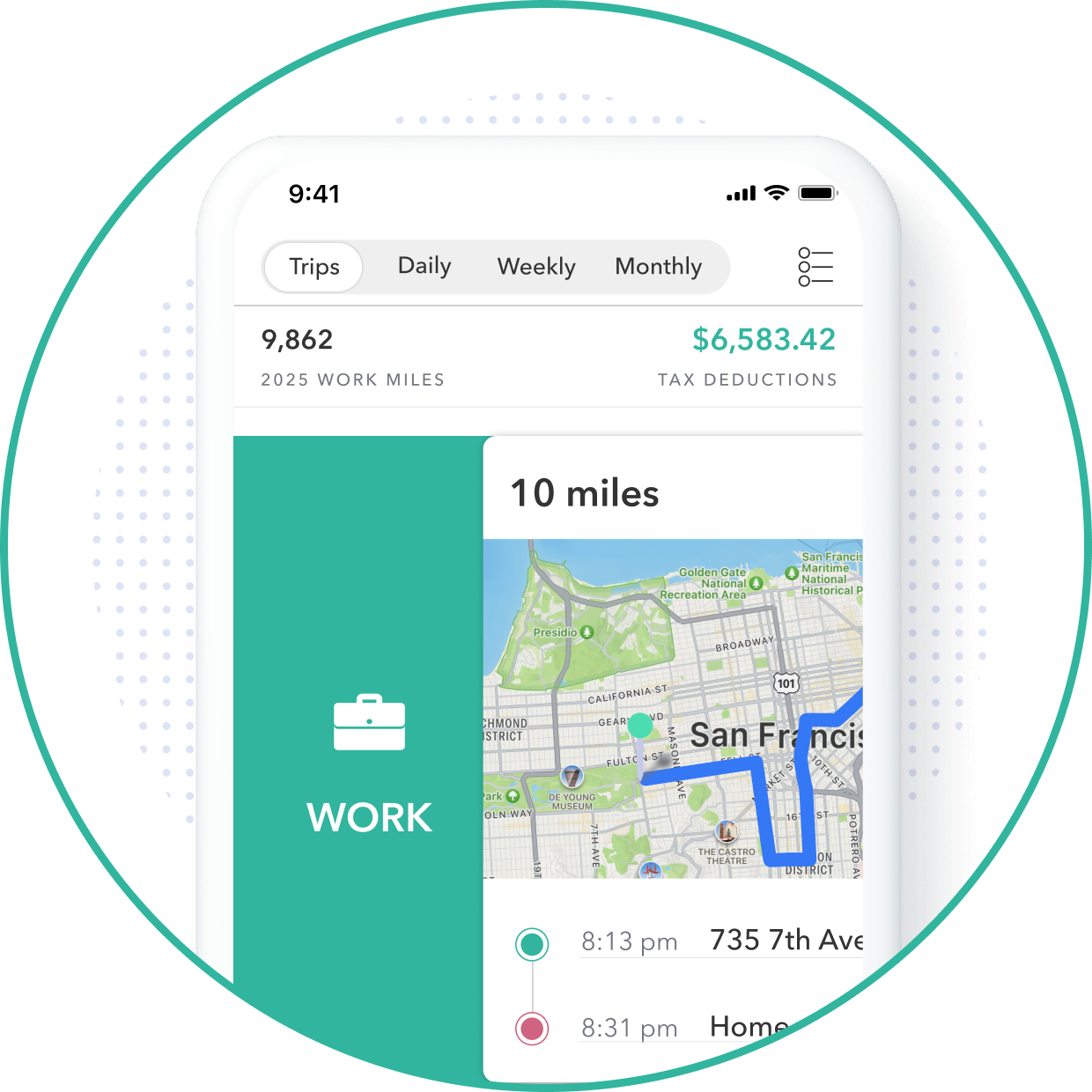
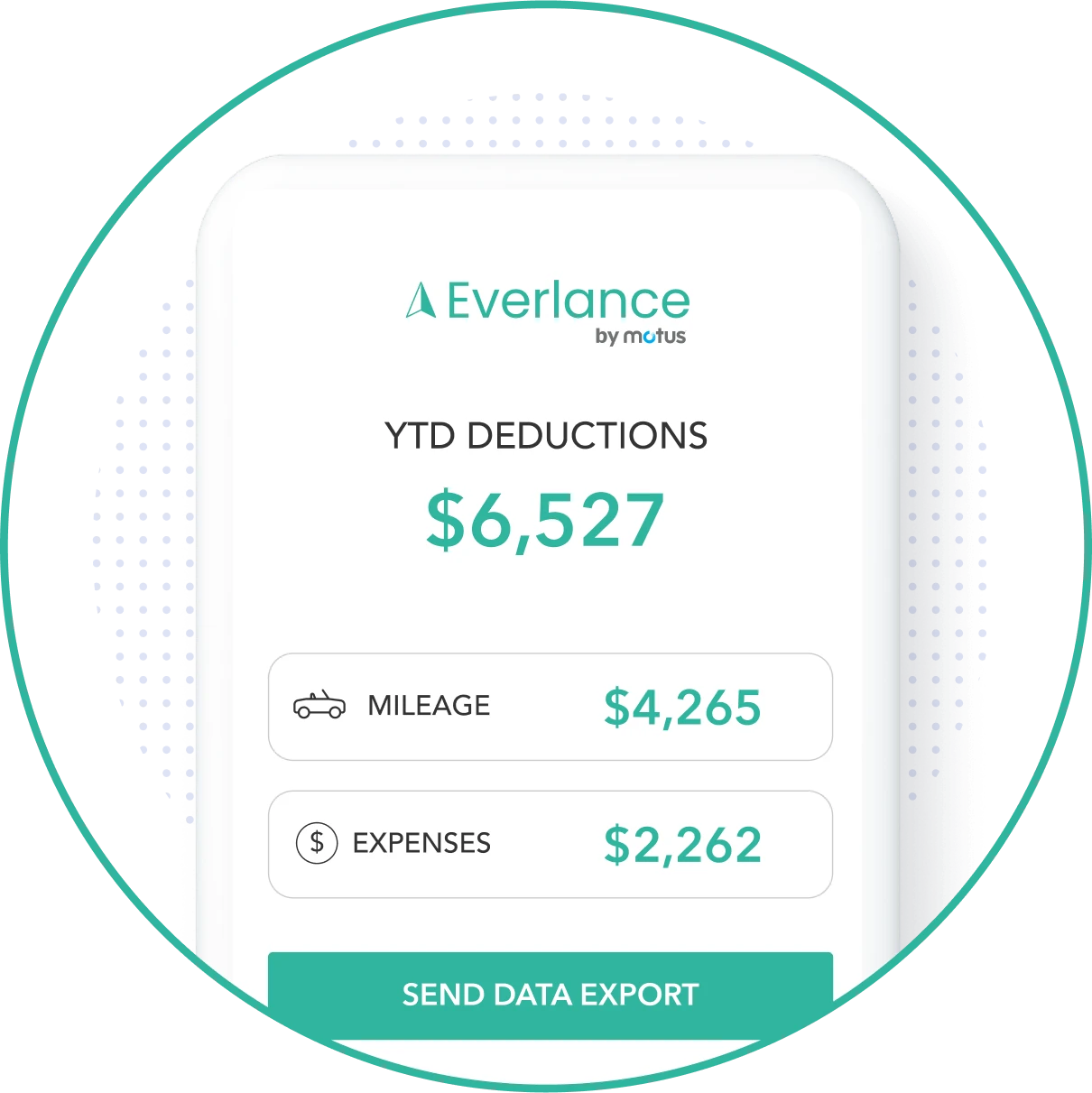
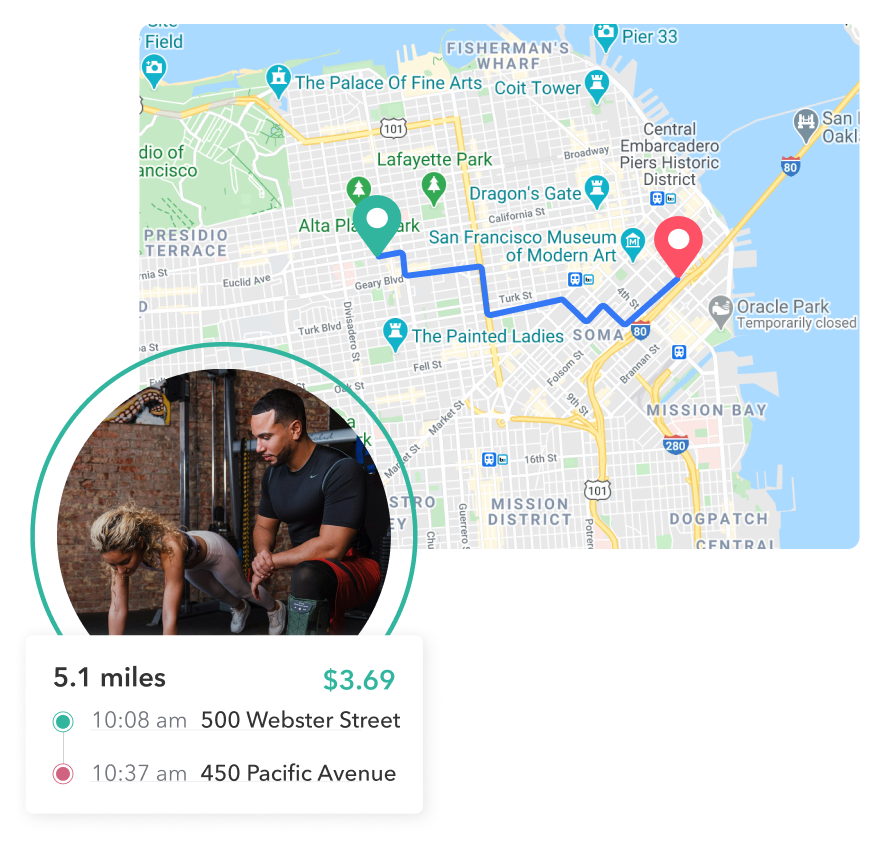
Every Client Drive Logged Automatically. See Exactly What It Adds Up To.
Here is what automatic mileage tracking looks like for a personal trainer on a typical workday. Adjust the sliders to match your driving volume and tax bracket.
Mileage Savings Calculator
Estimated total tax savings
$3,486
Federal + state combined
Why Personal Trainers Lose Thousands in Mileage Deductions Every Year Without Realizing It
Independent personal trainers pay both income tax and self-employment tax on net profit. The mileage deduction reduces net profit before both taxes apply, making it one of the most efficient Schedule C deductions available. Most fitness professionals claim only a fraction of what they drove.

Mobile fitness professionals routinely underestimate how many miles they drive

Self-employment tax makes every deductible mile worth more for fitness professionals

Vehicle deductions for fitness professionals draw IRS attention without strong documentation
Fitness professionals who log every drive keep significantly more of their income
Trainers using automatic GPS tracking capture 30% more deductible miles than those logging manually. The missed trips are always the short, incidental ones: a resistance band pickup, a last-minute gym swap, a quick client drop-off. Automatic tracking captures all of them without any driver action.
Qualifying trip types:

Property showings — each leg is a separate deductible trip
Listing appointments and CMA presentations
Open house setup, signage, and hosting runs
Neighborhood farming and prospecting drives
Client meetings at any location
Home inspections, appraisals, and photo shoots
Continuing education and broker training
Title company, lender, and escrow visits
Common qualifying trip types for personal trainers

How the Mileage Deduction Actually Works on a Personal Trainer's Tax Return?
Independent personal trainers filing as sole proprietors report income and expenses on Schedule C. The mileage deduction reduces net profit dollar for dollar, lowering both federal income tax and self-employment tax on Schedule SE.
The IRS Standard Mileage Rate and How Fitness Professionals Should Use It
Personal trainers have two options for vehicle deductions: the standard mileage rate or the actual expense method. For most fitness professionals, the standard rate delivers a larger deduction with less recordkeeping.
Under the standard method, total qualifying business miles are multiplied by the IRS-published rate. This covers fuel, depreciation, maintenance, and insurance. No receipts needed. The mileage log is the only required document.
Critical rule: the standard rate must be elected in the first year you place a vehicle in business use. Trainers using an LLC or S-corporation should consult a tax professional on applicable vehicle expense rules.
Updated each year by the IRS
Covers gas, insurance, depreciation & maintenance. Applies to all qualifying business miles driven by personal trainers and fitness professionals.
A trainer averaging 115 business miles per week logs over 6,000 deductible miles per quarter. Every undocumented mile is a permanently forfeited Schedule C deduction.
What the IRS Actually Requires from Personal Trainers Claiming a Mileage Deduction
The IRS requires contemporaneous mileage records from all self-employed filers, including personal trainers claiming vehicle expenses on Schedule C. Understanding what that standard means in practice protects your deduction.
Under IRS Publication 463, a valid mileage log must capture five elements per trip: date, starting location, destination, total miles, and business purpose. Aggregated weekly totals or entries labeled only 'client' or 'gym' do not satisfy the requirement.
Many trainers reconstruct mileage at year-end from scheduling apps or calendar entries. The IRS treats these logs as insufficient. A log must be created at or near the time of each drive to meet the contemporaneous standard.
Automatic GPS tracking satisfies the contemporaneous standard for every trip. Each drive is timestamped at departure, the full route recorded in real time, and distance calculated from GPS data. The trainer's only required input is a one-tap classification and a brief purpose note.





IRS Compliance Checklist


Date of the trip
The IRS requires a specific date for every entry. Weekly summaries or estimated date ranges invite disallowance.

Starting & ending location
GPS-calculated mileage eliminates estimation errors that frequently draw examiner attention in Schedule C audits.

Total miles per trip
'In-home training session, [client name], [address]' satisfies the requirement. Entries reading only 'work' or 'session' do not.

Specific business purpose
Vague notes like "work" or "client" are not sufficient. "Buyer showing at 412 Oak St for the Johnson family" — that level of specificity is what holds up.
Key Compliance Facts for Personal Trainers and Fitness Professionals

Schedule C vehicle deductions for fitness professionals face elevated IRS scrutiny
Because mileage reduces net profit before self-employment tax is applied, personal trainers save on both income tax and the 15.3% SE tax with every deductible mile.

Multi-location trainers need unified tracking across all driving
Trainers splitting schedules across gyms, client homes, and outdoor sites drive in complex patterns manual tracking cannot capture. Automatic tracking logs every leg without driver action.

IRS-compliant report format
GPS tracking app generates year-end PDF, Excel, and CSV reports matching Publication 463 requirements. Ready for your CPA or attachable directly to your return.

Audit protection for fitness professionals with significant vehicle deductions
Trainers claiming substantial Schedule C mileage deductions face above-average examination rates. Audit protection plans with professional representation are worth evaluating.
Personal Trainer Mileage Deduction: Answers to the Questions Fitness Professionals Ask Most
Answers to the most common mileage tracking and Schedule C questions from personal trainers and fitness coaches. Consult a CPA for advice specific to your situation.
.svg)
Still have questions?
Explore the full resource library for IRS rate guides, mileage log templates, and Schedule C walkthroughs.

Stop Leaving Your Personal Trainer Mileage Deductions Behind.
Log every client drive automatically and export your IRS-ready report at tax time.


.svg)
