
Mileage Tracker for Real Estate Agents — finally effortless
Every showing, open house, and listing appointment moves your business forward. A mileage tracker helps real estate agents capture every deductible mile automatically, accurately, and with IRS-ready records.
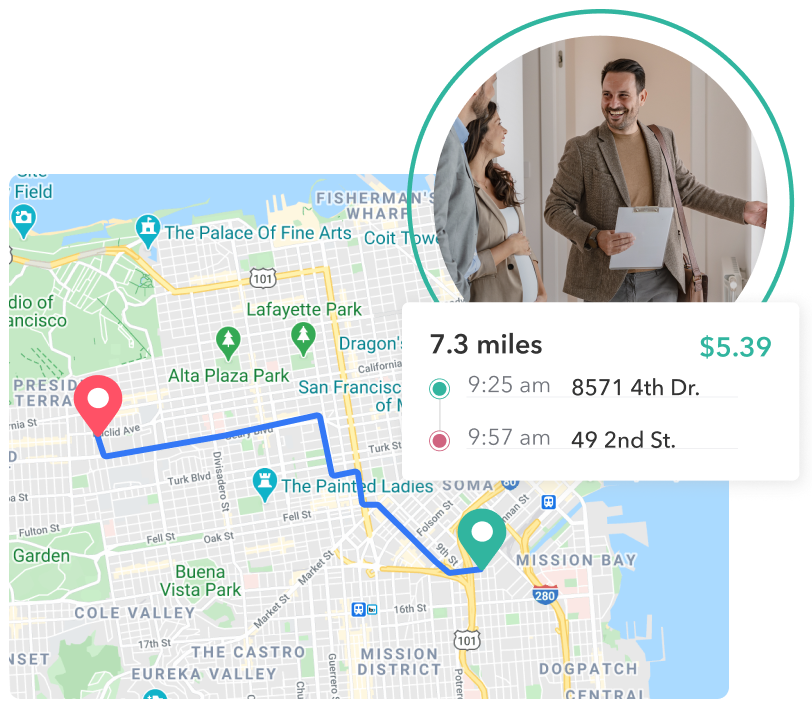
$15K+
4M+
30%
4.8/5
Everything you need to know about mileage tracking for real estate agents
Whether you're a solo agent closing your first 10 deals or a top producer running a full team, getting a reliable mileage tracker for real estate agents in place is one of the highest-leverage tax moves in your business.
What is a mileage tracker for real estate agents — and why does it matter?
Real estate agent mileage tracking is the practice of logging every business-related drive you make as a real estate professional: the distances, dates, destinations, and purposes — all recorded in a format the IRS can verify if they ever ask to see it.
For real estate agents and Realtors, this matters more than in most professions. The nature of the job means you spend a significant portion of your working life behind the wheel — and a well-configured Realtor mileage tracker pays for itself many times over. Client showings, listing appointments, open houses, neighborhood canvassing, broker meetings, and title company visits all rack up miles fast. At the IRS standard mileage rate — which applies to every qualifying business drive — those trips can translate into tens of thousands of dollars in legitimate vehicle expense deductions, money that reduces your taxable income and lowers your tax bill directly.
The reason most agents leave that money on the table isn't lack of eligibility. It's lack of documentation. Without a proper log, even 100% legitimate business trips can be disallowed in an audit. The IRS requires what they call contemporaneous records — meaning trips logged at the time they happen, not reconstructed later from memory or a calendar.
This is where a dedicated mileage log app transforms your workflow. Instead of manually writing down odometer readings or piecing together a real estate agent mileage log from memory each April, your phone does the work in the background — capturing every drive with GPS precision the moment your car starts moving. The best mileage tracker for real estate agents runs silently, requires zero manual input, and hands you an IRS-ready report when it's time to file.
How an automatic mileage tracker works for real estate agents?
An automatic GPS mileage tracker uses the location hardware already built into your smartphone to detect when you start and stop driving — without you needing to press a single button. For agents who are constantly moving between properties, offices, and clients, this is the difference between capturing every deductible mile and losing track of them entirely. Unlike manual methods, a real estate mileage app creates contemporaneous records automatically — exactly what the IRS requires.

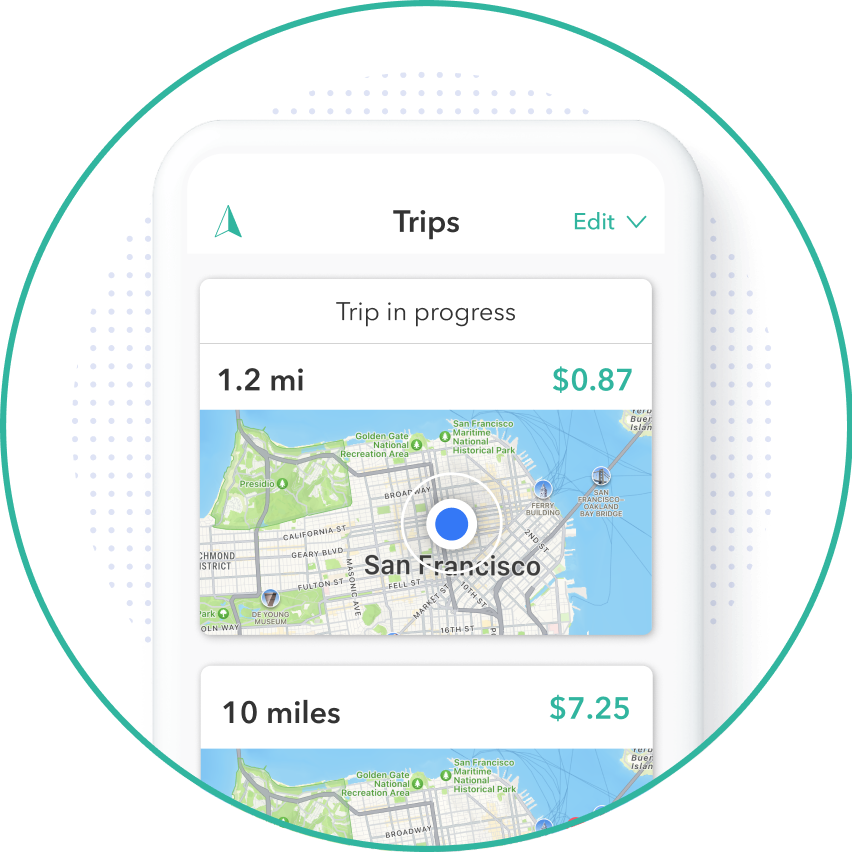
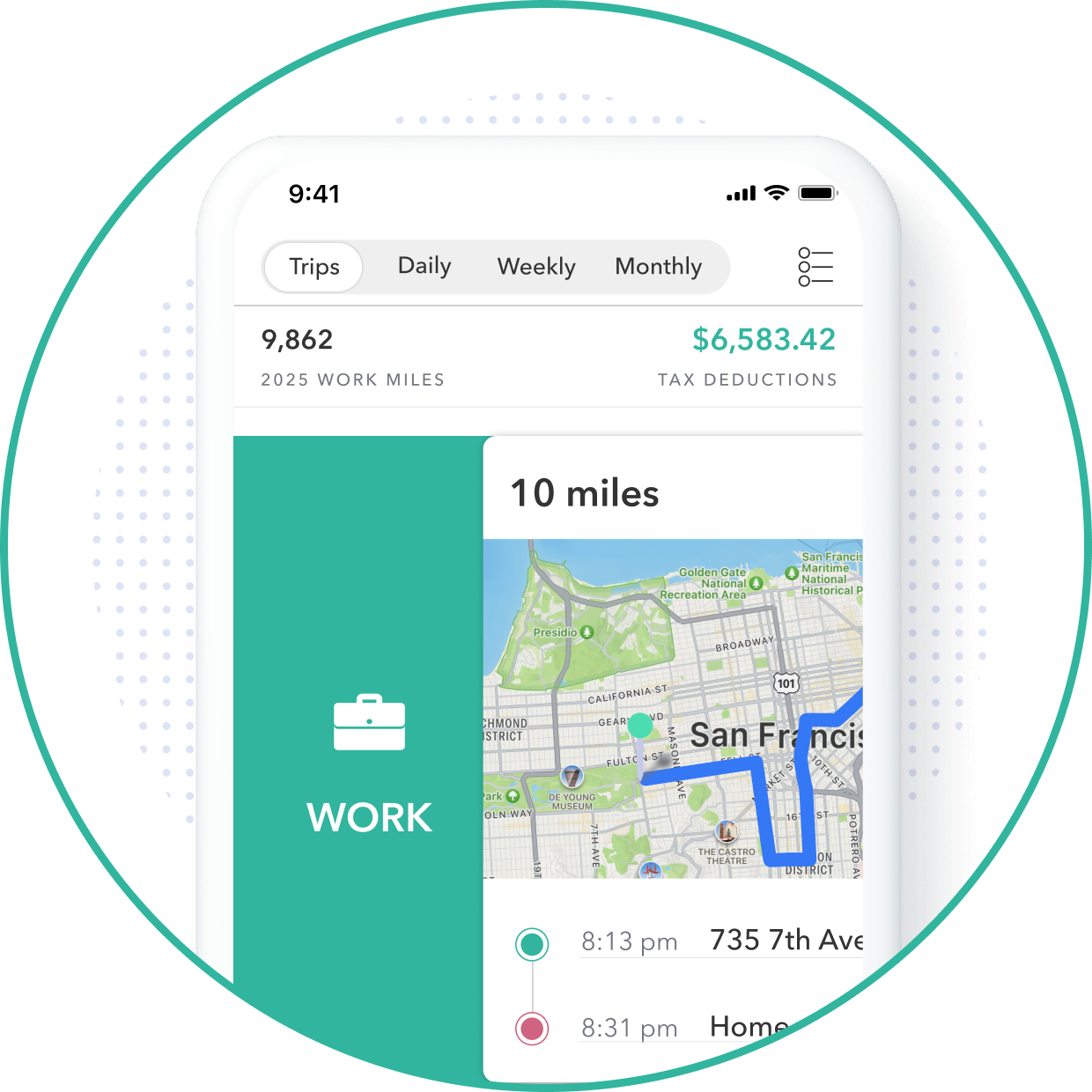
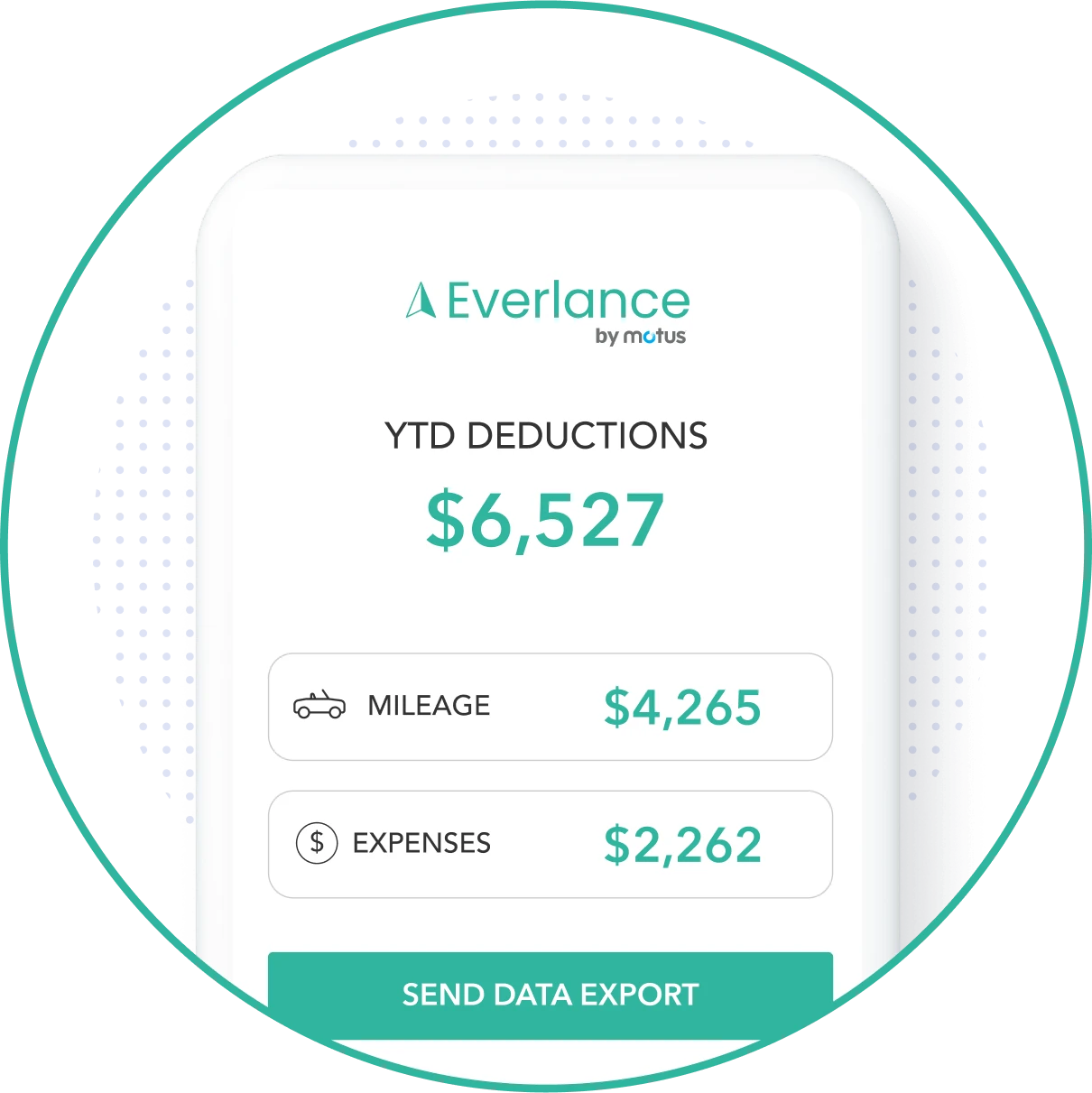
See every mile. Know what it's worth.
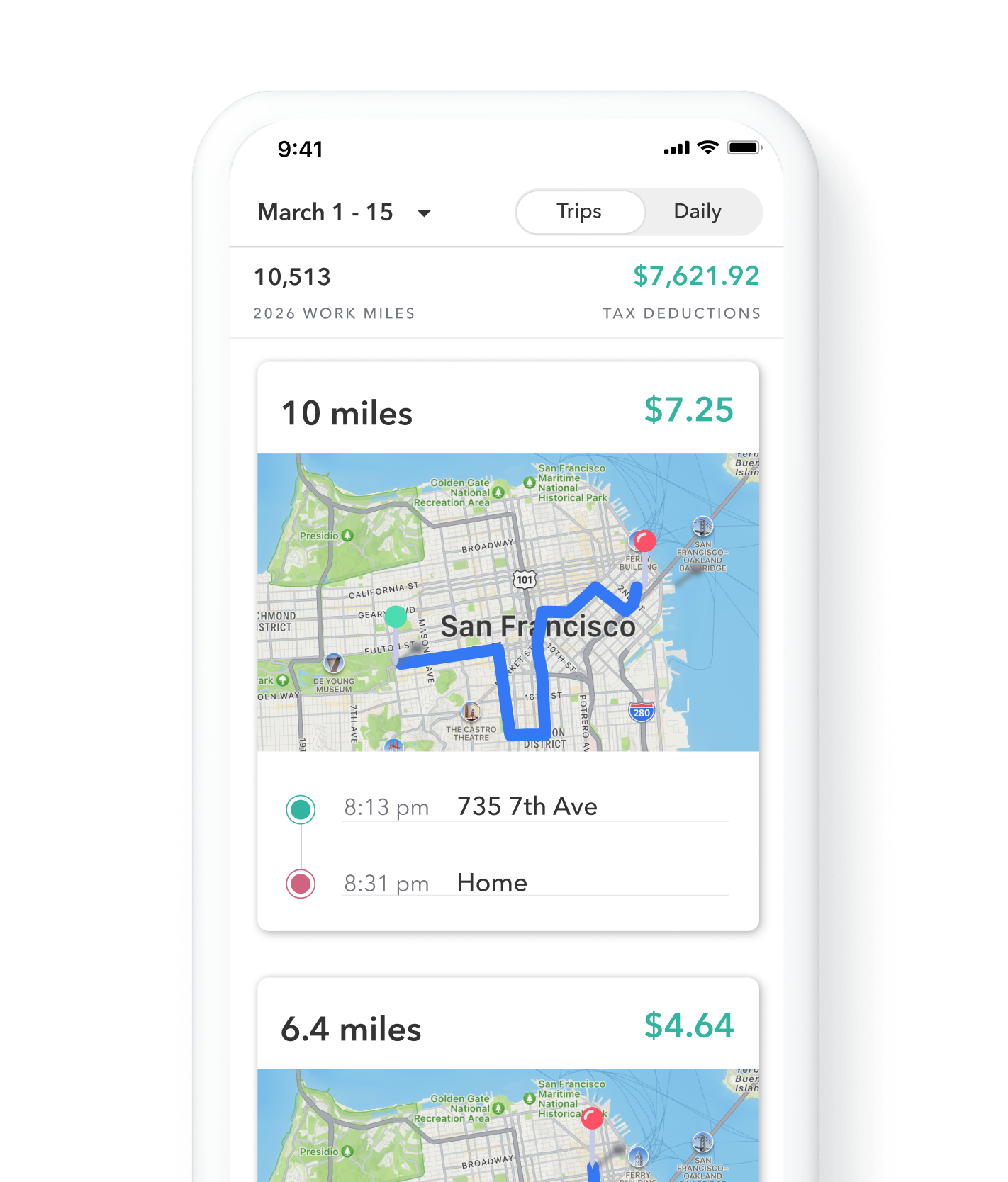
This is what your mileage tracking looks like inside Everlance — and what your annual deduction could look like on your tax return. Adjust the sliders to match your real numbers.
Mileage Savings Calculator
Your 2026 mileage savings estimate
$6,960
Based on IRS standard mileage rate
Mileage tracking matters more for real estate than almost any profession
Most professions have a fixed commute. Real estate agents have a different destination every hour. That constant movement is your biggest untapped tax asset - and the agent mileage deduction is one of the largest line items available to any self-employed professional. The question isn't whether you qualify. It's whether you're capturing it properly.

You drive more than you realize

The IRS rate has never been higher

Audits in real estate are real
Agents who track consistently keep significantly more of what they earn
Studies consistently show that self-employed professionals who use an automatic mileage tracking app recapture 30% more deductible miles than those who track manually — or don't track at all. For a busy agent, that 30% gap can represent thousands of dollars in missed deductions every single year. Manual tracking fails because the job is too fast-moving: you close a showing, immediately take a call, and drive to the next property. By the time you sit down to log trips, half of them are gone from memory. A purpose-built mileage tracking app for real estate agents eliminates that gap entirely. Every drive is captured, timestamped, and GPS-verified — whether you remembered to open the app or not.
Qualifying trip types:

Property showings — each leg is a separate deductible trip
Listing appointments and CMA presentations
Open house setup, signage, and hosting runs
Neighborhood farming and prospecting drives
Client meetings at any location
Home inspections, appraisals, and photo shoots
Continuing education and broker training
Title company, lender, and escrow visits
Qualifying trip types

How mileage tracking feeds directly into your tax return?
For independent contractor agents and self-employed Realtors, real estate agent mileage tracking feeds directly into Schedule C — and every mile you fail to document is taxable income you're paying on unnecessarily. The IRS mileage rate for real estate agents applies to every qualifying business drive, making accurate logs a direct lever on your annual tax bill.
The IRS standard mileage method: your best friend as an agent
Real estate agents have two options when it comes to claiming the mileage deduction: the standard mileage rate or the actual expense method. For the vast majority of agents, the standard mileage rate produces a larger mileage deduction with significantly less record-keeping complexity — which is exactly why it's the default choice for most real estate professionals.
Under the standard mileage method, you deduct the IRS-published rate per business mile driven against your gross income on Schedule C. This single figure covers your gas, insurance, depreciation, and maintenance proportionally. It's clean, straightforward, and often more generous than tallying actual costs.
The critical rule: you must elect the standard mileage rate in the first year you use a vehicle for business. If you start with actual expenses, you generally cannot switch back. This makes getting your tracking system right in year one especially important. An automatic mileage tracker ensures you're always capturing the data you need, whichever method you and your CPA decide is best for your situation.
For agents operating as LLCs, S-corps, or who receive mileage reimbursements from a brokerage, the rules vary — but the need for accurate, contemporaneous mileage records remains the same in every structure.
Updated each year by the IRS
Covers gas, insurance, depreciation & maintenance. Applies to all qualifying business drives.
Every trip type above is fully deductible. Multiply even a moderately active week of agent driving across a full production year and you see why vehicle mileage is consistently one of the largest deductions available to self-employed real estate professionals. Every untracked mile is a deduction you're leaving behind.
Mileage reimbursement and staying IRS-compliant
Whether you're claiming a self-employed deduction or being reimbursed by a brokerage, the requirement is the same: accurate, contemporaneous mileage records. Here's what compliance actually looks like in practice.
Most real estate agents operate as independent contractors — which means Realtor mileage reimbursement typically isn't on the table from a broker. Instead, you claim the deduction yourself on Schedule C. But as team structures grow and more agents work under hybrid arrangements, brokerage reimbursement programs are increasingly common. In either case, accurate real estate agent mileage tracking is the foundation that makes the whole system work — whether you're filing solo or submitting logs to a team administrator.
For agents receiving a mileage reimbursement through an accountable plan — where your broker reimburses you at or below the IRS standard rate in exchange for documented logs — that reimbursement is generally not included in your taxable income. The key word is "documented." Without a proper log, even legitimate reimbursements can become taxable compensation in an IRS review.
IRS compliance for mileage comes down to six specific requirements the agency looks for when examining vehicle deduction claims. Agents who rely on reconstructed logs — pieced together from calendar entries and credit card statements after the fact — routinely fail these checks even when every underlying trip was a legitimate business drive. Automatic tracking satisfies all six from the moment the car starts moving.





The IRS standard mileage method: your best friend as an agent


Date of the trip
The IRS cross-references claimed trips against MLS activity, showing schedules, and buyer communications. Every entry needs a precise date.

Starting & ending location
GPS-verified coordinates carry the most weight in an audit — objective, timestamped, and extremely difficult to dispute.

Total miles per trip
Captured automatically by GPS — no manual odometer readings, no estimation, no rounding errors that draw examiner attention.

Specific business purpose
Vague notes like "work" or "client" are not sufficient. "Buyer showing at 412 Oak St for the Johnson family" — that level of specificity is what holds up.
What "accountable plan" reimbursement requires from agents

Substantiated records submitted within a reasonable time
The IRS considers 60 days from the date of the expense a safe harbor. Mileage logs submitted monthly or quarterly satisfy this requirement cleanly.

Reimbursed at or below the IRS standard rate
Amounts reimbursed above the IRS rate become taxable wages. Amounts at or below are excluded from income — but only with supporting documentation.

Excess amounts returned to the employer
If your brokerage provides advances or pays flat allowances, any amount above actual documented mileage must be returned. Accurate tracking makes this calculation straightforward.

IRS-compliant report format
Everlance generates downloadable mileage reports in PDF, CSV, and Excel — pre-formatted with every field the IRS requires. One tap, submission-ready.

Audit protection for high-deduction filers
Agents claiming significant vehicle deductions benefit from Everlance Professional's $1 million audit protection — expert representation and coverage if the IRS ever reviews your return.
Mileage tracking FAQs for real estate agents
Practical answers to the questions agents ask most. For advice specific to your tax situation, always consult a qualified CPA or tax professional.
.svg)
Still have questions?

Stop leaving thousands on the table every year.
Automatically track every real estate business mile with IRS-ready reports and maximize every tax deduction.


.svg)
