
Mileage Trackerfor Rideshare Drivers every mile on the clock, captured.
Every Uber trip, every Lyft ride, every mile repositioning to a surge zone is a business mile. A mileage tracker built for rideshare drivers captures it all automatically, so the full value of your driving shows up at tax time, not just what the platform reports.
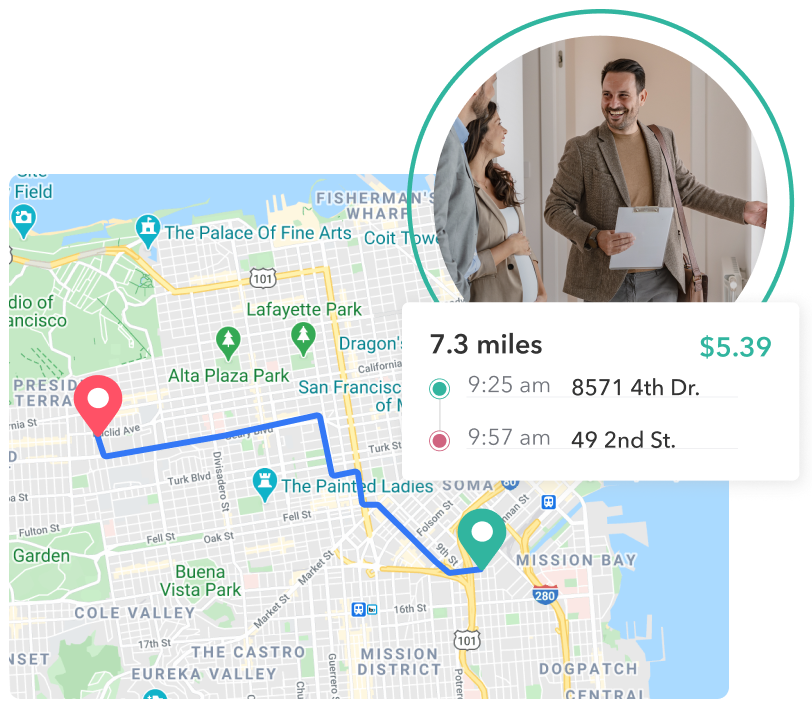
$3,000+
$12,000+
30%
4.8/5
The rideshare driver's complete guide to mileage tracking
Whether you drive for Uber or Lyft part-time or run the app full-time, automatic mileage tracking is the highest-return tax move available to any rideshare driver. The platforms only report a fraction of your deductible driving. The rest is yours to claim, but only if you log it.
What is a mileage tracker for rideshare drivers and why does it matter?
Rideshare mileage tracking means recording every business mile driven for Uber, Lyft, or Uber Eats: the date, start point, destination, total miles, and purpose, in a format that satisfies IRS documentation requirements.
For Uber and Lyft drivers classified as independent contractors, vehicle mileage is almost always the single largest tax deduction available. At the IRS standard mileage rate, every qualifying mile reduces taxable income directly, lowering both federal income tax and self-employment tax owed.
Most drivers fail to capture their full deduction not because they are ineligible, but because they lack documentation. The IRS requires contemporaneous records: a log created at or near the time each trip occurs. Reconstructing mileage from a platform earnings summary after the fact does not meet this standard and can get deductions disallowed in an audit.
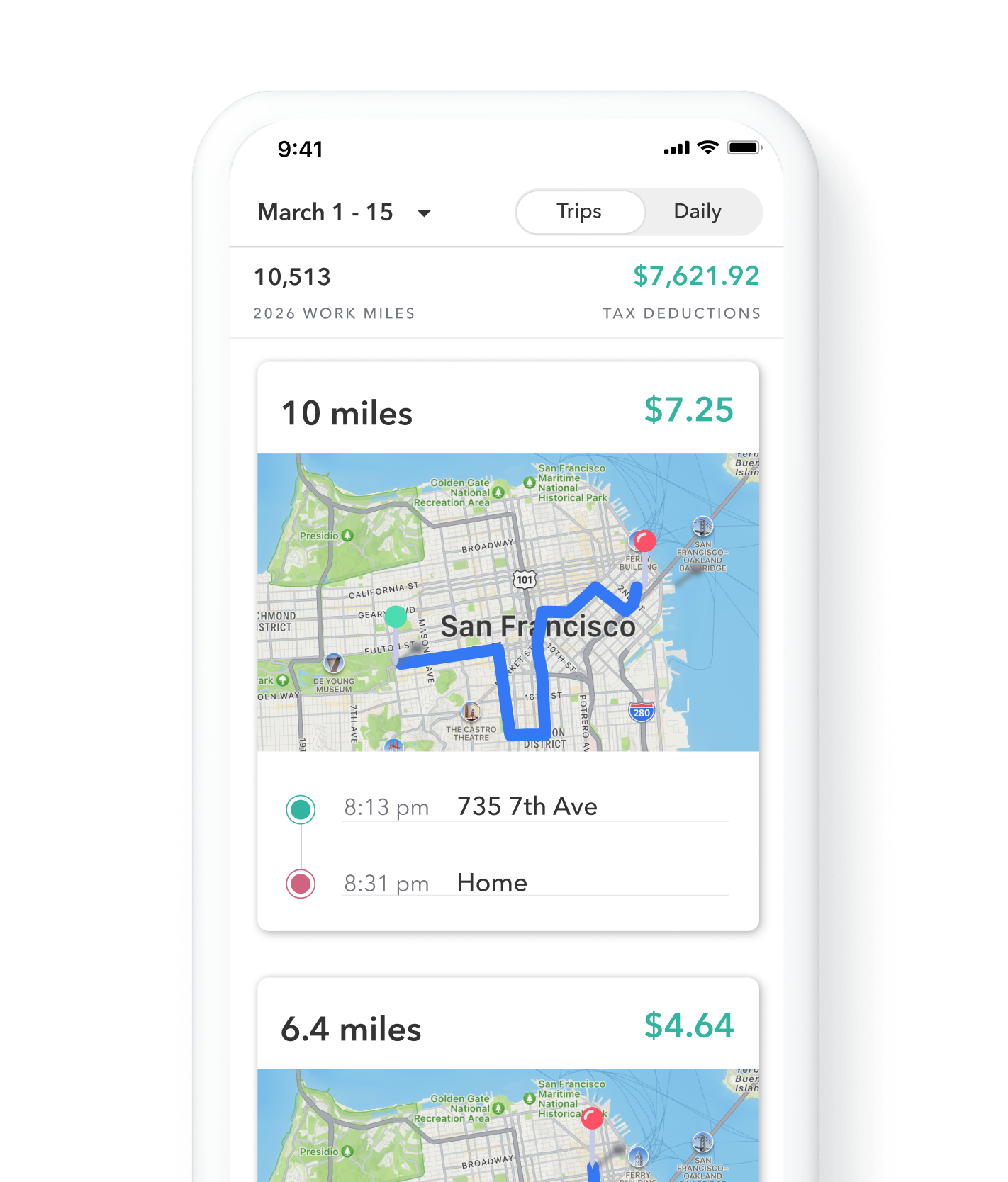
A dedicated mileage app solves this automatically. Using your phone's GPS, it logs every mile from the moment you go online to the moment you arrive home, timestamped and ready to support your Schedule C.
How an automatic mileage tracker works for rideshare drivers?
An automatic GPS tracker uses your phone's location hardware to log trips without any manual input. For Uber and Lyft drivers switching between passenger trips, deadhead miles, and surge repositioning, it's the only method that captures the complete picture.

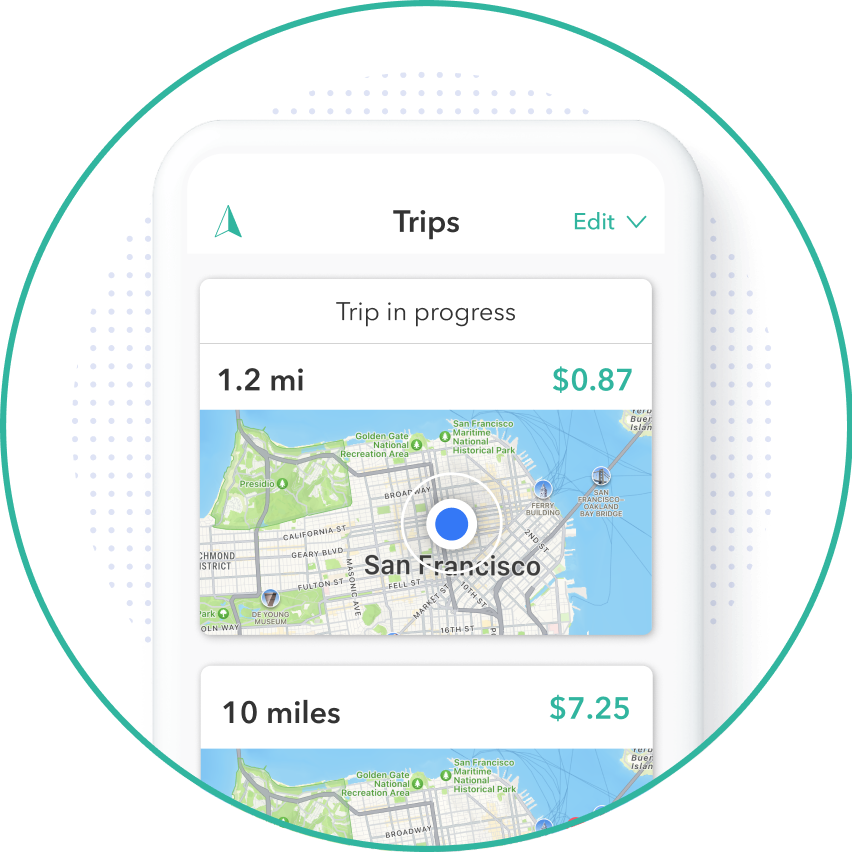
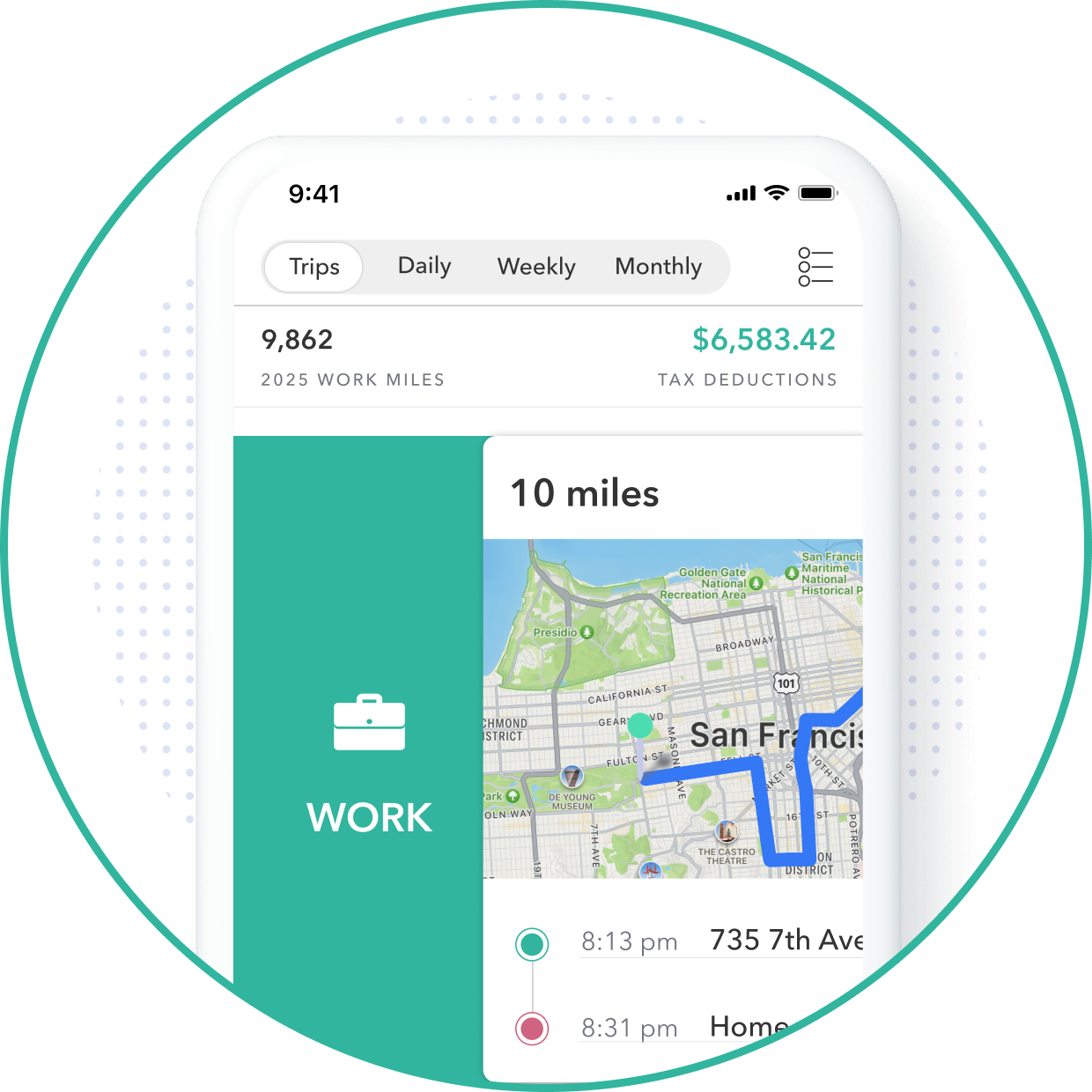

See every mile on the road. Know exactly what it saves you.
Here's what automatic rideshare mileage tracking looks like in the app, and what your annual deduction could look like on your return. Adjust the sliders to match your driving volume and tax situation.
Mileage Savings Calculator
Estimated total tax savings
$5,510
Federal + state combined
Mileage tracking is the most valuable tax tool available to rideshare drivers
Uber and Lyft report your earnings to the IRS on a 1099-K or 1099-NEC. They do not report your mileage. Every mile you fail to document is a deduction you lose permanently. For a full-time rideshare driver, that gap can mean thousands of dollars per year.

Uber and Lyft report earnings, not mileage

The IRS mileage rate rewards high-volume drivers

Self-employment tax makes every mile worth even more
Drivers who track every mile consistently keep more of what they earn
Automatic mileage tracking apps capture 30% more deductible miles than manual methods. For a driver completing 20,000 business miles per year, that gap represents thousands in missed deductions. The pace of rideshare driving makes manual logging unrealistic: you finish an Uber trip, accept the next Lyft, navigate, drop off, repeat. Automatic GPS tracking captures every segment in real time without any driver action.
Qualifying trip types:

Property showings — each leg is a separate deductible trip
Listing appointments and CMA presentations
Open house setup, signage, and hosting runs
Neighborhood farming and prospecting drives
Client meetings at any location
Home inspections, appraisals, and photo shoots
Continuing education and broker training
Title company, lender, and escrow visits
Qualifying trip types for rideshare drivers:

How rideshare mileage tracking feeds directly into your tax return
Rideshare drivers file Schedule C to report income and deductible expenses. Vehicle mileage is almost always the largest single line item. Every documented qualifying mile reduces net profit, directly lowering both federal income tax and self-employment tax. No other expense category offers this level of deduction impact.
The IRS standard mileage rate: the right choice for most rideshare drivers
Most Uber and Lyft drivers choose the standard mileage rate over the actual expense method. It produces a larger, simpler deduction and requires only a mileage log, not receipts for every vehicle cost.
Under the standard mileage method, you multiply total business miles by the IRS-published rate. This single figure covers gas, oil changes, tire wear, insurance, and depreciation. No fuel receipts, no service records needed.
Critical IRS rule: you must elect the standard mileage rate in the first tax year you place a vehicle in business use. Starting with actual expenses locks you into that method for that vehicle. Starting automatic tracking from your first Uber or Lyft shift protects this choice.
Drivers operating through an LLC or owning multiple rideshare vehicles should consult a tax professional. In all cases, contemporaneous GPS mileage records are required.
Updated each year by the IRS
Covers gas, insurance, depreciation & maintenance. Applies to all qualifying business drives.
A full-time Uber or Lyft driver completing 400 business miles per week accumulates roughly 20,000 deductible miles per year. At the current IRS rate, that produces one of the largest vehicle deductions available to any self-employed individual. Every undocumented mile is a deduction permanently lost.
IRS mileage documentation requirements for rideshare drivers
Rideshare drivers are among the most frequently audited self-employed filers, in part because Schedule C vehicle deduction claims are large. Knowing what IRS-compliant mileage documentation requires is not optional for drivers who want to protect their deductions.
The IRS does not accept a platform earnings summary, an annual mileage estimate, or a reconstructed log as proof of vehicle deductions. Under IRS Publication 463, contemporaneous records are required: each trip must be logged at or near the time it occurs, not assembled after the fact.
Uber and Lyft ride history exports still fall short. They capture only accepted-trip mileage, omitting all pre-shift, deadhead, repositioning, and post-shift driving. They also lack the stated business purpose field the IRS requires. In an examination, a log missing these trip categories can result in partial or full disallowance, even when the underlying driving was legitimate.
Automatic GPS tracking is the only method that satisfies all IRS contemporaneous record requirements without driver intervention. It timestamps each trip, records GPS coordinates at start and end, calculates precise distance, and stores everything in a Publication 463-compliant format.





IRS Compliance Checklist


Date of the trip
The IRS cross-references claimed mileage against 1099 earnings and platform activity records. A precise date is required for every entry.

Starting & ending location
GPS-verified coordinates provide the strongest audit defense. Objective, timestamped location data is extremely difficult to dispute.

Total miles per trip
Automatic GPS calculation eliminates manual odometer error and rounding inconsistencies that can trigger examiner scrutiny.

Specific business purpose
'Uber passenger trip, city center' or 'Lyft deadhead to airport zone' is what the IRS requires. Generic labels like 'work' do not qualify.
Key compliance facts for rideshare drivers

Platform ride history is not a mileage log
Your Uber or Lyft trip history records only accepted-trip miles. Pre-trip positioning, deadhead driving, and return trips home are not captured, often 30-40% of total deductible mileage.

The self-employment tax multiplier effect
Because the mileage deduction reduces net earnings before self-employment tax is applied, each deductible mile saves a rideshare driver more than an equivalent deduction saves a W-2 employee.

Multi-app drivers need unified mileage records
Drivers working Uber, Lyft, and Uber Eats in the same session need one unified log capturing all driving. Custom categories allow per-platform mileage breakdowns for tax preparers who need that detail.

IRS-compliant report format
A compliant mileage app generates reports in PDF, Excel, and CSV matching IRS Publication 463 field requirements. Accepted by tax professionals and submittable during an IRS examination.

Audit protection for high-mileage filers
Full-time Uber and Lyft drivers claiming substantial vehicle deductions face elevated IRS examination rates. Audit protection plans offering professional representation are worth considering for any driver with a significant annual mileage deduction.
Mileage tracking FAQs for rideshare drivers
Answers to the questions Uber and Lyft drivers ask most about mileage tracking, tax deductions, and IRS compliance. For advice specific to your situation, consult a qualified CPA or tax professional.
.svg)
Still have questions?
Explore the full resource library: IRS rate guides, mileage log templates, Schedule C walkthroughs, and rideshare-specific tax guides all in one place.

Stop losing money on untracked Uber Lyft miles.
Automatic GPS tracking captures every Uber and Lyft mile. IRS-ready report at tax time.


.svg)
