
Mileage Tracker for Self-Employed and Freelancers every business mile logged, every deduction claimed.
Every client visit, every site inspection, every supply run is a deductible business mile. A mileage tracker for freelancers and self-employed professionals captures every mile automatically via GPS, so your Schedule C deduction reflects everything you actually drove.

$2,500+
$10,000+
30%
4.8/5
The self-employed and freelancer's complete guide to mileage tracking
Whether you're a freelance designer driving to client presentations, an independent consultant visiting project sites, or a sole proprietor running a service business, mileage tracking is one of the highest-value tax deductions available to self-employed people. Most miss their full deduction because they rely on memory or don't track at all.
What is a mileage tracker for self-employed individuals and why does it matter?
Mileage tracking for freelancers and self-employed professionals means recording every business mile driven: the date, starting location, destination, total miles, and business purpose, in a format that satisfies IRS Publication 463 requirements.
For sole proprietors and 1099 contractors filing Schedule C, vehicle mileage is frequently the largest single deductible expense. At the IRS standard mileage rate, a self-employed consultant or freelancer driving 15,000 business miles per year generates a deduction that meaningfully reduces both taxable net profit and self-employment tax.
Most freelancers fail to capture their full deduction because they lack documentation. Without a contemporaneous mileage log, the IRS can disallow vehicle deductions in an audit. An automatic GPS mileage tracker closes this gap, creating a verified record of every qualifying drive without any manual input.
How an automatic mileage tracker works for self-employed and freelance professionals?
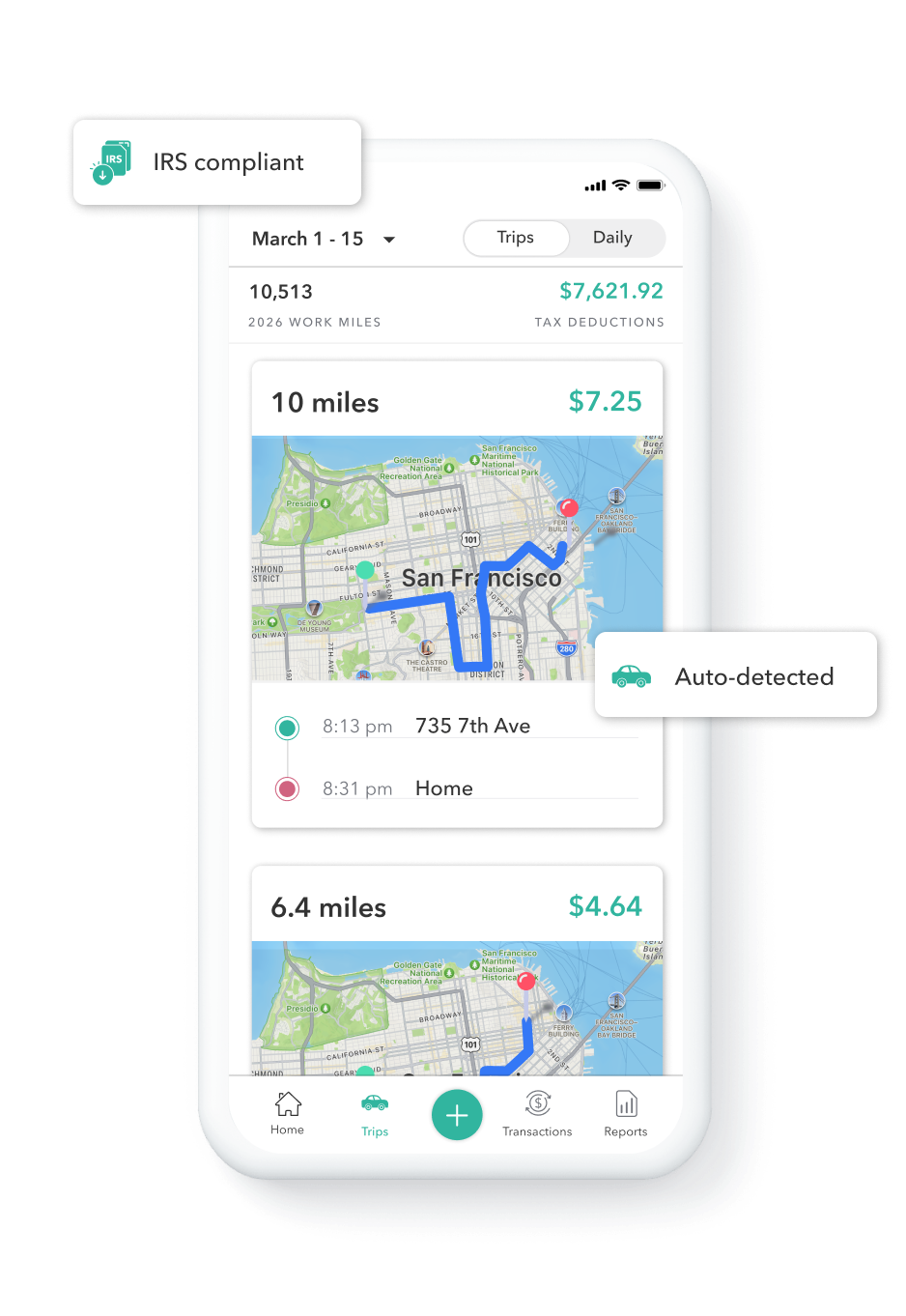
An automatic GPS mileage app uses your smartphone's location and motion sensors to detect every drive and log your route in real time. For freelancers and consultants with irregular, varied business driving, automatic detection is the difference between capturing every deductible mile and missing the ones that are hardest to remember.

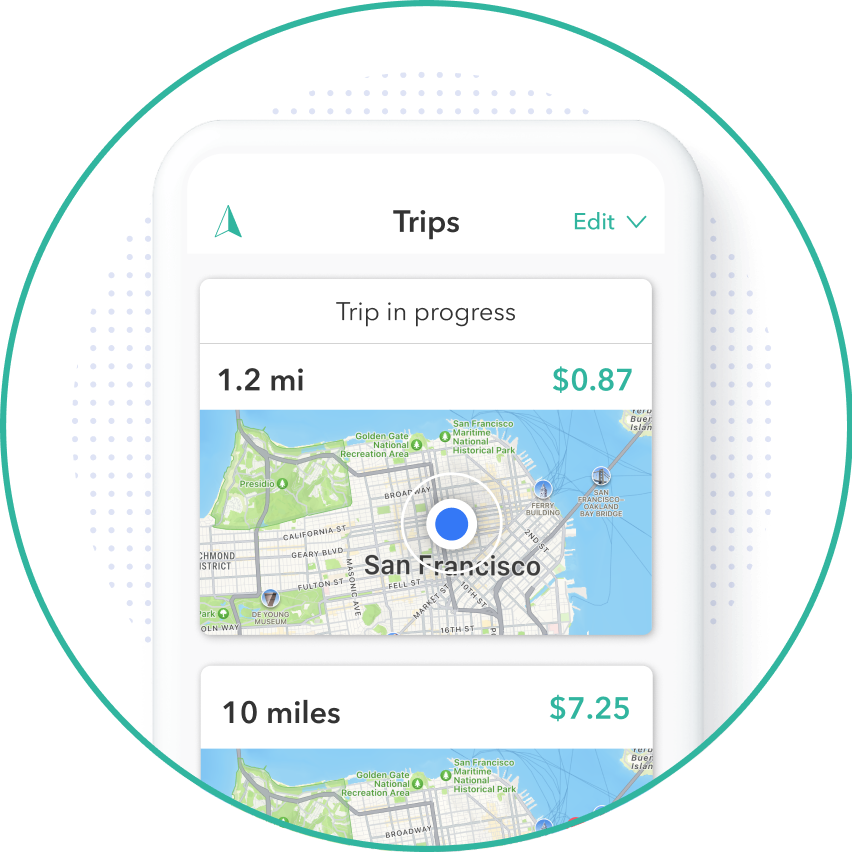
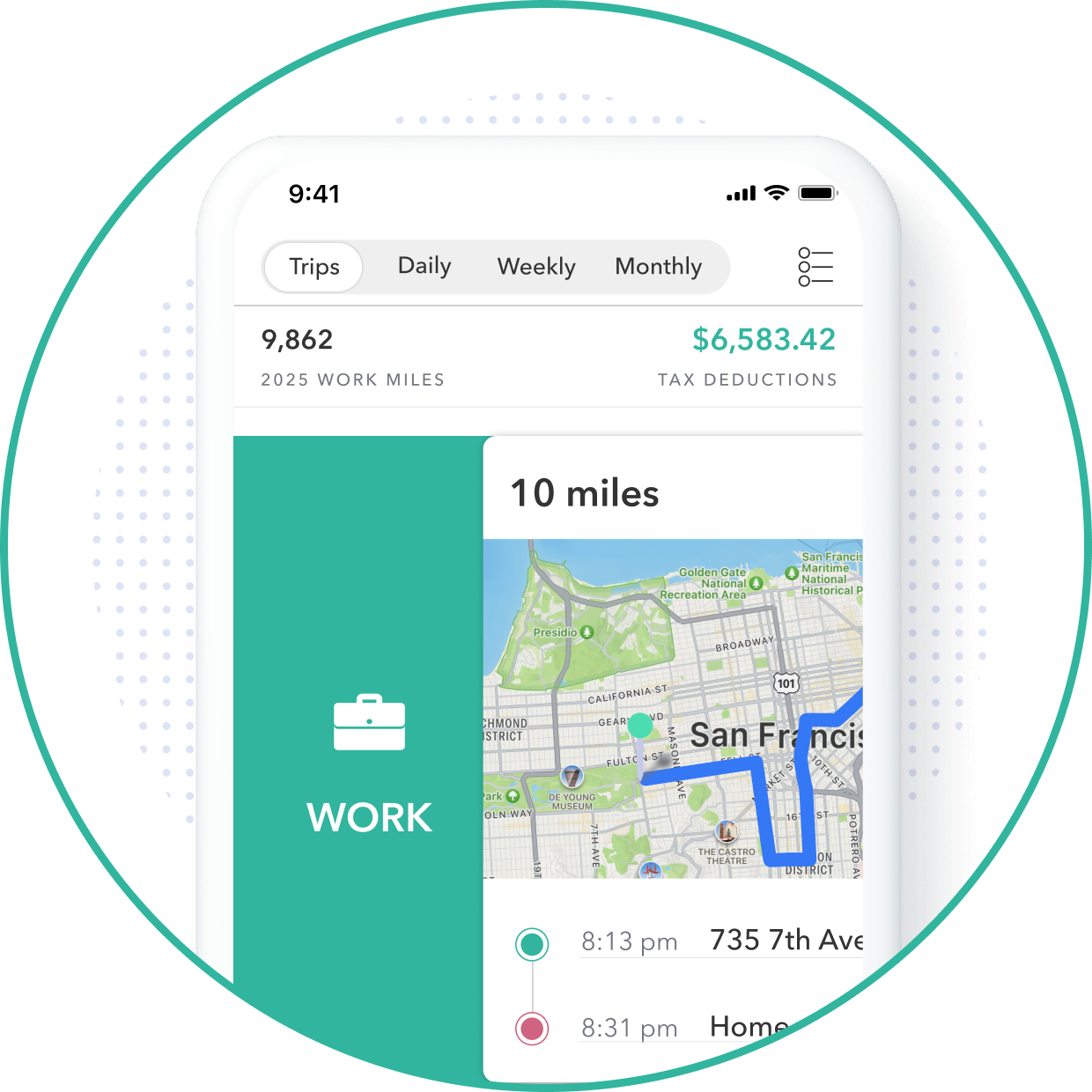
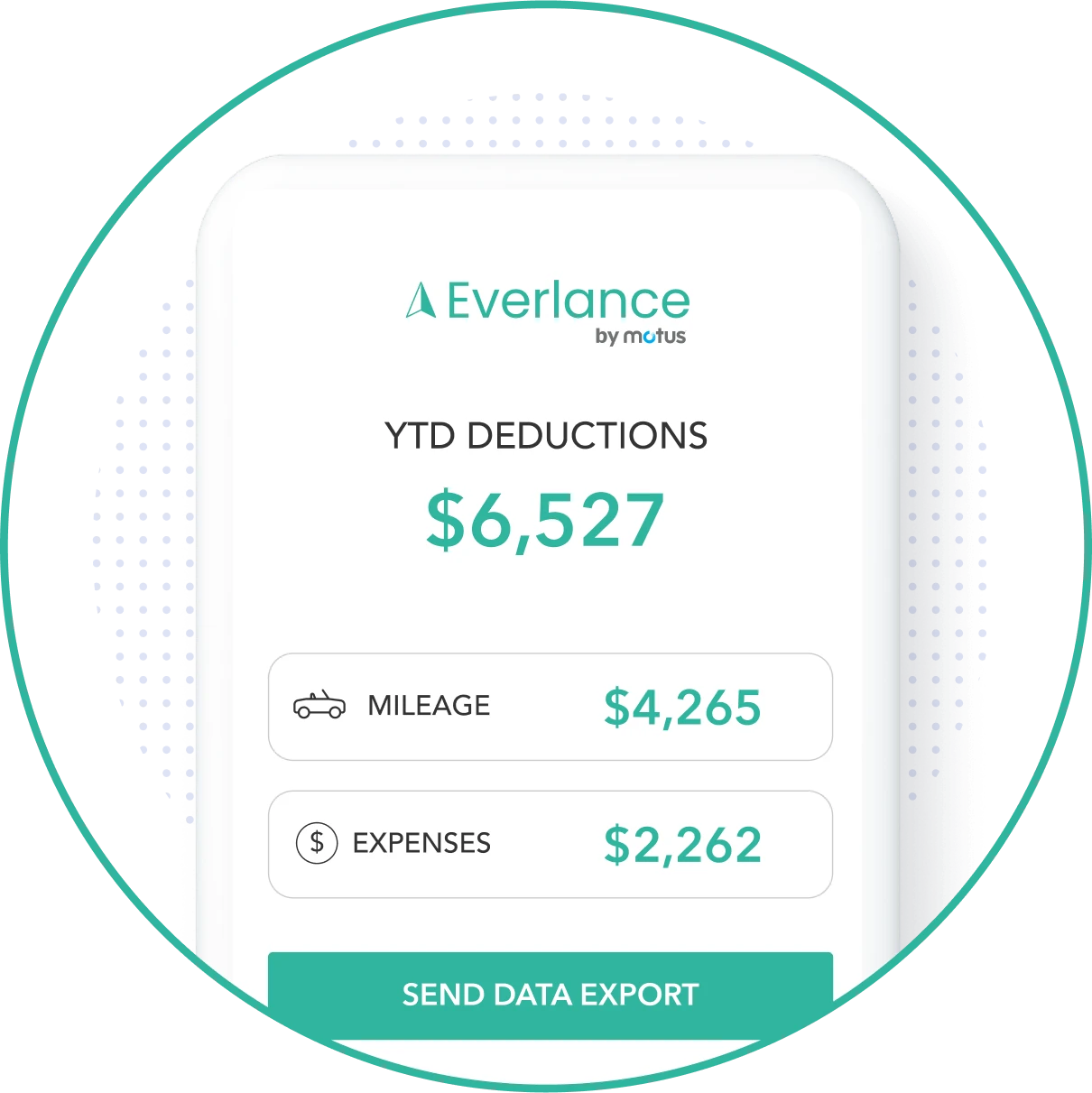
See your business miles tracked in real time. See what they save you at tax time.
Here's what automatic mileage tracking looks like for a self-employed professional, and what your annual deduction could look like on Schedule C. Adjust the sliders to match your actual business driving and tax bracket.
Mileage Savings Calculator
Estimated total tax savings
$4,058
Federal + state combined
Mileage tracking is one of the highest-value tax deductions available to self-employed people
Freelancers and self-employed individuals pay both income tax and self-employment tax on net profits. Every deductible mile reduces net profit before both taxes are calculated. Vehicle mileage often produces the largest single deduction on a sole proprietor's Schedule C, yet most freelancers claim only a fraction of what they're entitled to.

Most self-employed people significantly underestimate their business mileage

Self-employment tax amplifies the value of every deductible mile

IRS Schedule C vehicle deductions are a known audit trigger
Self-employed professionals who track consistently protect their deductions and lower their tax bill
The mileage deduction is a straightforward, IRS-sanctioned deduction every self-employed person who drives for business is entitled to take. The only requirement is documentation. An automatic mileage tracker removes that burden entirely: every qualifying drive logged in real time, classified with one tap, stored as a GPS-verified record satisfying IRS Publication 463 requirements.
Qualifying trip types:

Property showings — each leg is a separate deductible trip
Listing appointments and CMA presentations
Open house setup, signage, and hosting runs
Neighborhood farming and prospecting drives
Client meetings at any location
Home inspections, appraisals, and photo shoots
Continuing education and broker training
Title company, lender, and escrow visits
Common qualifying trip types for freelancers and self-employed individuals:

How mileage tracking for self-employed individuals works on your tax return
Sole proprietors and freelancers report income and expenses on Schedule C. The vehicle mileage deduction appears as a business expense, reducing net profit dollar for dollar. That reduced net profit lowers both federal income tax and self-employment tax on Schedule SE, making mileage one of the most efficient deductions in the entire tax code for 1099 workers.
The IRS standard mileage rate and how it applies to self-employed filers
Self-employed individuals and freelancers have two options for deducting vehicle use: the IRS standard mileage rate or the actual expense method. For the majority of self-employed filers, the standard rate is simpler, requires less record-keeping, and produces a larger deduction than tallying actual costs.
Under the standard mileage method, you multiply total qualifying business miles by the IRS-published rate. This figure covers fuel, depreciation, maintenance, repairs, and insurance proportionally. No fuel receipts, repair invoices, or insurance statements needed. The mileage log is the only required documentation.
Critical IRS rule: you must elect the standard mileage rate in the first year you place a vehicle in business use. Start with actual expenses and you're generally locked in for that vehicle. Freelancers and sole proprietors should start automatic tracking from their very first business drive.
Self-employed professionals operating through an LLC, S-corp, or partnership, or using more than one vehicle for business, should review the applicable rules with a tax professional. Contemporaneous GPS mileage records are required in all cases.
Updated each year by the IRS
Covers gas, insurance, depreciation & maintenance. Applies to all qualifying business drives.
A self-employed professional averaging 120 business miles per week accumulates over 6,000 deductible miles per quarter. Every undocumented mile is a permanently forfeited deduction on Schedule C.
IRS mileage documentation requirements for self-employed individuals and freelancers
The IRS is explicit: contemporaneous records are required for vehicle expense deductions by self-employed filers. This applies equally to sole proprietors, single-member LLCs, independent contractors, and 1099 consultants. Understanding what that means in practice is essential for any freelancer who wants to protect their Schedule C vehicle deduction.
Under IRS Publication 463, a compliant mileage log must record five elements for every trip: date, starting location, destination, total miles, and business purpose. All five must be present for each individual trip entry. Aggregated daily totals or entries without a stated business purpose do not satisfy the requirement.
Many freelancers and sole proprietors attempt to reconstruct their mileage at year-end from Google Maps history, calendar entries, or client invoices. The IRS treats reconstructed logs with skepticism and they frequently undercount actual mileage. A log not created contemporaneously does not satisfy the IRS standard regardless of how thoroughly it's assembled after the fact.
Automatic GPS tracking is the only method that creates a genuinely contemporaneous record for every trip without driver action. Each trip is timestamped at the moment it begins, the route recorded in real time, distance calculated automatically, and the record stored permanently. The only driver input needed is a one-tap classification and a brief business purpose note.





IRS Compliance Checklist


Date of the trip
The IRS requires a specific date for every mileage log entry. Aggregated weekly or monthly totals invite disallowance.

Starting & ending location
GPS-verified start and end coordinates provide objective, timestamped evidence independent of the driver's own records and extremely difficult to dispute.

Total miles per trip
GPS-calculated mileage eliminates estimation error and the inconsistencies between estimated and actual distance that frequently draw examiner attention in manual logs.

Specific business purpose
'Client consultation, [client name] office' or 'materials pickup for renovation project' satisfies the IRS requirement. Entries labeled 'work' or 'business' do not.
Key compliance and documentation facts for self-employed filers

Schedule C vehicle deductions are closely examined by the IRS
Vehicle expense claims on Schedule C are one of the highest-scrutiny items in audits of freelancers and sole proprietors. A GPS-verified mileage log created in real time is the strongest possible defense against disallowance.

The double tax benefit of mileage deductions for self-employed filers
Unlike W-2 employees, self-employed individuals save on both federal income tax and self-employment tax with every deductible mile. The effective savings per mile is substantially higher for a 1099 filer than for an equivalent salaried employee.

IRS-compliant mileage report format
A mileage tracking app generates year-end reports in PDF, Excel, and CSV matching IRS Publication 463 field requirements. Ready for your CPA, attachable to your return, or submittable directly in response to an IRS information request.
.svg)
Multi-client and multi-project driving needs unified tracking
Consultants and freelancers serving multiple clients drive in fragmented, irregular patterns that manual tracking cannot reliably capture. An automatic app records every drive and custom categories allow per-client or per-project mileage breakdowns for tax reporting or client billing.

Audit protection for self-employed filers with significant vehicle deductions
Freelancers and sole proprietors claiming substantial vehicle deductions on Schedule C face elevated IRS examination rates. Audit protection plans offering professional representation are worth evaluating for any self-employed filer with a significant annual mileage deduction.
Mileage tracking FAQs for self-employed individuals and freelancers
Answers to the most common questions freelancers, sole proprietors, and 1099 contractors ask about mileage tracking, Schedule C deductions, and IRS compliance. For advice specific to your situation, always consult a qualified CPA or tax professional.
.svg)
Still have questions?

Every business mile is a deduction. Start claiming yours.
Automatic GPS tracking captures every business mile and generates your IRS-ready report at tax time.


.svg)
