


AirBnB Mileage Guide
A practical guide to Airbnb mileage deductions, the commuter rule, and how to track miles correctly.
If you host on AirBnB, driving is probably not a daily part of your work. But that doesn’t mean mileage deductions don’t matter. Many AirBnB hosts drive for cleaning, maintenance, supply runs, guest support, or managing multiple properties. When those trips qualify as business mileage, they can reduce your taxable income and lower what you owe at tax time.
The key is understanding which miles count, which ones do not, and how the IRS commuter rule applies to AirBnB hosting.
Why mileage tracking matters for AirBnB hosts
Mileage is one of the few deductions that turns everyday driving into real tax savings. Even if you only drive occasionally for your AirBnB, those miles can add up over the year.
Mileage tracking matters because:
• Business miles are deductible
• Personal and commuting miles are not
• The IRS requires clear documentation through a mileage log
Without a mileage log, you cannot claim the deduction, even if the driving was legitimate.
What counts as business mileage for AirBnB
The IRS allows you to deduct “ordinary and necessary” miles related to your rental activity. For AirBnB hosts, this usually means driving tied directly to operating and maintaining your listing.
Deductible AirBnB business miles
These trips usually qualify:
• Driving to your AirBnB property to clean, restock, or inspect it
• Traveling to purchase supplies like linens, toiletries, or cleaning products
• Driving to meet cleaners, contractors, or repair professionals
• Traveling between multiple AirBnB properties you manage
• Driving to handle maintenance, repairs, or emergencies for guests
If the purpose of the trip is clearly tied to hosting, it generally qualifies as business mileage.
Miles you cannot deduct (the commuter rule)
This is where AirBnB hosts need to be especially careful.
Non-deductible miles
Trips like:
• Driving from your home to your AirBnB if it is considered a commute
• Driving home after finishing AirBnB-related tasks
• Personal errands, even if they happen on the same trip
• Trips that are primarily personal with only minor hosting tasks
If you live in the same property you rent on AirBnB, driving from your home to local stores or service providers may still be considered commuting unless your home qualifies as your principal place of business.
The home office exception
If your home qualifies as your primary place of business for your AirBnB activity, trips from your home to other work locations may count as business mileage. This requires meeting strict IRS home office rules, which most AirBnB hosts do not meet.
If you’re unsure, it’s safer to assume that driving from home to your AirBnB property is commuting and not deductible.
Choosing a mileage deduction method
AirBnB hosts can deduct vehicle use in one of two ways: the standard mileage rate or the actual expenses method. Because AirBnB driving is usually limited and predictable, many hosts prefer simplicity.
The standard mileage rate
This is the most common choice for AirBnB hosts.
What it is
A fixed cents-per-mile rate set by the IRS each year. It covers gas, maintenance, insurance, depreciation, and other vehicle costs.
How it works
• Track your business miles
• Multiply those miles by the IRS mileage rate for the year
• Claim the total as your deduction
Why it works well for AirBnB hosts
• Easy to track
• No need to save gas or repair receipts
• Ideal for hosts who drive occasionally but consistently
Once you choose the standard mileage rate for a vehicle, you generally cannot switch to actual expenses for that same vehicle later.
The actual expenses method
The actual expenses method lets you deduct the real cost of operating your vehicle for AirBnB.
What it includes
• Gas and oil
• Maintenance and repairs
• Insurance
• Registration and fees
• Depreciation if you own the vehicle
How it works
• Add up all vehicle expenses for the year
• Track total miles and AirBnB business miles
• Deduct the business-use percentage of those costs
This method can make sense if you have high vehicle costs, but it requires more detailed record keeping and saving every receipt.
Expenses you can deduct regardless of method
Some driving-related expenses are deductible even if you use the standard mileage rate:
• Parking fees while working
• Tolls paid during AirBnB-related trips
Tickets, fines, and personal parking costs are never deductible.
How to track mileage as an AirBnB host
The IRS requires a mileage log. Estimates, averages, or rounded numbers do not qualify.
A proper mileage log should include:
• Date of the trip
• Starting location
• Destination
• Business purpose
• Miles driven
You can track this manually, but many AirBnB hosts forget trips because driving is not part of their daily routine. Missed trips mean missed deductions.
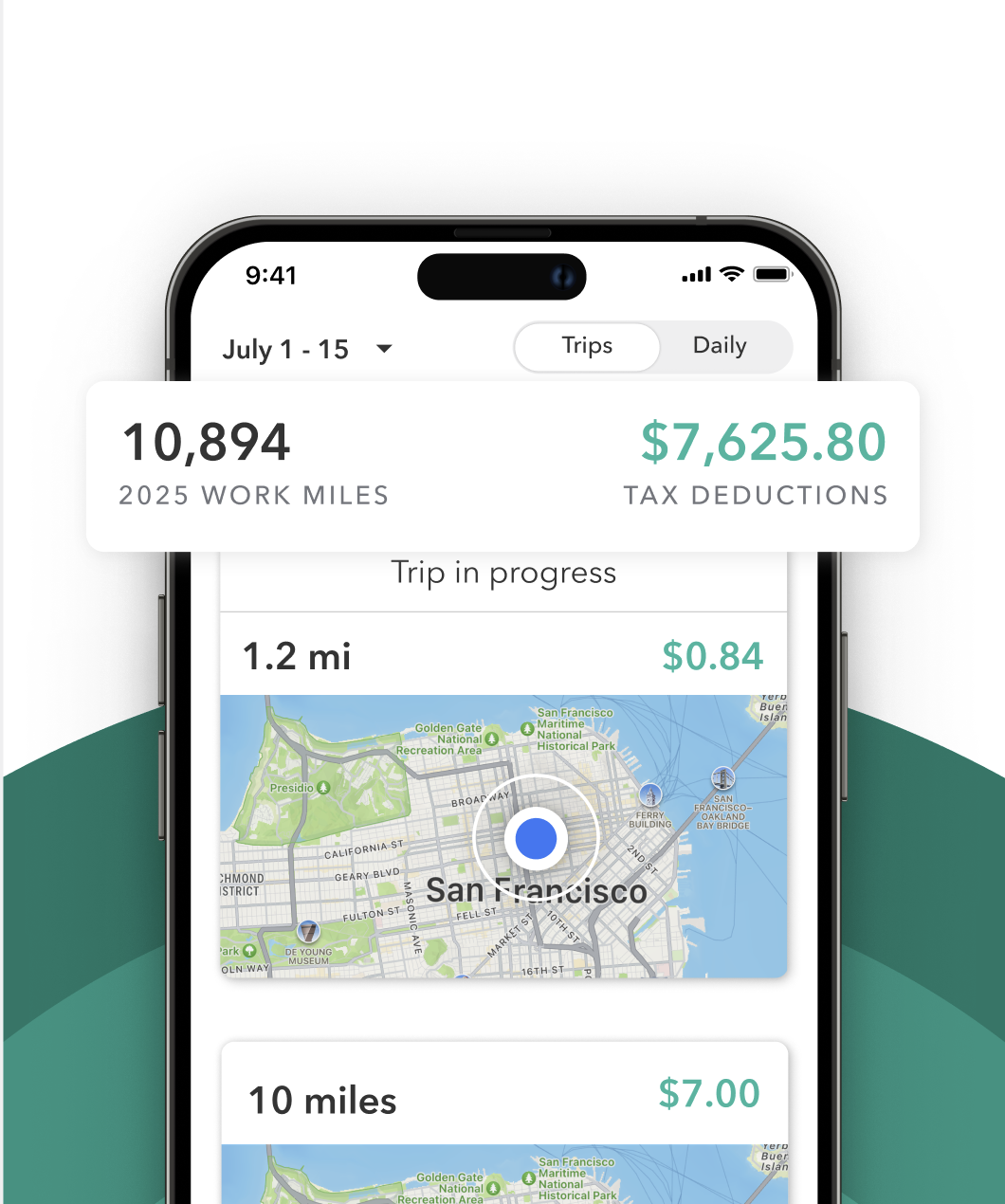
Automatic mileage tracking apps like Everlance help by detecting trips in the background, letting you classify them quickly, and generating IRS-compliant mileage reports at tax time.
How to claim your mileage deduction
Most AirBnB hosts who treat hosting as a business report mileage on Schedule C. Some hosts may file under Schedule E depending on how their rental operates.
When filing, you will choose:
• Standard mileage rate: Multiply business miles by the IRS rate
• Actual expenses: Deduct the business-use portion of vehicle costs
You cannot use both methods for the same vehicle in the same year. Keep mileage logs and related records for at least three years in case of an audit.
Common mileage mistakes AirBnB hosts make
Many hosts lose deductions by making avoidable errors:
• Treating commuting miles as business mileage
• Forgetting occasional supply or maintenance trips
• Not keeping a mileage log
• Mixing personal and AirBnB driving without clear separation
• Assuming AirBnB driving “doesn’t count enough to matter”
Even limited mileage can reduce your tax bill when tracked correctly.
Why mileage deductions still matter for AirBnB hosts
Mileage may not be your largest deduction, but it’s one of the easiest to overlook. Tracking it helps you:
• Lower your taxable income
• Stay compliant with IRS rules
• Understand the true cost of hosting
• Keep cleaner records year-round
For AirBnB hosts, mileage is about accuracy, not volume. Tracking the miles you are entitled to deduct helps ensure you don’t leave money on the table or claim miles that could cause problems later.








.svg)
