

4.8/5 on App Store
Visiting clients, reviewing policies, or prospecting? Every mile is a mileage tax deduction at the current IRS rate. Most agents leave thousands unclaimed each season. Track miles and keep what’s yours.




The IRS requires logging mileage tax deductions as trips happen, not reconstructing them at tax time. It’s the most audited rule. Every business trip must capture four specific details.
Every drive from your home office or agency to a client’s home, workplace, or meeting spot qualifies as a mileage tax deduction, including legs of multi-stop days. Visiting three policyholders across town in one afternoon means every mile between stops counts. Multi-appointment days, early morning visits, and evening consultations all qualify as legitimate business mileage.
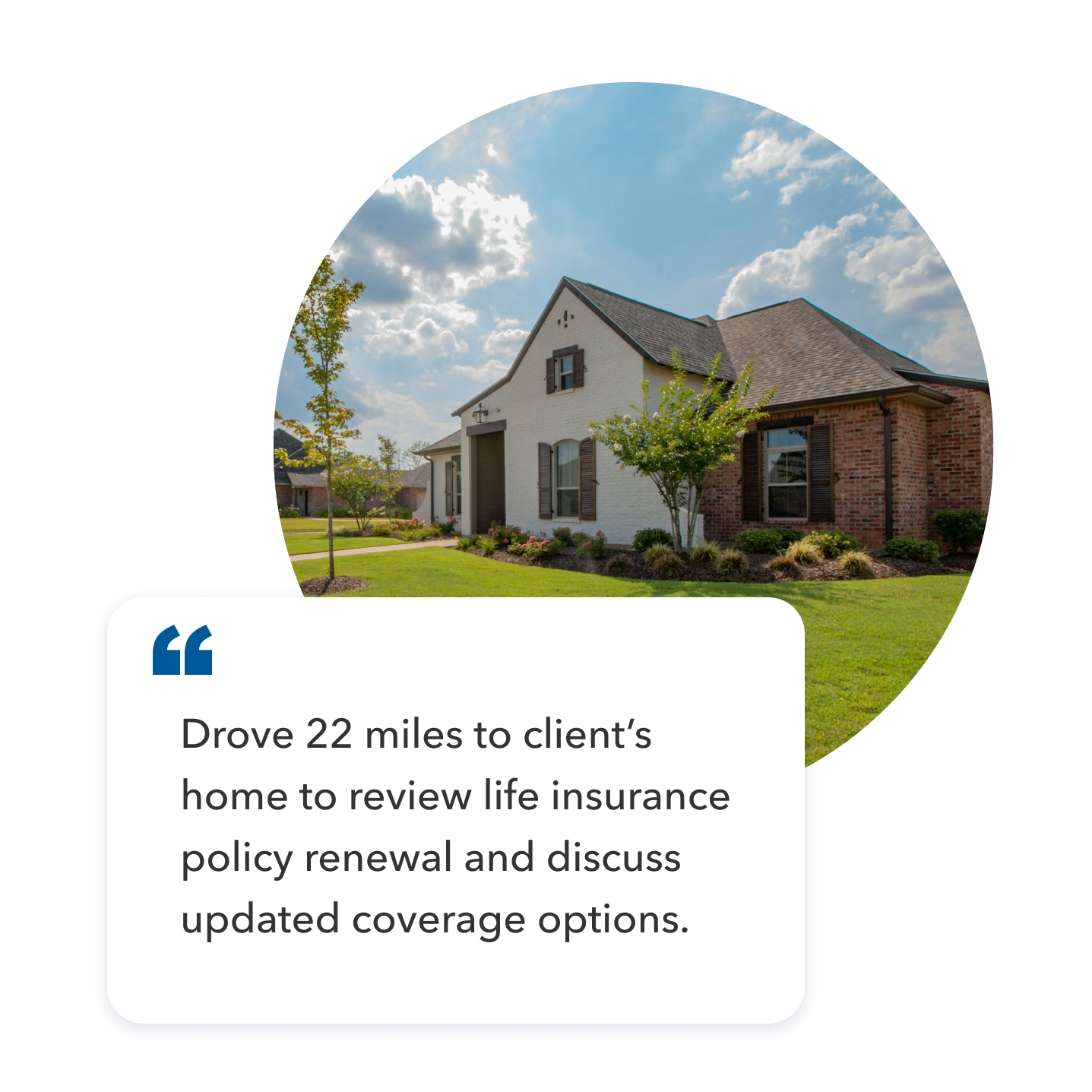
Driving through neighborhoods to canvas prospects, drop off marketing materials, attend community events, or identify new business opportunities is fully deductible whether or not a visit produces a sale. Even exploratory drives to evaluate new territories for your book of business are valid mileage tax deductions. If you drove there for business purposes, the IRS considers it qualifying, so log every prospecting trip the moment you leave.

Driving to your agency’s main office, a carrier’s regional headquarters, or an underwriting meeting qualifies as a mileage tax deduction as long as the trip is work-related. This includes compliance training sessions, product briefings, and agent onboarding events at carrier offices. If the visit serves your insurance business, the drive to get there qualifies too.

Drives to inspect a policyholder’s property, assess a claims situation, or conduct an in-person risk evaluation are fully deductible mileage tax deductions. Field visit miles count the same as office miles. Whether you’re inspecting a residential property before policy issuance or documenting a claim after an incident, every mile to and from the site is a legitimate write-off.

As a self-employed insurance agent, mileage tax deductions extend beyond client visits — driving to industry networking events, chamber of commerce meetings, NAIFA chapter gatherings, or referral partner lunches all count at the current IRS mileage rate. Whether meeting at a hotel ballroom or a downtown restaurant, consistent mileage logging ensures every networking mile gets captured.

Every mile driven to maintain your insurance license is a mileage tax deduction. Driving to state-required CE courses, CLU or ChFC classes, conferences, or insurer training seminars all qualify as deductible professional development mileage. The IRS recognizes that maintaining your credentials is maintaining your business, so whether attending a two-hour CE class across town or a multi-day licensing summit, log every mile. Your credentials are your competitive edge, and the drive to earn them is a legitimate write-off.

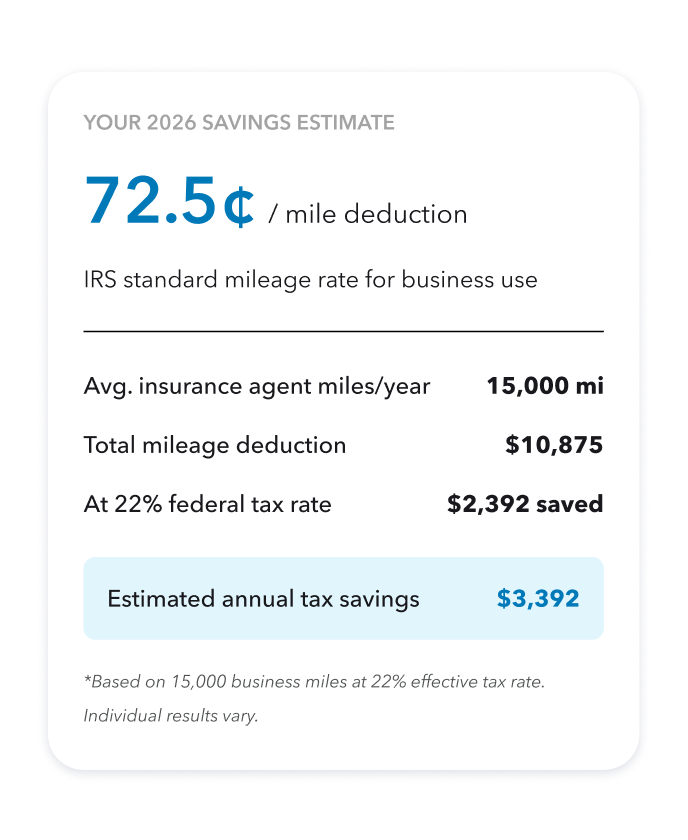
Mileage tax deductions add up faster than most insurance agents realize. A life insurance agent averaging five client appointments per week can easily log 15,000+ business miles annually — a significant deduction at the current IRS rate. But client visits are just the start. Factor in prospecting drives, carrier office trips, claims field visits, networking events, and CE mileage, and your total deductible miles climb even higher. Every agent’s situation is different, so we built the calculator below to make it personal. Enter your annual business miles and tax rate to see exactly what your drives are worth — then start tracking.
The IRS requires logging mileage tax deductions as trips occur, not reconstructing them at tax time. It’s the most audited rule. Every business trip must capture four specific details.

The IRS routinely cross-references claimed trips against agency assignment records, facility schedules, and contract dates. Every trip in your log needs a specific date.

GPS-captured coordinates carry the most weight in an audit because they are objective and difficult to dispute. Log the specific address for every trip origin and destination.

Write a specific note: "shift at St. Mary's ICU on travel assignment." Vague entries like "work" will not survive IRS scrutiny.

Total miles per trip. Automatic GPS tracking captures this precisely — no odometer readings or manual input required.
Answers to the most common questions insurance agents ask about IRS mileage tax deductions. Each answer is written to give you a clear, actionable response — not legal jargon. For advice specific to your tax situation, always consult a qualified CPA or tax professional.
Track every client drive and field visit automatically. Generate an IRS-compliant mileage report at tax time, in one tap. Never miss a deduction again.
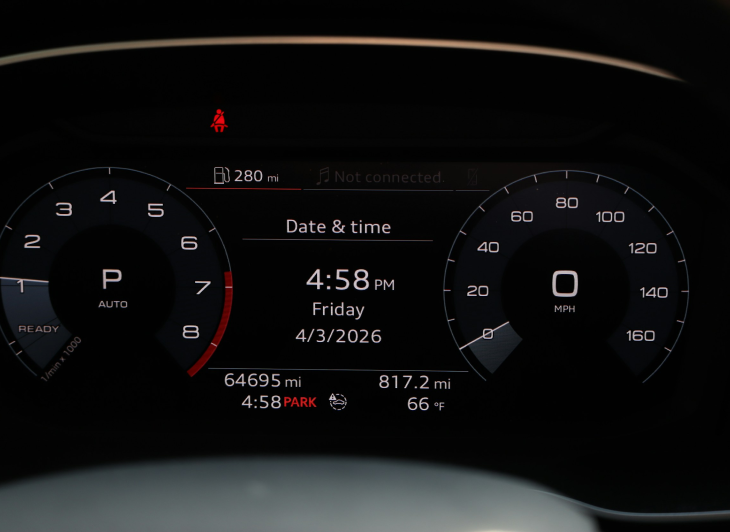
Get the current IRS mileage rate, see how it compares to prior years, and learn how to apply mileage tax deductions to your insurance business.

Discover how insurance agents use the IRS mileage rate to track, calculate, and claim deductions that reduce their tax bill significantly.

Discover how the Qualified Business Income deduction helps self-employed professionals reduce taxable income and keep more of what they earn.










.svg)
