The short answer is yes - and if you're not doing it yet, you're almost certainly leaving money on the table. Every mile you drive without a passenger - heading to a pickup, repositioning to a busy area, or driving home after your last ride - is potentially deductible. The IRS standard mileage rate for 2026 is 72.5 cents per mile, which means a driver logging 30,000 business miles annually could claim a $21,750 deduction. That's real money, and it's money most drivers undercount because they rely on memory or sloppy spreadsheets.
The good news: AI-powered tools now exist that can automatically track your mileage, sort your expenses, and even help you file your taxes with far less headache than doing it manually. The bad news: the IRS doesn't care that tracking mileage is tedious. If you get audited and can't produce a detailed log, you lose the deduction - period. So the question isn't really whether Uber drivers can use AI to track mileage and file taxes - it's why anyone would still choose not to.
This piece walks through exactly how AI tools work for rideshare drivers, which ones are worth your time, how they keep you IRS-compliant, and where the technology is headed. Whether you drive full-time or just pick up weekend shifts, there's something here that can save you hundreds or thousands of dollars a year.
For years, mileage tracking for gig workers meant one of two things: a paper logbook stuffed in the glove compartment or a spreadsheet that got updated once a month (if you remembered). Both approaches are error-prone, time-consuming, and practically guaranteed to miss deductible miles.
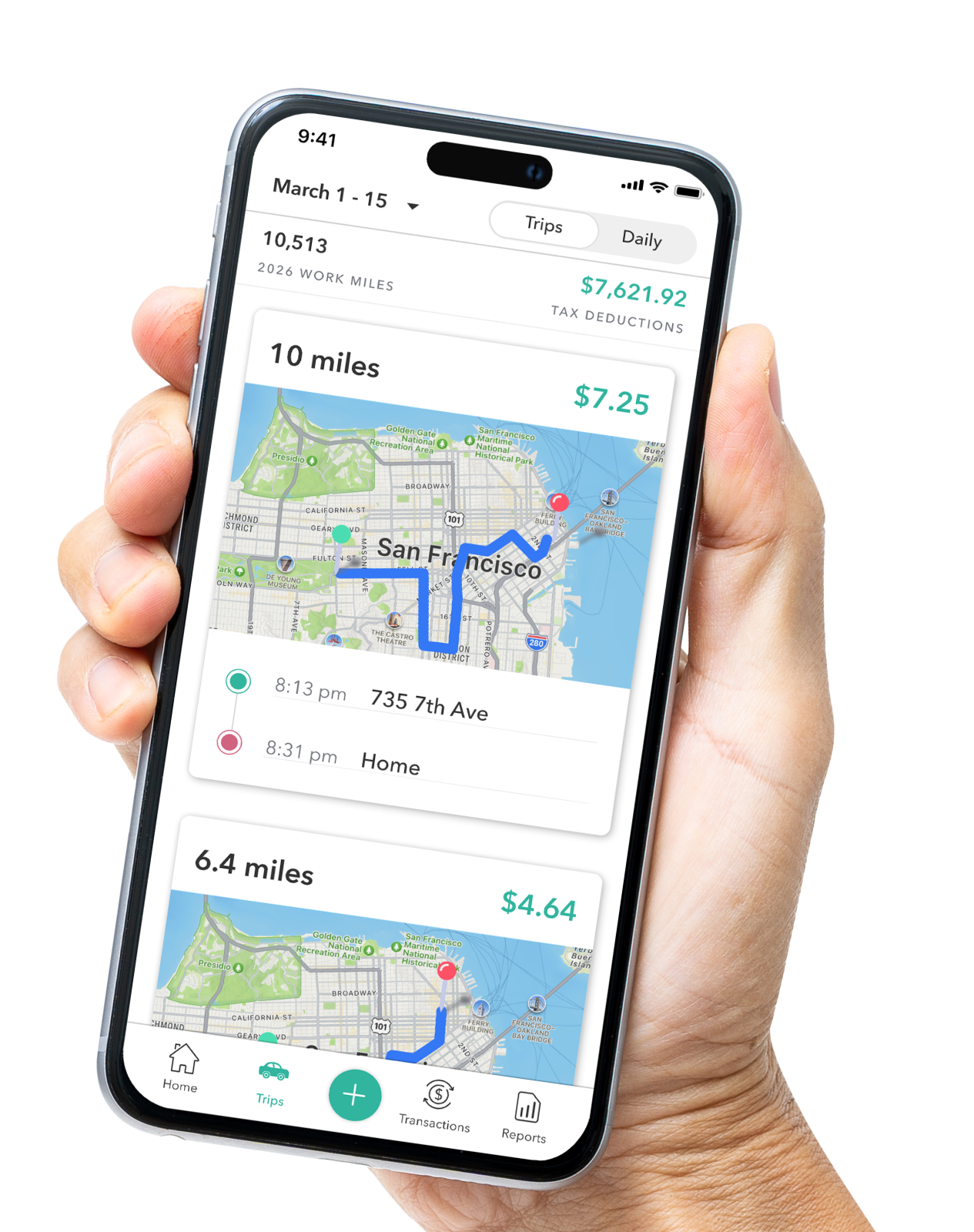
AI has changed this equation entirely. Modern mileage tracking apps use a combination of GPS data, motion sensors, and machine learning algorithms to detect when you're driving, where you're going, and whether the trip is likely business or personal. The best ones run quietly in the background and require almost zero input from you. Instead of remembering to press "start" every time you leave your driveway, the app handles detection automatically and asks you to confirm or recategorize later.
What makes this genuinely useful - not just a tech gimmick - is accuracy. Gig workers who tracked expenses manually missed an average of 15-20% of their deductible miles. That's roughly $2,000 to $4,000 in lost deductions for a typical full-time rideshare driver at the 2026 rate. AI closes that gap by capturing trips you'd otherwise forget.
The core problem with mileage tracking isn't recording the miles. It's deciding which ones count. You drive to the grocery store, then open the Uber app in the parking lot and start accepting rides. Which part of that trip is deductible? What about driving between your last dropoff and your house?
AI-based tools solve this by analyzing patterns in your driving behavior. They look at time of day, location, speed, duration, and whether a rideshare app was active on your phone. Over time, the algorithm learns your habits. It knows that a 6 AM trip to the airport district on a Tuesday is almost certainly a work drive, while a 10 AM trip to your kid's school is not.
Most apps present you with a simple swipe interface: swipe right for business, left for personal. But the AI pre-categorizes most trips for you, so you're just confirming rather than deciding from scratch. Some drivers report that after a few weeks of training the algorithm, 90% or more of their trips are correctly categorized without any manual input.
The IRS draws a hard line between personal and business driving. Your commute from home to a regular workplace? Not deductible. But rideshare driving is different because you don't have a fixed workplace. The IRS generally considers your first trip to pick up a passenger (or to a location where you're actively seeking rides) as the start of your business mileage.
Machine learning models handle this distinction by cross-referencing multiple data points. If your phone's GPS shows you leaving home at 5 PM on a Friday, and your Uber driver app goes online two minutes later, the system flags everything from that point forward as business miles. When you go offline and drive to a restaurant for dinner, the system recognizes the shift and categorizes accordingly.
This matters because mixed-use trips are where most drivers get confused. A good AI tracker will split that trip accurately, assigning business miles only to the segments where you were actively working or traveling between rides. That level of precision is nearly impossible to maintain with a manual log.
What Miles Does Uber's Summary Miss?
Chart 1: Uber's annual driver summary only includes on-trip miles. A dedicated AI tracker captures all deductible miles - typically 40-60% more than Uber reports.
Not all mileage apps are created equal, and the differences matter more than you might think. The best tools for rideshare drivers share a few key traits: automatic trip detection, accurate GPS logging, easy categorization, and the ability to generate IRS-compliant reports at tax time. Some go further by integrating directly with tax preparation software or offering built-in expense tracking for things like gas, car washes, and phone bills.
When evaluating options, pay attention to battery drain (a real concern for drivers who need their phones all day), accuracy of trip detection, and whether the free tier is actually usable or just a teaser for the paid version. A good mileage app should pay for itself many times over through the deductions it helps you capture.
The technical backbone of any AI mileage tracker is GPS, but raw GPS data alone isn't enough. Phone GPS can drift, especially in urban canyons between tall buildings or in parking garages. Better apps use a technique called sensor fusion - combining GPS with accelerometer data, Wi-Fi signals, and cell tower triangulation to produce more accurate location readings.
Predictive analytics take this a step further. By analyzing your historical driving patterns, the app can anticipate when you're about to start a work shift and begin tracking proactively. Some tools even offer suggestions like "You usually start driving around 4 PM on Thursdays - want me to start tracking automatically?" This reduces the chance of missing the first few miles of a shift, which over a year can add up to hundreds of dollars in lost deductions.
One of the most practical features in newer AI tools is direct integration with Uber and Lyft's driver platforms. Uber provides an annual tax summary that includes total miles driven on-trip (with a passenger in the car), but this number dramatically undercounts your actual deductible miles. It doesn't include miles driven to pick up passengers, miles between rides, or miles driven while waiting for a ping.
Apps that connect with your Uber or Lyft account can pull in your trip data and match it against GPS records to fill in the gaps. The result is a complete picture: on-trip miles, deadhead miles, and repositioning miles, all in one report. Some drivers find that their total deductible miles are 40-60% higher than what Uber's summary shows.
This integration also helps with income tracking. Instead of manually entering every fare, the app can import your earnings data and match it with corresponding expense records. Come tax time, you have a single dashboard showing income, mileage deductions, and other expenses - everything you need to fill out Schedule C.
Annual Mileage Deduction Value at $0.725/mi (2026)
Chart 2: IRS standard mileage rate $0.725/mi for 2026. Tax savings estimated at 25% effective rate. Actual savings vary by tax bracket and total income.
Filing taxes as a rideshare driver means dealing with Schedule C (Profit or Loss from Business), Schedule SE (Self-Employment Tax), and potentially Form 1040-ES for quarterly estimated payments. It's not complicated once you understand the forms, but gathering all the supporting documentation is where most people stumble.
AI document recognition tools can dramatically reduce this burden. Instead of sorting through a shoebox of receipts, you snap photos throughout the year and let the software extract the relevant data: vendor name, date, amount, and expense category. By the time January rolls around, your expenses are already organized and ready to plug into your tax return.
Modern OCR (optical character recognition) powered by AI can read a crumpled gas station receipt with surprising accuracy. You take a photo, and within seconds the app extracts the total, identifies it as a fuel purchase, and files it under vehicle expenses. Better tools will even flag potential issues, like a receipt that's too faded to read or a duplicate entry.
For rideshare drivers, the most common deductible expenses beyond mileage include:
• Phone bills (the business-use percentage)
• Car washes and detailing
• Parking fees and tolls
• Snacks and water for passengers
• Phone mounts, chargers, and dash cams
• Roadside assistance memberships
Each of these requires documentation. AI receipt scanning turns what used to be a dreaded annual chore into a five-second habit.
Here's something that catches a lot of new rideshare drivers off guard: the IRS expects you to pay taxes four times a year, not just once in April. If you owe more than $1,000 at filing time, you'll face an underpayment penalty. For a driver earning $40,000 annually, quarterly estimated payments might run $2,500 to $3,500 each, depending on deductions and other income.
AI forecasting tools help by projecting your annual income and tax liability based on your earnings so far. If you had a strong January and February, the app adjusts your Q1 estimate upward. If March was slow, it recalculates. This dynamic approach is far more accurate than guessing based on last year's numbers, especially for drivers whose income fluctuates seasonally.
2026 Quarterly Estimated Tax Due Dates:
Q1 (Jan 1 - Mar 31): April 15, 2026
Q2 (Apr 1 - May 31): June 16, 2026
Q3 (Jun 1 - Aug 31): September 15, 2026
Q4 (Sep 1 - Dec 31): January 15, 2027
Tip: Some apps pre-fill Form 1040-ES with your estimated amount and remind you before each deadline.
The IRS audits roughly 1.1% of individual returns, but self-employed filers face higher scrutiny, especially those claiming large vehicle deductions. The single best thing you can do to protect yourself is maintain a contemporaneous mileage log - a record created at or near the time of each trip, not reconstructed months later.
AI mileage trackers create this record automatically. Every trip is logged with a timestamp, start and end locations, distance, and purpose. This is exactly what the IRS wants to see. A well-maintained digital log from a reputable app is far more credible than a handwritten notebook, and auditors know it.
The IRS requires five pieces of information for each business trip: the date, destination, business purpose, total miles, and starting odometer reading (or equivalent). AI trackers capture all of this automatically except the business purpose, which you provide when you categorize the trip.
Here's what a good log entry looks like versus a bad one:
Good log entry:
"January 14, 2026. Home to airport pickup zone, 12.3 miles. Uber rideshare shift." GPS coordinates and map attached.
Bad log entry:
"January - about 400 miles for Uber."
The difference between these two entries could be worth thousands of dollars in an audit. Digital logs also have the advantage of being backed up to the cloud, so you won't lose your records if your phone breaks or gets stolen. Set up a weekly routine where you spend five minutes reviewing and confirming any unclassified trips.
Most Uber drivers know about the mileage deduction, but many stop there. The tax code allows you to deduct any ordinary and necessary business expense, and rideshare driving generates more of these than you might realize.
You have two options for vehicle deductions: the standard mileage method (72.5 cents per mile in 2026) or the actual expense method, where you deduct the business percentage of your real car costs - gas, insurance, repairs, depreciation, lease payments, and more. Run both calculations to see which saves you more.
Standard Mileage vs. Actual Expense Method
Chart 3: Compare both deduction methods before choosing. Once you select the actual expense method for a vehicle, you cannot switch back to standard mileage for that same vehicle.
Beyond mileage, the table below shows deductions that rideshare drivers frequently overlook - along with the documentation needed and estimated annual value for each:
Chart 4: Top missed deductions for Uber and rideshare drivers in 2026. Impact level: Green = High, Amber = Medium, Gray = Low. Track these throughout the year, not just at tax time.
A driver earning $50,000 who claims only the mileage deduction might pay $7,500 in self-employment tax plus income tax. That same driver, after claiming all eligible deductions, might reduce their taxable income by an additional $3,000 to $5,000. Over a few years, that adds up to a significant difference in take-home pay.
The key is tracking these expenses as they happen, not trying to reconstruct them in March. AI expense tools make this painless by letting you photograph receipts on the spot and auto-categorize them based on the vendor.
AI tools for gig workers are improving fast. Within the next few years, expect to see fully automated tax filing where your mileage app talks directly to your tax software and generates a complete Schedule C without you touching a keyboard. Some platforms are already testing this with varying degrees of success.
We're also seeing AI-powered financial coaching that goes beyond tax prep. Imagine an app that tells you, "You're on track to owe $3,200 in Q3 taxes, but if you increase your driving by 8 hours this month, the additional mileage deduction will offset most of that." This kind of real-time strategic advice was previously only available from a human accountant charging $200 an hour.
The gig economy now includes tens of millions of Americans, and the tools serving this workforce are finally catching up to the complexity of their tax situations. AI isn't replacing the need to understand your taxes - you should still know what Schedule C and Schedule SE are - but it's eliminating the tedious, error-prone parts of the process. For Uber drivers wondering whether AI can handle mileage tracking and tax filing, the answer is a clear yes, and the drivers who adopt these tools earliest will benefit the most.
Ready to stop guessing at your mileage?
Everlance is built specifically for the way gig workers actually drive and earn. Over 4 million independent workers use it to track mileage and expenses automatically, generate IRS-compliant reports, and find deductions they'd otherwise miss.
The average Everlance user saves $6,500/year in deductions.
Everlance automatically logs every business mile and expense so Uber drivers never miss a deduction, making tax time faster, simpler, and worth more money back.



.webp)

.svg)


.svg)
