As a Walmart Spark delivery driver, you are an independent contractor. Spark does not withhold taxes from your earnings, and every deduction you miss comes straight out of your pocket at tax time.
The good news is that the expenses that come with the job, your vehicle, your phone, your equipment, and the cost of running your own business, are all deductible.
This guide breaks down every legitimate deduction available to Spark drivers, organized by category, so you know exactly what to track and what to claim.
Walmart Spark mileage
Mileage is the most valuable deduction available to most Spark drivers. Unlike multi-pickup delivery platforms, Spark routes typically originate from a single Walmart location and run outward to customer addresses, sometimes covering significant distance per order. Those miles accumulate quickly across a full week of deliveries.
You have two options for deducting vehicle costs: the standard mileage rate or actual vehicle expenses. You must choose one and stick with it for the full tax year for that vehicle.
🚗
Driving from the Walmart to the customer
Every mile from the Walmart store to each customer delivery address is a fully deductible business mile. Spark routes can cover a wide delivery radius, and these miles are the core of your mileage deduction.
📦
Driving between customer stops on a multi-drop route
Spark batches often include multiple customer deliveries in a single route. Every mile between customer addresses as part of completing that batch is deductible. Log each leg to keep your records accurate.
🗺️
Driving to a different Walmart location for better offers
If you drive to a different Walmart store zone while the app is active to access higher-paying offers, those miles are deductible business miles. The purpose is clear, you are actively positioning yourself for work.
🔧
Driving to a vehicle service appointment
Miles to and from maintenance appointments for your delivery vehicle are deductible at your business-use percentage. Spark deliveries put real load stress on your vehicle, making regular service a genuine business necessity.
Vehicle expenses
Spark delivery puts a specific kind of strain on a vehicle. Heavy grocery and general merchandise loads, repeated loading and unloading, and frequent stop-and-go driving through residential neighborhoods all add up. If you choose to deduct actual vehicle expenses instead of the standard mileage rate, these costs become deductible at your business-use percentage.
Track every dollar you spend on your vehicle and calculate the percentage of your total annual miles that were driven for Spark. That percentage applies to each qualifying expense. You cannot combine this method with the standard mileage rate for the same vehicle in the same year.
⛽
Gas
Deduct the business-use percentage of your annual fuel costs. Spark routes often cover suburban and rural areas where deliveries are spread out, making fuel a significant expense for active drivers. Save receipts or use a fuel tracking app throughout the year.
🛡️
Car insurance
Auto insurance premiums are deductible at your business-use percentage. If you carry a delivery or commercial rider on your policy to cover your Spark work, that portion may be fully deductible. Standard mileage rate filers cannot deduct insurance separately.
🔧
Repairs and maintenance
Oil changes, tire replacements, brake work, and suspension repairs are deductible at your business-use percentage. Carrying heavy loads of groceries and general merchandise regularly accelerates wear on tires and suspension faster than typical personal driving. Keep all service records.
🚘
Depreciation
Under the actual expense method, you can deduct a portion of your vehicle's depreciation each year at your business-use percentage. The rules depend on when the vehicle was placed in service. A tax professional can help you calculate this accurately.
🧼
Car cleaning
Delivering groceries and household goods means spills, dirt, and trunk residue are part of the job. Regular cleaning is a practical necessity for Spark drivers and is deductible at your business-use percentage under the actual expense method.
🏷️
Registration and fees
Annual vehicle registration fees and state or local fees tied to your vehicle are deductible at your business-use percentage under the actual expense method.
Phone, equipment, and delivery gear
Spark deliveries involve more physical handling than most gig platforms. You are loading, transporting, and unloading large, heavy orders, sometimes without any assistance at the door(Yeah, we've seen the Reddit posts). The gear that makes that work safer, faster, and more professional is a legitimate business expense, and so is the phone that connects you to every offer.
📱
Phone and data plan
The Spark app is your connection to every offer, route, and customer update. Deduct the business-use percentage of your monthly phone bill and device cost. Keep your usage estimate consistent and be prepared to explain it if audited.
🛺
Hand truck or dolly
Spark orders regularly include large, bulky, or heavy items. A hand truck or dolly purchased to handle these safely and efficiently is a fully deductible business expense. This is one of the more Spark-specific deductions that drivers on other platforms rarely need.
🧳
Insulated bags and coolers
Keeping frozen and refrigerated items at temperature during delivery is part of the job. Insulated bags and soft coolers purchased for your Spark deliveries are fully deductible. If Spark reimbursed you for any of these, you cannot also deduct that amount.
🪢
Cargo straps and trunk organizers
Straps, nets, and organizers that keep orders secure and intact during transit are deductible business equipment. Damaged deliveries affect your ratings and your income, making these a reasonable and necessary expense.
🧤
Work gloves
Handling heavy and bulky orders repeatedly makes work gloves a practical and deductible business expense. Keep your purchase receipts and track these with your other equipment costs.
🔌
Phone mount and car charger
A mount and charger keep your phone accessible and powered across long delivery routes. Both are standard and deductible tools for any Spark driver.
Parking & tolls
Parking and tolls paid during active deliveries are deductible regardless of which vehicle expense method you use. Spark routes often run through suburban and residential areas where paid parking is less common, but tolls on highway routes between store and customer can add up. Keep receipts and toll account statements throughout the year.
🅿️
Parking fees
Any parking fees paid while completing a Spark delivery are fully deductible. Save receipts or screenshots as documentation. Personal parking does not qualify.
🛣️
Tolls
Tolls paid on delivery routes are fully deductible. Spark routes can cover significant highway distance depending on the delivery zone, making this a more meaningful deduction for some drivers than others. Only deduct tolls paid out of pocket that were not reimbursed.
Self-employment benefits
Spark offers flexibility, but it does not offer benefits. No health coverage, no retirement plan, no workers' compensation. As an independent contractor, you fund all of that yourself. The IRS gives self-employed workers specific deductions to help offset those costs, and they are worth understanding and claiming in full.
🏥
Health insurance premiums
If you pay for your own health, dental, or vision coverage and are not eligible for a plan through a spouse's employer, you may be able to deduct those premiums in full. This is an above-the-line deduction, available even without itemizing, and it can make a real difference for drivers covering their own insurance costs.
💰
Retirement account contributions
A SEP-IRA, Solo 401(k), or SIMPLE IRA lets you reduce your taxable income while building savings for the future. There is no employer match in gig work, but the contribution limits for self-employed workers are generous and the tax benefit is immediate.
🧾
Self-employment tax deduction
As a self-employed Spark driver, you pay both the employee and employer sides of Social Security and Medicare taxes. The IRS lets you deduct half of that total from your gross income, above the line, regardless of whether you itemize.
General business expenses
The operational costs of running your Spark business extend beyond your vehicle and equipment. These deductions are straightforward, easy to document, and easy to overlook if you are not tracking them throughout the year.
📲
Business app subscriptions
Mileage tracking apps, expense management software, and navigation apps with paid tiers used specifically for your Spark work are deductible. Keep a record of which subscriptions serve your business and what you pay for each.
📋
Tax preparation fees
The cost of software or a CPA to handle your Schedule C and self-employment taxes is deductible. If your preparer handles both personal and Spark income, only the portion attributable to your gig work qualifies.
📡
Roadside assistance membership
Breaking down mid-route with a car full of groceries is a direct hit to your income and your ratings. A roadside assistance plan purchased to support your delivery work is deductible at your business-use percentage.
🏦
Bank and payment fees
Fees from a dedicated business bank account or costs tied to receiving your Spark earnings are deductible. Monthly maintenance charges and transfer fees directly tied to your gig income qualify.
What Spark drivers cannot deduct
Spark drivers make some specific tax mistakes that other gig workers typically don't. Here is what does not qualify and why:
| Expense |
Why it doesn't qualify |
| Personal Walmart purchases |
Shopping for yourself at Walmart while waiting for or between offers is a personal expense, not a business one. The fact that you are at a Walmart store does not make personal purchases deductible. |
| The drive to your assigned Walmart |
Miles from your home to the Walmart where you begin accepting offers are personal commute miles. Your deductible mileage begins once you are actively on a delivery. |
| Reimbursed equipment costs |
If Spark provided or reimbursed you for any equipment, you cannot also claim that as a deduction. Only out-of-pocket costs qualify. |
| Clothing and personal items |
There is no required uniform for Spark drivers. Comfortable clothes and shoes worn while making deliveries are personal expenses and do not qualify, even if purchased specifically for the job. |
| Fines and tickets |
Traffic violations and parking tickets received while on a delivery are not deductible. The IRS does not allow deductions for penalties regardless of when or where they occurred. |
Walmart Spark driver tax deduction FAQ
Does Walmart Spark send a 1099?
Yes. If you earned $600 or more as a Spark driver in a calendar year, you will receive a 1099-NEC. You are required to report all earnings regardless of whether you receive a form, and even if you earned less than $600.
Does Spark track my mileage for taxes?
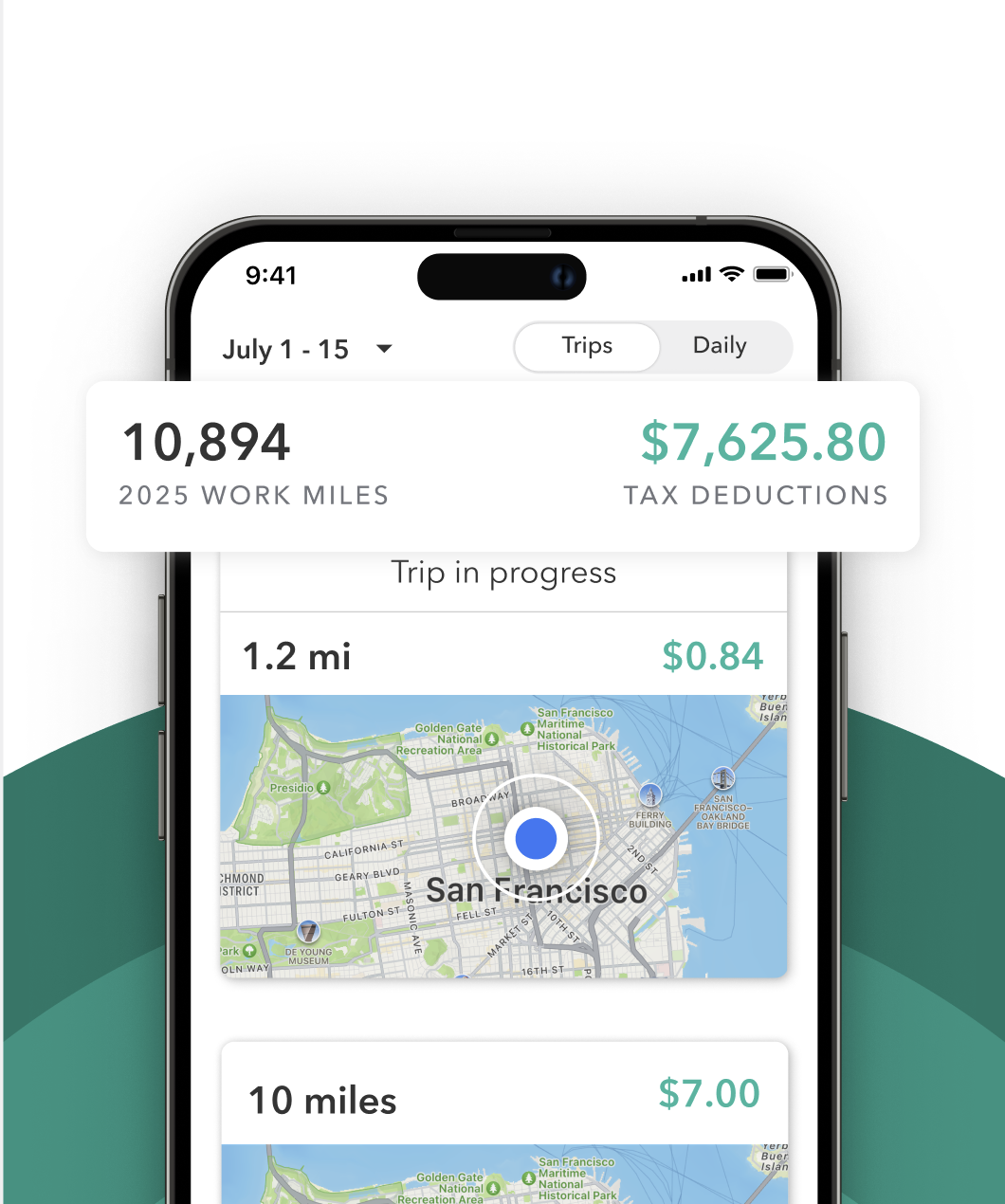
No. Spark does not provide a mileage summary you can use for your tax return. You need to track every business mile independently. An automatic tracking app like Everlance is the most reliable way to make sure your full mileage deduction is captured throughout the year.
Do Spark drivers have to pay quarterly taxes?
If you expect to owe more than $1,000 in federal taxes for the year, the IRS requires quarterly estimated payments. Spark withholds nothing from your earnings, so if you are not setting money aside throughout the year, you may face a penalty when you file.
Can I deduct equipment I bought to handle heavy Spark orders?
Yes. A hand truck, dolly, cargo straps, work gloves, and similar gear purchased to handle large or heavy Spark orders are fully deductible as business equipment. Keep your receipts and track these purchases separately from personal expenses.
Do I need receipts for all my deductions?
Yes. Documentation is required for every deduction you claim. For mileage, the IRS requires a log with dates, destinations, and business purpose recorded as trips happen. For equipment and other expenses, keep digital or physical receipts. An app that handles both automatically is the easiest way to stay prepared.










.svg)
