
Delivery Driver Tax Guide
what you owe, what you can deduct, and how to keep more of what you earn.
Every delivery platform payment is self-employment income. This guide explains taxes, quarterly payments, key deductions, mileage tracking, and IRS documentation to help delivery drivers reduce taxes and stay compliant.
15.3%
$7,250+
4
$0
The delivery driver's complete guide to taxes
Delivery drivers for DoorDash, Instacart, Grubhub, Amazon Flex, Spark, Shipt, and Uber Eats are independent contractors responsible for managing taxes, 1099 income, deductions, and filing Schedule C each year.
What delivery driver taxes are and why they're different from a regular job
W-2 employees have taxes withheld automatically, and employers cover half of their Social Security and Medicare contributions. Delivery drivers classified as independent contractors handle these responsibilities themselves. Platforms pay gross earnings without withholding taxes, and drivers report their income and deductible business expenses on Schedule C.
Delivery drivers are generally responsible for:

Federal income tax: Based on net business profit and your individual tax bracket.
Self-employment tax: 15.3% applied to 92.35% of net earnings, covering Social Security and Medicare.

State income tax: Where applicable, based on your state's tax rules.
Because taxes are not automatically withheld, drivers should set aside money throughout the year. Quarterly estimated tax payments can help avoid a large tax bill and potential penalties at tax time.
How delivery driver taxes work: income, self-employment tax, and quarterly payments
The tax calculation for a delivery driver follows a clear sequence.

All gross earnings from every platform are reported on Schedule C as gross income. DoorDash, Instacart, Amazon Flex, and any others you use are all combined here.

Legitimate business deductions are subtracted. Vehicle mileage is almost always the largest single deduction. Equipment, phone use, and other business costs follow.

Net profit is the amount that remains after deductions. This figure feeds into both Schedule SE (self-employment tax) and Form 1040 (income tax).

Self-employment tax of 15.3% is calculated on 92.35% of net profit. Half of this amount is then deductible from gross income on your Form 1040, reducing income tax liability.

Federal income tax is calculated on adjusted gross income. The result is your total federal tax liability for the year.
Quarterly estimated taxes are generally paid four times annually based on projected tax liability. Missing payment deadlines may result in underpayment penalties calculated for each period, even when the remaining tax balance is fully paid by the filing deadline.

See what your delivery earnings actually cost in taxes, and what deductions recover
Understanding your real tax position requires two calculations: what you owe before deductions, and what mileage and expense tracking reduces it to. Use the inputs to build a picture specific to your delivery income and driving volume.
Your 2026 delivery tax estimate
Current IRS rate applied
Estimated tax after mileage deduction
$3,780
Federal and state combined
Taxes are your responsibility — and the platforms aren't going to warn you
Every delivery platform deposits earnings to your account and issues you a 1099. That is the extent of their tax involvement. The quarterly payments you owe, the mileage log the IRS may request, and the deductions that reduce your bill are entirely yours to manage.

Platforms report income to the IRS, not your deductions

Self-employment tax applies to every dollar of net profit

Missing quarterly payments can mean penalties
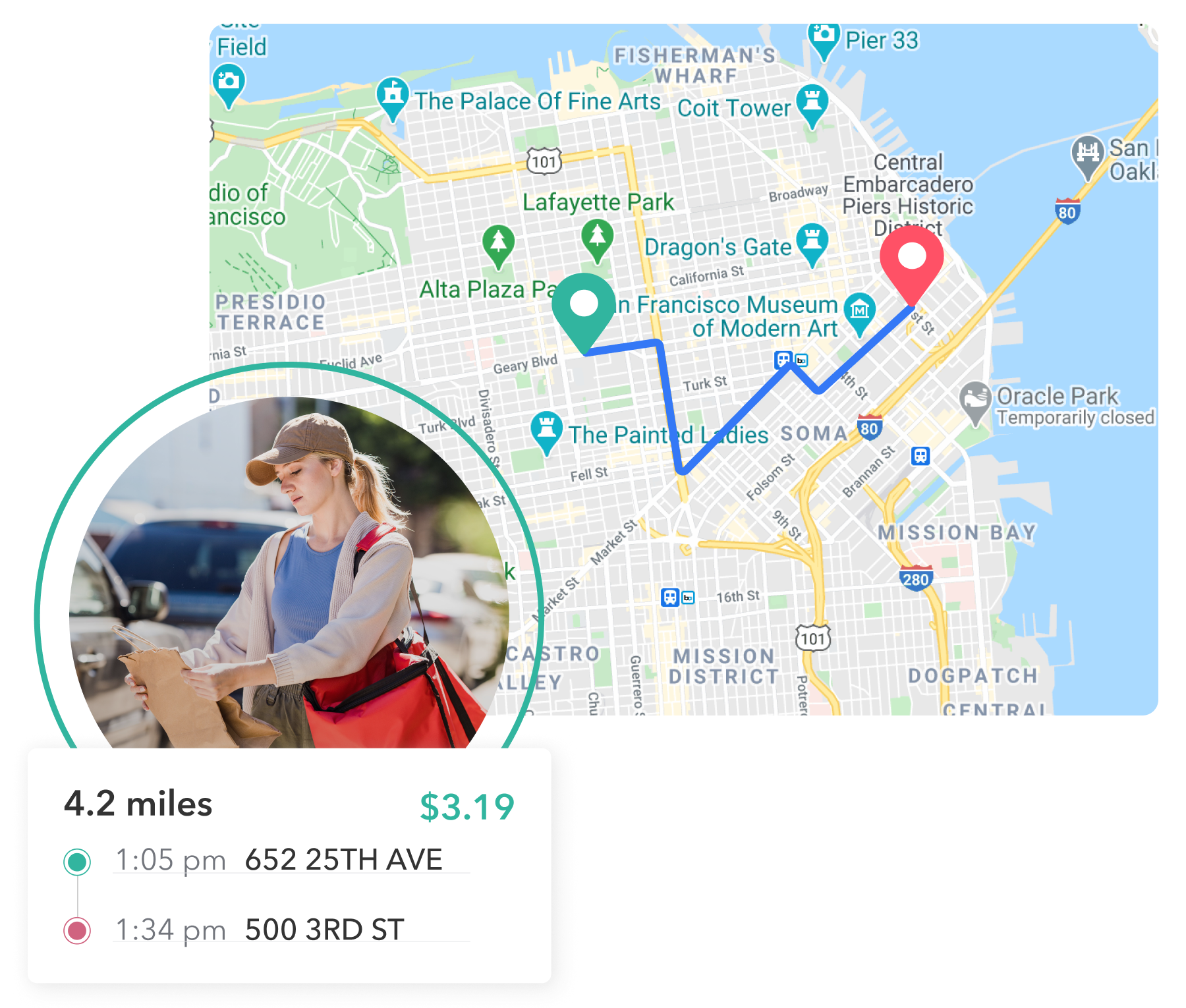
Mileage can be one of your largest deductions
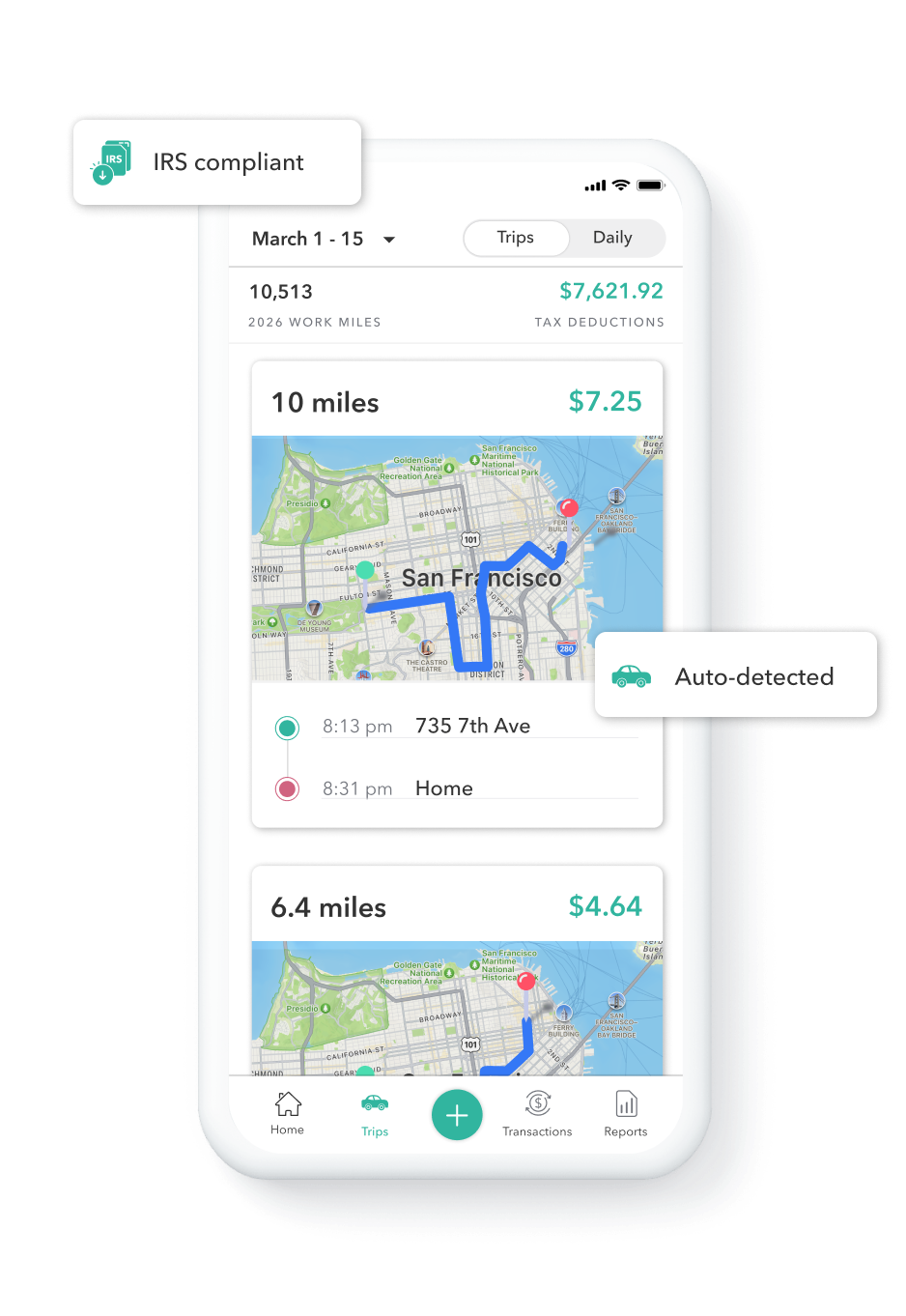
Tracking eligible mileage between deliveries and other business trips helps delivery drivers maintain accurate records, maximize deductions, and avoid missing tax savings.
Qualifying delivery driving scenarios:
The most valuable tax deductions for delivery drivers
Vehicle mileage dominates the delivery driver deduction picture. For most drivers, it accounts for 70-80% of total Schedule C deductions. The remaining 20-30% comes from a set of smaller but legitimate expenses that most drivers are entitled to and consistently miss.
The mileage deduction: the right method for most delivery drivers
Most delivery drivers choose the IRS standard mileage rate over the actual expense method. It produces a larger deduction for most delivery vehicles and requires only a mileage log, not receipts for every vehicle cost.
Under the standard mileage rate, you multiply total qualifying business miles by the IRS rate for the year. That single figure covers fuel, insurance, depreciation, and maintenance. One number. One record. One log.
Critical rule: you must elect the standard mileage rate in the first tax year you place a vehicle in business use. Starting with actual expenses locks you into that method for the life of that vehicle. Drivers who begin automatic mileage tracking from their first delivery shift preserve this election.
Drivers who lease their vehicle, have unusually high actual vehicle expenses, or operate a high-mileage commercial vehicle may benefit from the actual expense method. A qualified tax professional can run both calculations to determine which produces the larger deduction for a specific situation.
Updated each year by the IRS
Covers gas, insurance, depreciation & maintenance. Applies to all qualifying delivery business miles.
Each platform has its own tax forms, thresholds, and deductions. Here’s where to go next
The tax rules generally apply across delivery platforms, but 1099 forms, reporting thresholds, payment structures, and relevant deductions can vary. If DoorDash or Instacart is your primary platform, explore our dedicated guides for more specific tax information.
Platform-specific tax guides
DoorDash Driver Tax Guide
DoorDash treats Dashers as independent contractors and reports qualifying earnings on Form 1099-NEC. This guide explains DoorDash income reporting, Stripe tax forms, earnings such as bonuses and peak pay, relevant deductions, and current IRS reporting requirements for drivers.
Instacart Shopper Tax Guide
Instacart full-service shoppers are independent contractors responsible for taxes on qualifying earnings. This guide explains Instacart income reporting, batch and peak pay, tips, grocery delivery mileage, relevant deductions, and tax considerations for high-volume shoppers.
1099 documentation and IRS compliance facts
What a 1099-NEC reports and what it doesn't
Your 1099-NEC reports gross earnings, while mileage, equipment, phone expenses, and other deductions require separate documentation and reporting.
The 1099-NEC reporting threshold
Your 1099-NEC reports gross earnings, while mileage, equipment, phone expenses, and other deductions require separate documentation and reporting.
Drivers working multiple platforms
Income from multiple delivery platforms is combined for tax reporting, while eligible mileage and business deductions are claimed accordingly.
The IRS contemporaneous record requirement
The IRS expects timely mileage records documenting business trips, making consistent mileage tracking essential for supporting vehicle deductions accurately.
Audit exposure for delivery drivers
Accurate mileage and expense records help delivery drivers substantiate deductions and remain prepared if their tax return is examined.






Delivery driver tax FAQs
Answers to the questions delivery drivers ask most about taxes, 1099 forms, deductions, and quarterly payments. For advice specific to your situation, consult a qualified CPA or tax professional.
.svg)
Tax guide, by platform

Track Every Mile. Maximize Every Tax Deduction.
Automatically track every qualifying business mile and create IRS-ready records for tax time.


.svg)
