
Personal Trainer Tax Guide
what you owe, what you can deduct, and how to keep more of what you earn.
Independent fitness professionals earn 1099 income and manage their own taxes. This guide covers self-employment tax, quarterly payments, key deductions, and documentation to help personal trainers reduce their tax bill.
15.3%
$7,250+
4
$0
The personal trainer's complete guide to taxes
Personal trainers working as independent contractors manage their own taxes, including 1099 income, business deductions, and Schedule C filing. Understanding that responsibility is the starting point for staying organized and keeping more of your income.
What personal trainer taxes are and why they're different from being a gym employee
Gym employees receive W-2s with taxes automatically withheld and employer FICA contributions. Independent personal trainers receive client payments or studio fees with no withholding, and report all income and deductible business expenses on Schedule C at year-end.
Personal trainers working independently are generally responsible for:

Federal income tax: Based on net business profit and your individual income tax bracket.
Self-employment tax: 15.3% applied to 92.35% of net earnings, covering Social Security and Medicare contributions.

State income tax: Where applicable, based on your state's tax rules for self-employment income.
Because clients and studios don't withhold taxes, trainers should set aside money from each payment throughout the year. Quarterly estimated payments help avoid a large tax bill and potential penalties at filing.
How personal trainer taxes work: income, self-employment tax, and quarterly payments
Personal trainer taxes follow a clear sequence each year.

All session fees, package payments, online coaching revenue, and other business income are reported on Schedule C as gross income.

Deductible business expenses are subtracted — qualifying mileage, equipment, certifications, studio rental, and business software.

Net profit after deductions determines both self-employment tax (Schedule SE) and income tax on Form 1040.

SE tax of 15.3% is calculated on 92.35% of net profit; half is then deductible from gross income, reducing income tax liability.

Federal income tax is applied to adjusted gross income after all deductions to arrive at total federal tax owed.
Quarterly estimated payments are generally due four times each year. Missing deadlines may result in underpayment penalties calculated per period, even if the remaining balance is fully paid by the filing deadline.

See what your training income actually costs in taxes, and what deductions recover
Two calculations tell the real story: what you owe before deductions, and how much mileage and expense tracking reduces that number. Use the sliders to build a picture based on your own training income and business driving.
Your 2026 training tax estimate
Current IRS rate applied
Estimated tax after mileage deduction
$11,800
Federal and state combined
Your taxes are your responsibility — and your clients won't remind you
Clients pay your fees and move on. Quarterly payments, mileage logs, and every deduction you're entitled to are entirely yours to manage. The fitness industry provides no automatic tax safety net.

Clients and studios report payments, not your deductible expenses

Self-employment tax applies to every dollar of net training profit

Missing quarterly payment deadlines can result in penalties
Qualifying trip types:

Property showings — each leg is a separate deductible trip
Listing appointments and CMA presentations
Open house setup, signage, and hosting runs
Neighborhood farming and prospecting drives
Client meetings at any location
Home inspections, appraisals, and photo shoots
Continuing education and broker training
Title company, lender, and escrow visits
Driving between clients can be one of your largest deductions
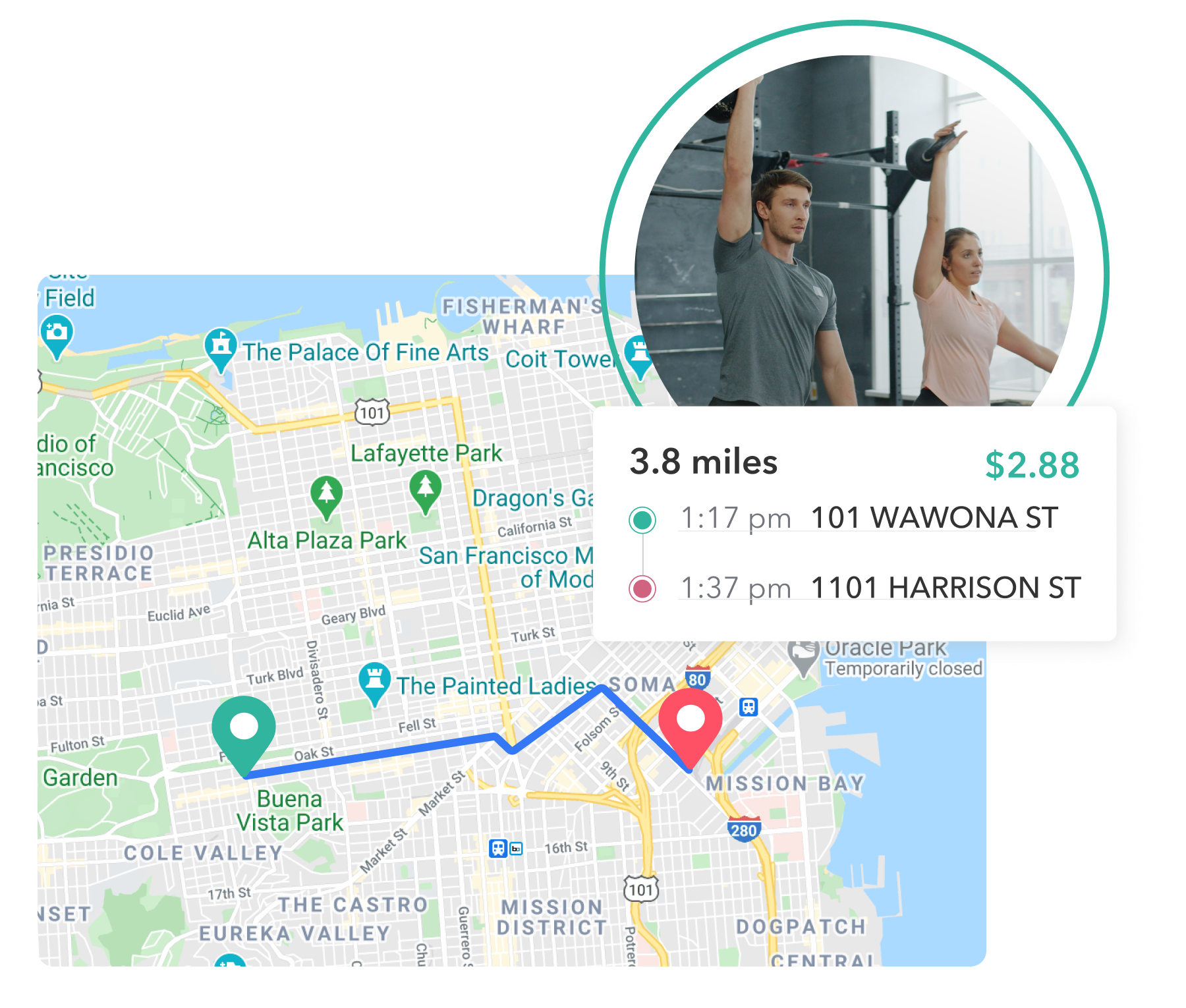
Mobile and in-home trainers accumulate significant business mileage between sessions. Tracking qualifying client drives consistently is one of the most impactful tax habits a personal trainer can build.
Qualifying personal trainer driving scenarios:
The most valuable tax deductions for personal trainers
Mileage is often the largest single deduction for mobile and in-home trainers. A range of legitimate business expenses beyond driving are regularly missed by fitness professionals at tax time.
The mileage deduction: the right method for most personal trainers
Most independent trainers use the IRS standard mileage rate over the actual expense method. It requires only a mileage log, covers fuel, depreciation, and maintenance in a single deduction, and typically produces a larger result.
Multiply total qualifying business miles by the IRS rate for the year. That single figure covers fuel, insurance, depreciation, and vehicle wear. The IRS updates the rate annually, and the same rate applies to every documented qualifying mile.
You must elect the standard mileage rate in the first year you use a vehicle for business. Starting with actual expenses locks you into that method for that vehicle. Trainers who begin tracking from their first client drive preserve the option to use the standard rate.
Trainers with unusually high actual vehicle costs or a leased vehicle may benefit from comparing both methods with a tax professional.
Updated each year by the IRS
Covers gas, insurance, depreciation & maintenance. Applies to all qualifying personal trainer business miles.
Each training setting has its own income structure and deductions. Here’s where to go next
The core tax rules apply across training environments, but income structure, mileage patterns, and relevant deductions can vary. Explore the dedicated guides below for training-setting-specific tax information.
Tax guides by training setting
In-Home and Mobile Personal Trainer Tax Guide
In-home and mobile trainers drive between clients and may qualify for significant mileage deductions. This guide covers business driving rules, session documentation, and how to track eligible miles between client appointments accurately.
Independent Gym and Studio Trainer Tax Guide
Trainers operating inside gyms, studios, or rented spaces have distinct deduction opportunities — studio rental fees, equipment costs, and facility-based 1099 income. This guide covers income reporting, applicable deductions, and recordkeeping for studio-based fitness professionals.
1099 documentation and IRS compliance facts

What a 1099-NEC reports and what it doesn't
Every entry must include the exact date the drive took place. The IRS cross-references claimed trips against permit records, MLS activity, client invoices, and platform logs — a missing or approximate date turns a valid deduction into an unverifiable one.
The 1099-NEC reporting threshold
Studios or clients may not issue a 1099-NEC below the applicable threshold, but trainers must report all taxable training income regardless of whether a form is received.
Trainers working across multiple locations or clients
Income from multiple gyms, studios, or private clients combines for tax reporting. Eligible mileage and business deductions are tracked and claimed together on one Schedule C.
The IRS contemporaneous mileage record requirement
The IRS expects timely mileage logs documenting the date, locations, distance, and business purpose of each business drive. Consistent tracking is essential for supporting vehicle deductions.
Audit exposure for self-employed fitness professionals
Accurate mileage and expense records help personal trainers substantiate deductions and remain prepared if their Schedule C return is examined.






Personal trainer tax FAQs
Answers to the questions personal trainers ask most about taxes, 1099 income, deductions, and quarterly payments. Consult a qualified CPA for advice specific to your situation.
.svg)
Tax guides by training setting

Track Every Mile. Maximize Every Deduction.
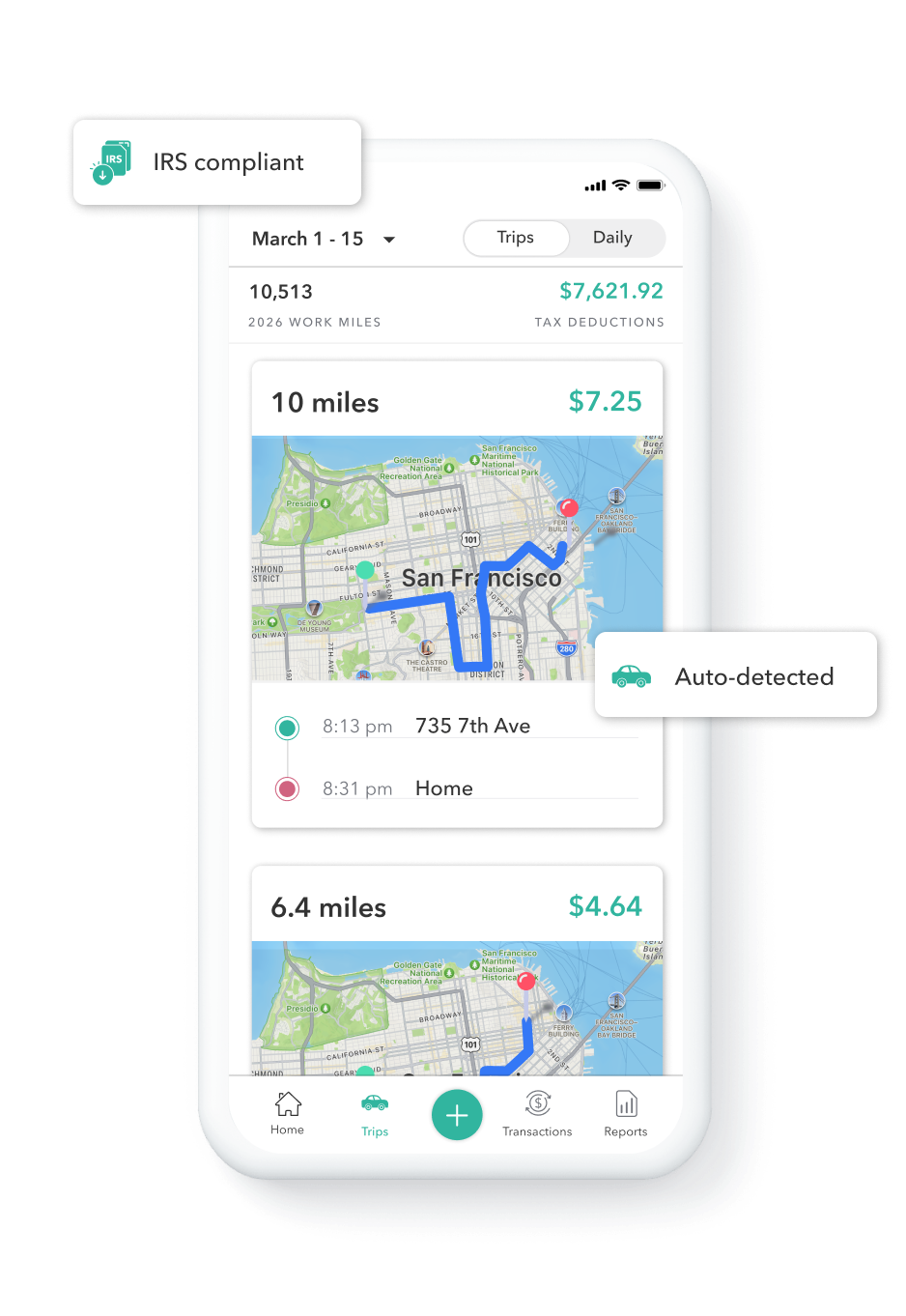
Automatically track qualifying business miles between every client drive and create IRS-ready records for tax time.


.svg)
