
Travel Nurses and Home Health Professionals Tax Guide
what your agency reports, what employment status determines.
Your staffing agency or employer reports your wages or contract income. It does not document your eligible mileage, professional expenses, or stipend details. This guide covers the tax rules for travel nurses and home health professionals based on how you are employed.

15.3%
$7,200+
4
Tax-free
The travel nurse and home health professional's complete guide to taxes
Your tax obligations depend on how you are classified. Travel nurses working through staffing agencies are typically W-2 employees. Home health workers may be W-2 or 1099. Each arrangement carries different responsibilities, available deductions, and filing requirements.
What healthcare worker taxes are and why employment status changes everything
W-2 employees have income taxes withheld and their employer covers half of Social Security and Medicare. Independent contractors and 1099 workers receive gross pay with no withholding, receive a 1099-NEC at year-end, and pay the full cost of self-employment taxes themselves.
Depending on your employment arrangement, you are generally responsible for:

Federal income tax: W-2 workers have this partially withheld; 1099 workers are responsible for the full amount and must pay quarterly.
Self-employment tax: 15.3% on 92.35% of net earnings, covering both the employee and employer portions of Social Security and Medicare.

State income tax: Varies by state. Travel nurses earning income in multiple states may have multi-state filing obligations.
W-2 workers should review withholding to avoid a year-end shortfall. Independent contractors must make quarterly estimated payments or face potential underpayment penalties.
How healthcare worker taxes work: income, classification, and quarterly payments
For 1099 and self-employed healthcare workers, the tax calculation follows a consistent sequence.

Report all 1099 and self-employment income from contract work, per diem pay, and non-agency assignments on Schedule C.

Subtract eligible business expenses including qualifying mileage between work locations, licensing fees, required supplies, and professional development.

Net profit after deductions determines both self-employment tax and federal income tax for the year.

Calculate 15.3% self-employment tax on 92.35% of net profit; deduct 50% from adjusted gross income on Form 1040.

Apply federal income tax to adjusted gross income after all deductions to determine total federal tax owed.
Quarterly payments are due four times per year. 1099 contractors who miss deadlines may face per-period underpayment penalties even if they pay in full at filing.

See what your healthcare income actually costs in taxes, and what expense tracking recovers.
Mileage and expense tracking can meaningfully reduce a healthcare worker's tax liability. Use the sliders to see your numbers.
Your 2026 healthcare tax estimate
Current IRS rate applied
Estimated tax after mileage deduction
$21,900
Federal and state combined
Your agency won't tell you what you owe or which deductions you qualify for
Staffing agencies and employers report wages or contract compensation and move on. Which deductions apply, when payments are due, and how to document your records are entirely your responsibility.

Your W-2 or 1099 reports income, not your deductible expenses

Employment status determines which deductions are available

1099 healthcare workers generally owe quarterly estimated taxes
Qualifying trip types:

Property showings — each leg is a separate deductible trip
Listing appointments and CMA presentations
Open house setup, signage, and hosting runs
Neighborhood farming and prospecting drives
Client meetings at any location
Home inspections, appraisals, and photo shoots
Continuing education and broker training
Title company, lender, and escrow visits
Not all healthcare driving is automatically deductible, and W-2 status changes everything
W-2 healthcare employees generally cannot claim unreimbursed mileage deductions at the federal level. For eligible 1099 workers, driving between patient homes or facilities during the work day may qualify. Driving from your personal residence to your first patient is generally not deductible.
Qualifying driving scenarios for eligible 1099 and self-employed healthcare workers:
Tax deductions available to eligible healthcare workers
Available deductions vary by employment status. For 1099 and self-employed healthcare workers, qualifying business expenses reduce taxable income and self-employment tax. W-2 employees have limited federal deduction options.
The mileage deduction: who qualifies and how it works
For eligible workers, primarily 1099 and self-employed home health professionals, the IRS standard mileage rate applies to qualifying business miles. It requires only a mileage log rather than individual vehicle receipts, and covers fuel, depreciation, and wear.
Multiply qualifying business miles by the IRS-published rate for the year. That single figure covers fuel, depreciation, insurance, and vehicle wear. The IRS adjusts the rate annually.
Elect the standard rate in the first tax year you use a vehicle for business. Starting with actual expenses in year one locks you into that method for that vehicle. Begin tracking from your first qualifying trip to preserve the election.
Workers with high actual vehicle costs or a leased vehicle may benefit from comparing both methods with a tax professional.
Updated each year by the IRS
Covers gas, insurance, depreciation & maintenance. Applies to qualifying drives between work locations for eligible 1099 workers.
Travel nurse and home health taxes have important differences. Here's where to go deeper.
The core tax rules apply broadly, but stipend treatment, mileage eligibility, and filing requirements differ between travel nurses and home health workers. The guides below address those specifics.
Tax guides by healthcare situation
Travel Nurse Stipend Tax Guide
Housing, meal, and travel stipends can be received tax-free when specific IRS criteria are met, including maintaining a qualifying tax home. This guide explains the tax home requirement, how to document stipend eligibility, and what happens when a travel nurse no longer qualifies.
Home Health Worker Tax Guide
Home health nurses, aides, and therapists working as 1099 independent contractors have a distinct set of eligible deductions, from per-visit mileage to clinical supplies and licensing fees. This guide covers the tax forms, qualifying expenses, and mileage rules specific to home health work.
Tax documentation and compliance facts

What a W-2 or 1099-NEC reports and what it doesn't
Your tax form documents what you were paid, not licensing costs, qualifying mileage, or professional expenses. Those require your own independent records to claim.
W-2 vs. 1099: how employment status changes your deduction options
W-2 healthcare workers generally cannot deduct unreimbursed work expenses at the federal level. 1099 contractors can deduct qualifying business expenses directly on Schedule C.
Travel nurses: multi-state income may create multi-state filing obligations
Earning income in multiple states during a travel assignment year may require filing returns in each state. Keep records of where you worked and for how long.
The IRS requires contemporaneous mileage documentation
A GPS-verified mileage log created at the time of each trip is the IRS standard. Reconstructed logs and year-end estimates do not satisfy the documentation requirement.
Self-employed healthcare workers face heightened Schedule C attention
High-mileage deductions and home office claims on Schedule C may attract IRS scrutiny. Accurate, timestamped records built throughout the year provide the strongest protection.






Travel nurse and home health professional tax FAQs
Answers to the tax questions healthcare workers ask most. Consult a CPA familiar with healthcare worker taxes for advice specific to your situation.
.svg)
Tax guides by situation

Track Every Qualifying Healthcare Mile.
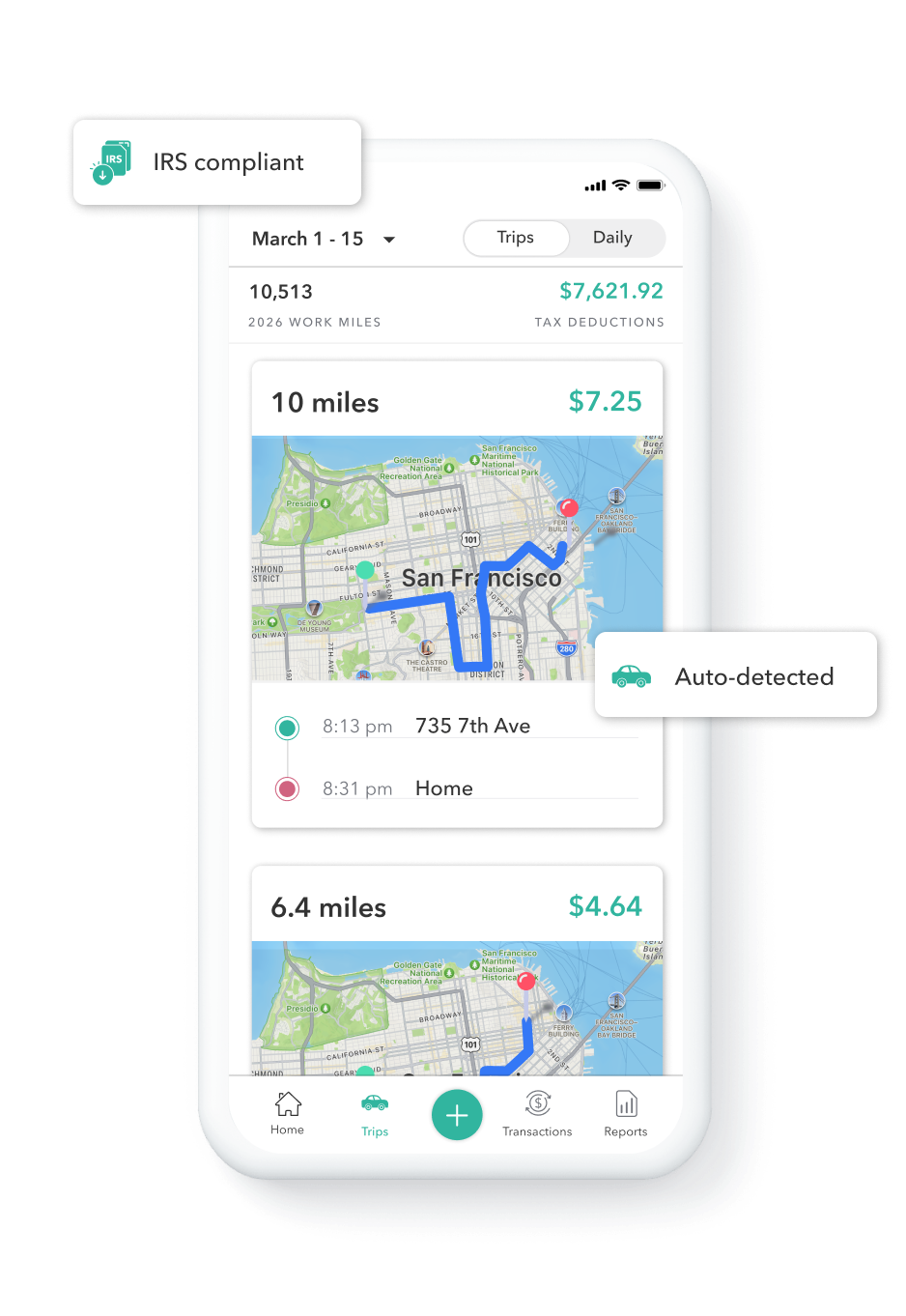
Everlance automatically tracks qualifying healthcare mileage with GPS-verified, IRS-ready records for deductions.


.svg)
